
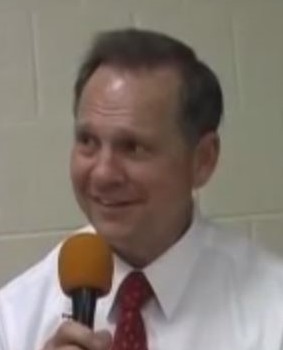
What Changed: Supreme Court Declines to Hear Defamation Appeal
The U.S. Supreme Court declined on a Monday to hear the Roy Moore defamation appeal seeking to reinstate an $8.2 million jury verdict against Senate Majority PAC. The decision brings a definitive conclusion to years of litigation stemming from the contentious 2017 special election for the U.S. Senate in Alabama.
By declining to review the matter, the Supreme Court leaves intact a ruling from the 11th Circuit that vacated the multimillion-dollar award originally granted to Moore by a federal jury. The justices’ action ends Moore’s legal challenge over the political commercial and confirms that the appellate reversal in favor of the political action committee stands as the final legal outcome.
The 2017 Alabama Senate Race and the Highway 31 Commercial
The legal fight traces back to the final stretch of the 2017 special Senate election in Alabama, in which Roy Moore stood as a candidate before ultimately losing the race to Democrat Doug Jones. During the heated closing days of the campaign, political action committee Senate Majority PAC backed an aggressive media campaign through an entity known as Highway 31.
Central to the lawsuit was a specific television advertisement produced and distributed by Highway 31. According to trial evidence and court findings, the advertisement aired 533 times in the final days preceding the election. The broadcast reached voters across Alabama media markets at a critical juncture in the campaign, drawing intense scrutiny and triggering immediate objections from Moore’s campaign team.
The Underpinning Allegations and Moore’s Denial
The political advertisement addressed public accusations concerning Moore’s past conduct. Among the central controversies of the 2017 race were claims made by Leigh Corfman, who asserted that Moore touched her in 1979 when she was 14 years old and Moore was 32 years old.
Moore consistently and unequivocally denied Corfman’s allegations. Despite his denials, the claims became a primary focus of political coverage, opponent messaging, and independent expenditure campaigns during the race, culminating in the television spot funded by Senate Majority PAC and aired under the Highway 31 moniker.
The Legal Pathway: From Federal Jury Award to Appellate Reversal
Following his election loss to Doug Jones, Moore filed a federal defamation lawsuit against Senate Majority PAC. Moore alleged that the Highway 31 commercial crossed the constitutional line between protected political speech and actionable defamation.
The case proceeded through federal court to a full trial. In 2022, a federal jury found in favor of Moore, determining that the commercial was defamatory and awarding him $8.2 million in damages. The verdict represented a significant monetary judgment against a major national political action committee and raised broad questions regarding legal liability for third-party independent political advertising.
The 11th Circuit Ruling and New York Times v. Sullivan
Senate Majority PAC challenged the 2022 jury award before the U.S. Court of Appeals for the 11th Circuit. On review, the appellate court reversed the jury verdict entirely, vacating the $8.2 million judgment.
The 11th Circuit based its reversal on the landmark First Amendment standard established in New York Times v. Sullivan. Under this legal framework, a public figure pursuing a defamation claim must meet an exacting evidentiary threshold by proving actual malice. The appellate panel determined that Moore failed to prove that Senate Majority PAC acted with actual malice—meaning knowledge of falsity or reckless disregard for the truth—when it produced and aired the commercial.
The Legal Conflict: Truthfulness vs. Juxtaposition
The dispute between Moore and Senate Majority PAC highlighted a core tension in defamation law regarding how published facts and news clips can be structured in political advertisements.
Senate Majority PAC maintained throughout the litigation that the Highway 31 advertisement was truthful. The political action committee argued that its broadcast relied on publicly available reporting and factual accounts concerning the accusations surrounding the Senate race, thereby shielding the organization from liability under constitutional free speech guarantees.
Moore’s Argument on Juxtaposition and the Masson Precedent
Conversely, Moore’s legal team contended that the construction of the ad created an entirely false impression. Moore’s attorneys asserted that the commercial juxtaposed disparate news excerpts to falsely imply that Moore solicited sex from young girls at a shopping mall. His counsel characterized this portrayal as a “fabricated accusation, never made by any reporter.”
In appealing to the nation’s highest court, Moore’s legal counsel claimed that the repercussions of the 11th Circuit decision extend far beyond his individual case. Moore’s attorneys argued that the appellate ruling undermined key defamation principles, stating: “if a publisher can escape a jury’s verdict by accurately quoting each fragment while manufacturing a false whole, Masson’s core holding is nullified for political ads.”
This argument invoked the legal doctrine derived from the Supreme Court’s Masson precedent, which addresses whether altering or arranging factual material can create a materially false statement that crosses into actionable defamation. Moore’s team warned that allowing political actors to assemble accurate snippets into an alleged falsehood would insulate deceptive campaign media from accountability.
Procedural Steps at the Supreme Court
Moore sought intervention from the U.S. Supreme Court to prevent the 11th Circuit decision from taking full effect and to restore the jury’s $8.2 million award. However, the high court consistently declined to intervene on his behalf.
Prior to its final order, the Supreme Court justices had previously rejected Moore’s June emergency request to stay the 11th Circuit ruling. That emergency denial signaled significant procedural headwinds for Moore’s broader petition.
With the Supreme Court’s formal decision on a Monday declining to hear the underlying appeal, Moore exhausted his legal avenues to overturn the appellate ruling. The high court’s refusal to grant a writ of certiorari leaves the 11th Circuit opinion intact and conclusively ends Moore’s legal challenge over the 2017 Highway 31 commercial.
Business and Campaign Media Implications
The resolution of this case carries notable implications for political organizations, legal advisors, media production companies, and commercial broadcasters involved in election advocacy.
Protections for Independent Political Action Committees
For political action committees like Senate Majority PAC, the Supreme Court’s decision underscores the protective durability of the New York Times v. Sullivan standard. Running hard-hitting campaign messages during competitive elections carries inherent defamation risks, but the actual malice standard remains a formidable barrier against plaintiffs seeking civil damages.
Because the 11th Circuit vacated the $8.2 million verdict on actual malice grounds and the Supreme Court left that ruling untouched, political committees retain considerable leeway under federal law to assemble campaign messaging from published news reports without facing automatic liability for inferences drawn by viewers.
Broadcasting and Content Standards
The case also demonstrates the high stakes surrounding rapid-fire broadcast placements in the closing stretch of political campaigns. With the disputed Highway 31 ad airing 533 times in the final days of the 2017 election, commercial television stations and media buyers operated under intense time constraints. The appellate ruling and subsequent Supreme Court denial indicate that, in the absence of demonstrable actual malice, courts remain reluctant to penalize political speech that synthesizes public controversies.
Who May Be Affected
Several institutional and political sectors observe the outcome of this dispute closely:
- Political Action Committees and Campaigns: Organizations funding independent expenditures can rely on established First Amendment protections when discussing public figures and election controversies.
- Public Figures and Political Candidates: Candidates who believe campaign advertisements present a distorted depiction of their background face continuing difficulties in securing or retaining jury verdicts under the demanding Sullivan framework.
- Media Broadcasters and Advertising Buyers: Television stations and streaming networks that air hundreds of ad spots in condensed campaign windows face reduced exposure to third-party liability claims when ads reference public reporting.
- Legal Practitioners in Election Law: Litigators challenging or defending political advertisements must navigate the high evidentiary bar required to prove actual malice, particularly when claims rest on theories of defamatory juxtaposition.
Risks and Limitations
While the outcome provides legal closure for Senate Majority PAC, the litigation history highlights notable strategic risks for both political spenders and public figures.
Jury Exposure and Litigation Costs
Although the appellate court ultimately overturned the award, a federal jury initially awarded $8.2 million to Moore in 2022. That verdict underscores the reality that juries in local jurisdictions may view selective editing or juxtaposition differently than appellate judges interpreting constitutional doctrine. Navigating five years of litigation between the 2017 broadcast and the 2022 trial—followed by extensive appellate reviews through 2026—entails substantial legal expense and operational uncertainty for political entities.
Unresolved Doctrinal Arguments
Because the Supreme Court declined to review the case rather than issuing a substantive merits opinion, it did not directly resolve the legal questions raised by Moore’s counsel regarding how Masson interacts with selective quoting in modern political ads. The decision leaves the 11th Circuit’s interpretation binding within its jurisdiction, while leaving broader theoretical debates about defamatory juxtaposition open to future litigation in other circuits.
What to Watch Next
With the Supreme Court’s rejection ending Moore’s lawsuit over the Highway 31 ad, the immediate legal dispute is resolved. Moving forward, legal analysts and political operatives will monitor whether other public figures attempt to test the boundaries of the actual malice standard in alternate federal circuits. Observers will also watch whether ongoing national debates surrounding the durability of New York Times v. Sullivan prompt the Supreme Court to take up different defamation disputes in future terms.