
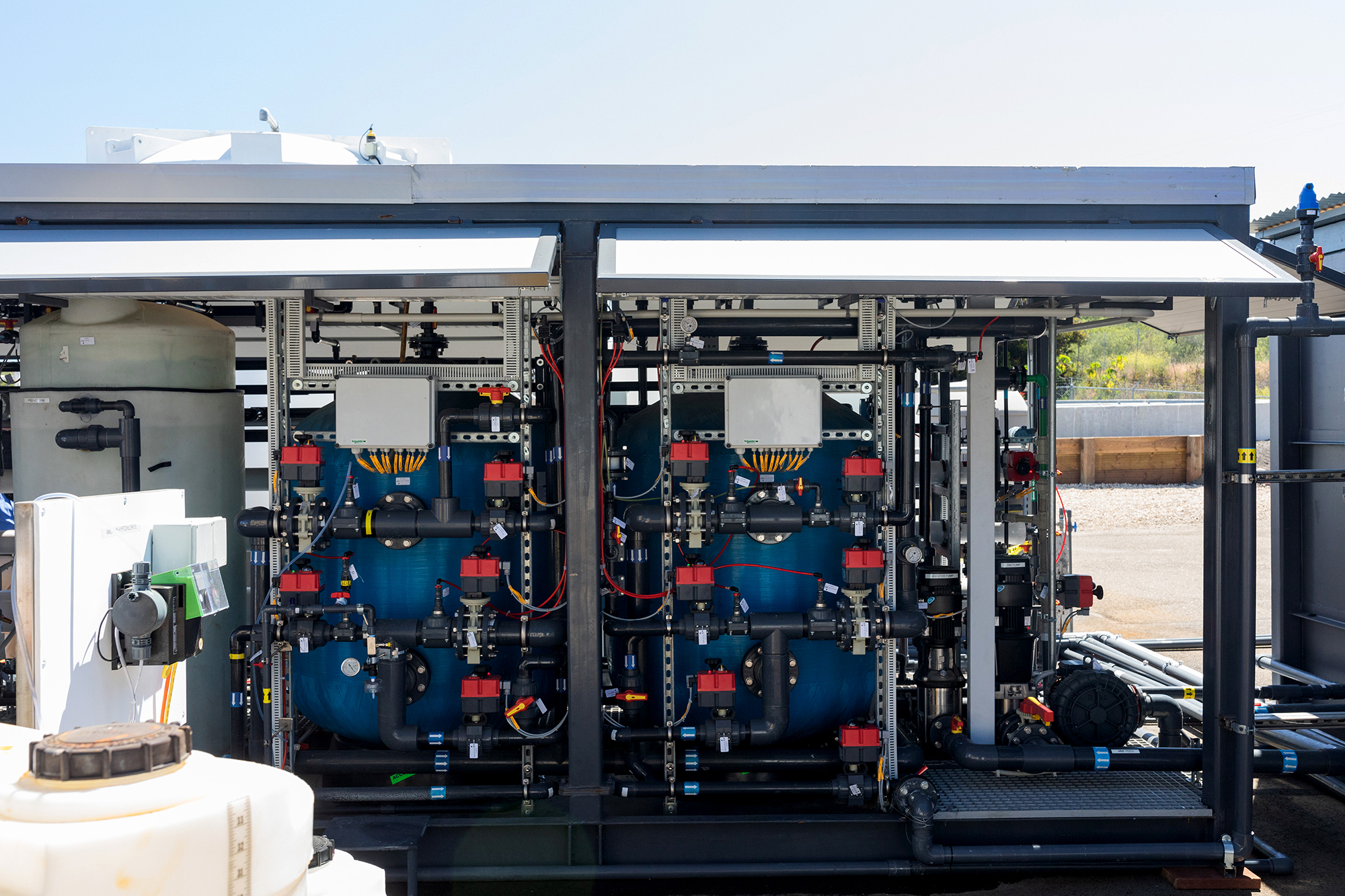
Pismo Beach has authorized $42 million to design and construct an advanced water purification facility known as Central Coast Blue, pressing forward independently after partner municipalities withdrew from the regional effort. The Pismo Beach City Council greenlit agreements totaling $41.2 million for construction and advisory services, navigating rising cost projections and shifts in regional governance.
What Changed
Initially, the Central Coast Blue project was a collaborative undertaking involving Pismo Beach, Grover Beach, and Arroyo Grande. However, both Arroyo Grande and Grover Beach subsequently pulled their funding from the project.
Following these withdrawals, the Pismo Beach City Council voted on Oct. 6 to dissolve the Central Coast Blue Regional Recycled Water Authority. Pismo Beach decided to advance the water purification initiative independently.
To move the project into its next phase, the Pismo Beach City Council authorized a $39 million agreement with PERC Water Corporation to construct a 750-acre-foot-per-year facility. In addition, the council approved a $2.2 million agreement with GHD Inc. for owner’s advisor services. In total, Pismo Beach authorized $42 million to design and construct the facility.
Context and Cost Projections
Financial parameters for Central Coast Blue have shifted notably over recent years. In 2022, the project’s estimated price tag stood at $93 million. By 2024, projected costs rose significantly to between $134 million and $159 million.
To help offset capital expenditures, Pismo Beach has secured roughly $35 million in grants. Funding sources include the U.S. Bureau of Reclamation, the state’s Water Recycling Funding Program, and the Integrated Regional Water Management program.
City leadership has emphasized that the project is designed for supply reliability rather than expansion. City Manager Jorge Garcia stated that the project is for replacing vulnerable water sources rather than for growth. Pismo Beach currently relies on three primary supplies: Lopez Lake, imported water from the State Water Project, and groundwater from the Santa Maria Groundwater Basin.
Sector Impact and Business Implications
Water infrastructure projects of this scale highlight the financial pressures facing local governments as they seek to diversify regional supplies. Public Works Director Rosemarie Gaglione noted that smaller-scale operations represent the path forward, stating that a plant size of 1 MGD (million gallons per day) or less than 1 MGD is the future of recycled water, which is why the state and federal government have devoted quite a bit of financial resources to such initiatives.
Community members have called for tight administrative control over the revised procurement process. Cynthia Replogle stated that residents need oversight, clear terms, protection of their money, and a true cost estimate.
Broader resource pressures in the region have also drawn scrutiny. Scott Newton stated in a Facebook post that a legal battle over the Lake Lopez water supply cost taxpayers over $800,000, pointing to tensions regarding regional water rights and environmental litigation involving groups like Luis Obispo Coastkeeper.
Risks or Limitations
While Pismo Beach has secured millions in grant funding and authorized specific design and construction agreements, exact final costs outside of the stated authorized amounts and cost projections from 2022 and 2024 remain subject to market variables. The precise operational impact of external legal challenges on county water operations also remains an ongoing factor for local resource management.
What to Watch Next
Construction on the facility is scheduled to take place between June 2027 and February 2028. Public Works Director Rosemarie Gaglione stated that the plant should produce purified water and the injection well should pump water into the ground by Sept. 17, 2028. Stakeholders will monitor construction milestones, contract execution with PERC Water Corporation and GHD Inc., and future rate impacts for water and sewer customers.