
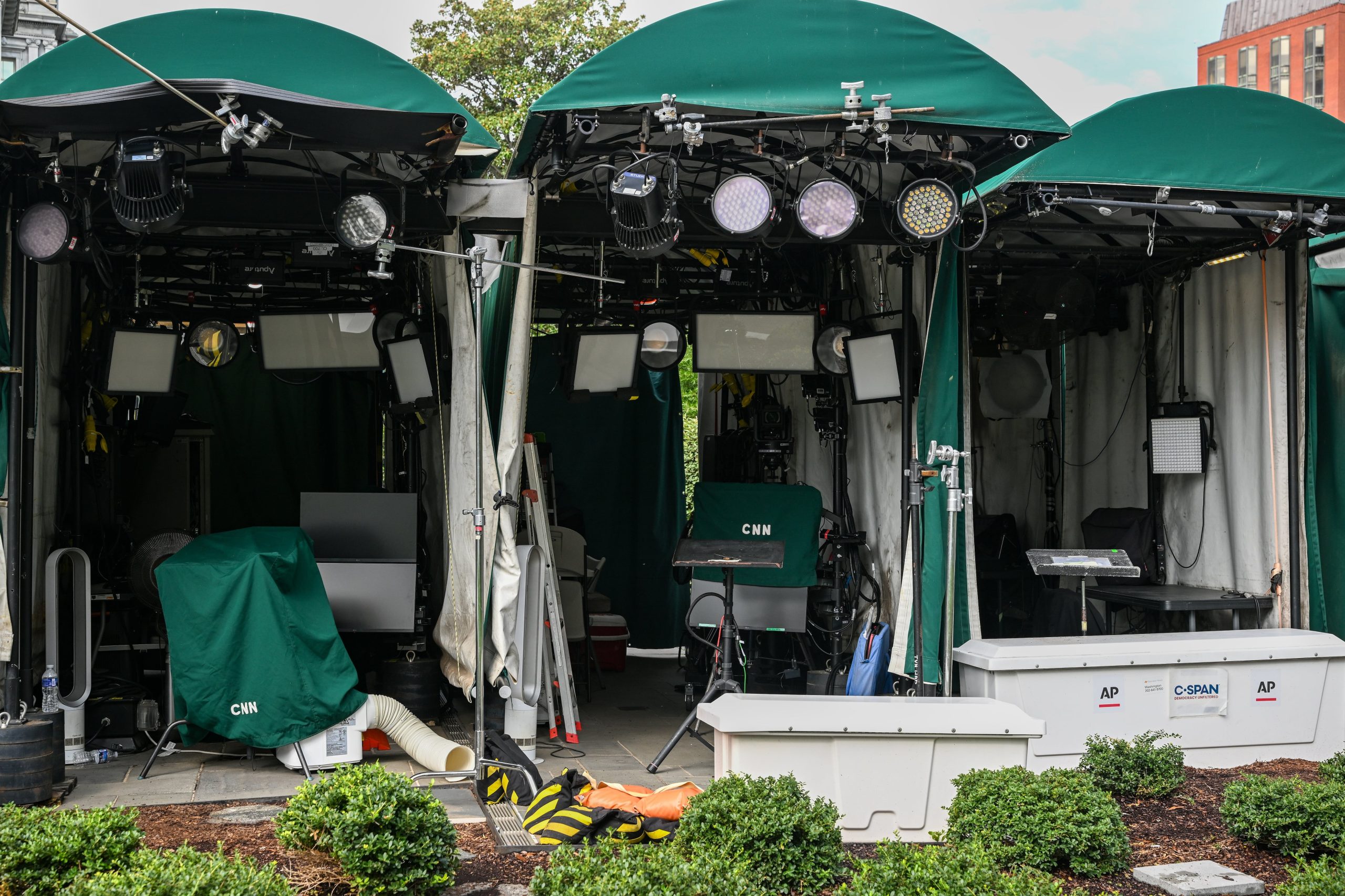
The U.S. Department of Justice (DOJ) has launched a formal DOJ antitrust investigation into whether the White House television press pool violated federal competition law when it decided to halt coverage of President Donald Trump. The probe focuses on joint action taken by major broadcast networks after the presidential administration barred three prominent media organizations from White House access.
The coverage halt occurred after the White House administration barred CNN, MS NOW, and Politico from presidential events. In response, the television press pool—which comprises five major national broadcasters: ABC, CBS, CNN, FOX, and NBC—temporarily suspended its shared camera coverage. The standard television pool coverage has since resumed after the presidential administration lifted the ban, following emergency legal action by the affected media outlets.
What Changed: The Coverage Halt and Expiration Timeline
The conflict between the White House administration and the press corps escalated rapidly over a days-long ban targeting specific news organizations. When CNN, MS NOW, and Politico were excluded from covering presidential proceedings, the remaining pool members coordinated a temporary shutdown of pool camera resources.
Following the exclusion, CNN, MS NOW, and Politico filed a federal lawsuit challenging the days-long ban. A judge subsequently granted a temporary judicial reprieve to the three news organizations. That court-ordered reprieve remains in place until Tuesday.
With the judicial order active, the White House administration lifted the ban on CNN, MS NOW, and Politico, and television pool coverage of President Donald Trump officially resumed. However, the federal government’s legal scrutiny shifted toward the media entities themselves through the Antitrust Division of the DOJ.
DOJ Antitrust Investigation: The Legal Basis and Official Statements
The core of the federal inquiry rests on whether competing news organizations engaged in an unlawful concerted refusal to deal or coordinated economic action. Federal antitrust statutes regulate standard business conduct between commercial rivals, prohibiting competitors from agreeing to joint business boycotts that restrict market activity.
DOJ spokesperson Emily Covington outlined the rationale behind the inquiry, stating that group boycotts among direct business competitors might violate U.S. antitrust law. Confirming the probe, Covington issued an official statement regarding the scope of the federal review.
“The Antitrust Division is simply investigating to determine whether these news organizations have violated the antitrust laws,” Covington stated.
Messages seeking comment regarding the federal inquiry were sent late Saturday to all five participating television pool broadcasters: ABC, CBS, CNN, FOX, and NBC. Official corporate responses from the networks regarding the DOJ investigation remained pending at the time of reporting.
Press Freedom Advocates Respond to Federal Probe
Media defense organizations and industry observers expressed immediate concern over the administration’s decision to deploy antitrust enforcement mechanisms against news organizations engaged in solidarity over White House access.
Jose Zamora of the Committee to Protect Journalists (CPJ) criticized the federal government’s legal stance, warning that applying competition law to access disputes threatens established press rights.
“The government should not use antitrust investigations to intimidate news outlets defending press access,” Zamora stated. He added, “The public’s right to know depends on that access.”
Zamora claimed that the government is actively using antitrust investigations as a tool to intimidate news outlets that take legal or organizational steps to defend press access. Observers note that the White House press pool has effectively become a proxy for a wider fight over whether the president or anyone can control news content. Industry analysts view these actions as an extraordinary escalation in President Donald Trump’s ongoing efforts to restrict news reporters and outlets he finds insufficiently supportive.
Business and Legal Context of Broadcast Pools
The White House television pool operates as a shared operational system among competitors to ensure continuous news gathering while managing spatial and logistical constraints inside executive branch venues. The pool is made up of five primary broadcast news competitors:
- ABC
- CBS
- CNN
- FOX
- NBC
Under standard industry operations, these competing networks share single-camera feeds and technical resources to cover presidential events. However, because these entities are commercial competitors in the broader media market, joint agreements to withdraw service or cease pooled coverage can trigger legal scrutiny under federal competition statutes.
The current legal dispute examines the boundary between joint operational pool agreements and potential group boycotts under federal antitrust jurisprudence. Key dates surrounding the legal timeline and reporting records include September 21, 2026, October 10, 2026, and October 11, 2026, alongside the upcoming court deadline on Tuesday.
Key Risks, Sector Limitations, and Uncertainties
Multiple legal and factual uncertainties surround the ongoing dispute as federal investigators evaluate the broadcasters’ actions:
- Legal Qualification: It remains uncertain whether the news organizations’ brief coverage suspension legally constitutes a commercial antitrust violation under federal law.
- Network Responses: Formal legal responses and official public statements from ABC, CBS, CNN, FOX, and NBC have yet to be published following inquiries sent late Saturday.
- Court Expiration: The judicial reprieve protecting CNN, MS NOW, and Politico expires on Tuesday, creating uncertainty regarding White House press pass status and pool operations once the temporary court order lapses.
What to Watch Next
The immediate focus turns to Tuesday, when the judge’s temporary reprieve granted to CNN, MS NOW, and Politico reaches its expiration date. Media legal experts and broadcast executives are watching whether the court will extend the protections, issue a permanent injunction, or allow the administration to alter access terms once again.
Concurrently, the DOJ Antitrust Division will proceed with its investigation into the five pool members—ABC, CBS, CNN, FOX, and NBC. Further filings in the lawsuit by the three barred organizations, as well as formal legal replies from the broadcast networks to the DOJ, are expected as the deadline approaches.
Reporting context and factual contributions for this ongoing matter include research records from The Associated Press (AP) and The Boston Globe, with reporting by Alanna Durkin Richer, Amy Taxin, and Kenny Holston.