
Funding Details
Starcloud, the space‑based data infrastructure provider, announced the closing of a $250 million Series A extension that values the company at $2.3 billion. The capital injection follows a successful initial Series A round and positions Starcloud to accelerate the deployment of its orbital data centres.
orbital data centres: What It Means and Why It Matters
The new funding round was led by a consortium of venture capital firms with a focus on aerospace and cloud‑computing technologies. While the identities of all participants were not disclosed, the investment signals strong confidence in the company’s vision for high‑altitude data processing.
Orbital Data Centre Vision
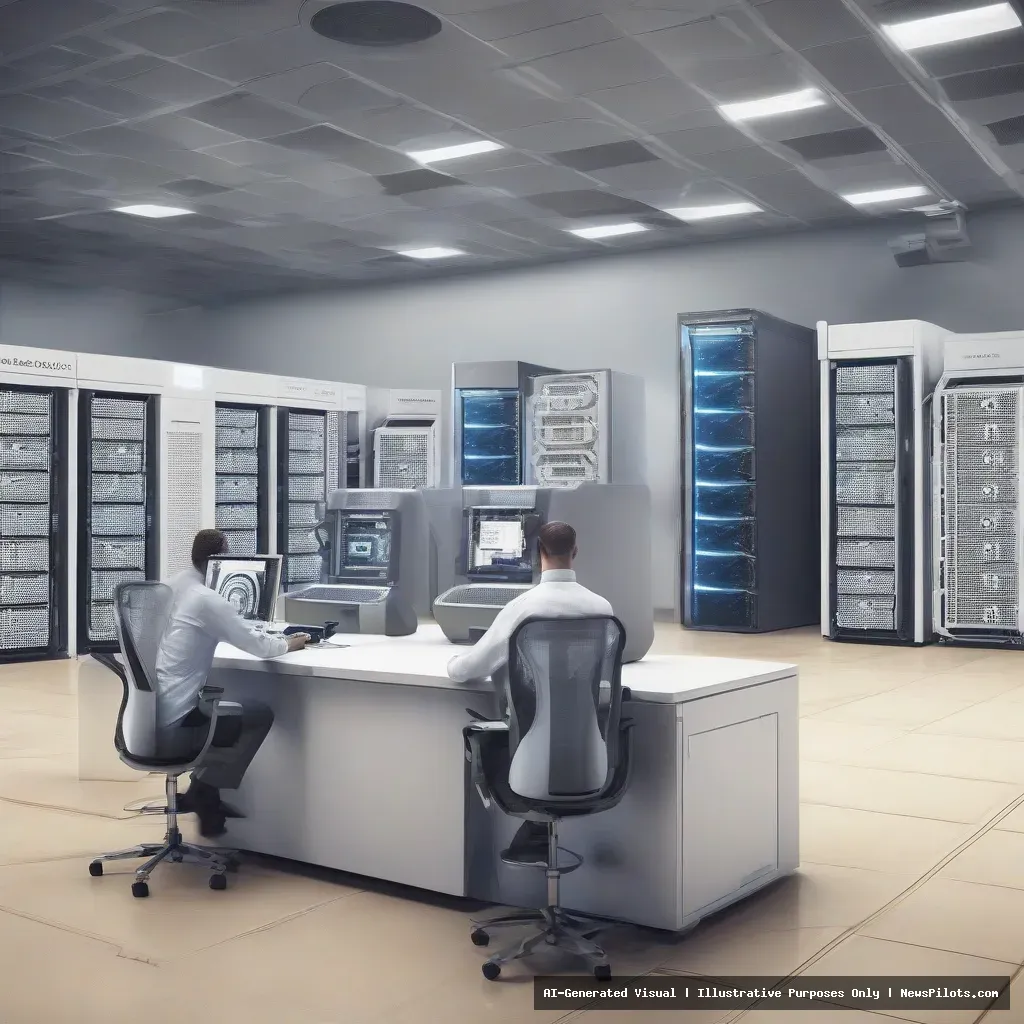
Starcloud’s core proposition is the creation of data centres in low Earth orbit. By placing computing infrastructure above the atmosphere, the company aims to reduce latency, increase resilience, and provide a global network that can serve customers across continents.
Unlike traditional terrestrial data hubs, orbital facilities benefit from a stable, low‑orbit environment that offers consistent power from solar panels and a reduced risk of terrestrial disasters such as earthquakes or extreme weather. This unique positioning is expected to support a wide range of data‑intensive applications, from real‑time analytics to high‑frequency trading.
Strategic Use of Capital
The $250 million will be deployed across several key initiatives. First, the company plans to launch additional satellite‑based data centres, expanding its footprint to cover more geographic regions. Second, Starcloud will invest in advanced cooling and power‑management systems designed for the space environment, ensuring operational reliability and energy efficiency.
Moreover, the capital will fund the development of secure, high‑bandwidth links between the orbital infrastructure and ground‑based networks. This connectivity layer is essential for delivering low‑latency services to end users and for integrating the orbital platform into existing cloud ecosystems.
Industry Context
The move comes at a time when demand for low‑latency, globally distributed data processing is growing rapidly. Industries such as finance, telecommunications, and media are exploring satellite‑based solutions to overcome the limitations of terrestrial networks, especially in remote or underserved regions.
Starcloud’s approach aligns with a broader trend of satellite operators diversifying their services beyond traditional communications. By offering compute and storage capabilities in orbit, the company is positioning itself as a key player in the emerging space‑edge computing market.
Competitive Landscape
While Starcloud is not the only firm pursuing orbital data infrastructure, its focus on building fully integrated data centres sets it apart. Competing initiatives have largely concentrated on satellite‑to‑ground data relay or edge computing at the satellite surface. Starcloud’s design incorporates full data‑centre functionality, including virtualization, redundancy, and high‑availability features.
The company’s valuation of $2.3 billion reflects investor optimism about the scalability of its model and the potential for high‑margin services in a niche market. Analysts suggest that the platform could attract large enterprises seeking to offload sensitive workloads to a secure, globally distributed environment.
Future Outlook
With the new funding, Starcloud is slated to complete its first orbital data centre launch within the next 18 months. Subsequent deployments are expected to follow on a quarterly basis, gradually expanding coverage and capacity.
As the company scales, it plans to open partnerships with ground‑station operators, network providers, and cloud service vendors. These collaborations will help integrate Starcloud’s orbital platform into the broader digital infrastructure, offering customers seamless access to hybrid terrestrial‑space solutions.
In addition to hardware expansion, Starcloud will invest in research and development to enhance its data‑processing algorithms and to optimize the use of limited orbital resources. This focus on continuous improvement is expected to keep the company at the forefront of the space‑edge computing sector.
Conclusion
The $250 million Series A extension marks a significant milestone for Starcloud, reinforcing its ambition to redefine global data infrastructure. By leveraging the unique advantages of low‑Earth orbit, the company aims to deliver faster, more resilient services to a wide array of industries. The funding provides the necessary resources to accelerate the launch of orbital data centres and to establish Starcloud as a leader in the emerging space‑edge computing arena.
Related Articles
- Charlotte Data Breach Affects 73,000 Preferred Parking Customers
- Southeastern Healthcare Solutions Faces Lawsuit Over 2025 Data Breach
Original Source: SatellitePro ME