
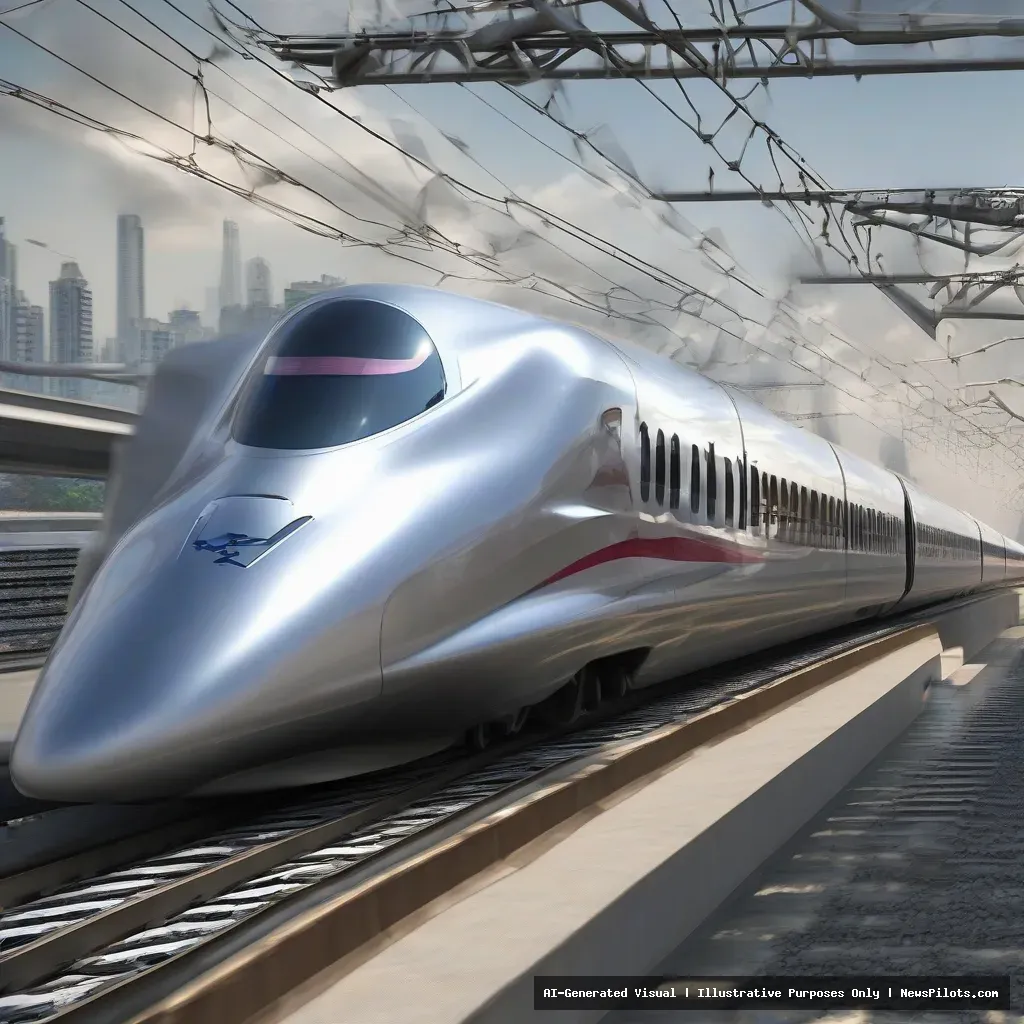
India’s upcoming Mumbai‑Ahmedabad bullet train will operate at 320 km/h and will be able to change tracks without the usual jolt, according to reports published in September 2026. The new capability is made possible by a specialized track‑switching system that is being rolled out on the high‑speed corridor, as detailed by several media outlets covering the project.
High-Speed Track Switching Explained
NDTV and News18 both describe the technology as a breakthrough that lets the train transition between rails while maintaining full speed. The reports emphasize that the switch occurs “without a jolt,” a claim echoed by Cobrapost and Moneycontrol. The Indian Express adds that the National High‑Speed Rail Corporation Limited (NHSRCL) has provided the technical explanation for how the system works.
Canted Turnouts: The Engineering Solution
Livemint’s coverage identifies the specific mechanism: canted turnouts. These are rail switches that are inclined or banked to align with the train’s trajectory, reducing lateral forces that normally cause a sudden shift in direction. By tilting the switch, the train can maintain its 320 km/h speed while moving onto a different track, keeping passenger comfort and safety intact. The technology is designed to balance centrifugal forces, allowing a seamless transition without requiring the train to slow down.
Implementation on the Mumbai‑Ahmedabad Corridor
According to the Indian Express, NHSRCL officials have outlined how the canted turnouts will be integrated into the existing track layout of the Mumbai‑Ahmedabad high‑speed rail project. The turnouts are being installed as part of the standard track infrastructure, ensuring that the entire route can accommodate high‑speed switching at multiple points. The September 2026 reports from News18 and Kerala Kaumudi note that the technology is already being tested, with the goal of full operational deployment on the corridor.
Passenger Experience and Safety
The smooth track transitions are expected to improve the overall ride quality for passengers traveling at 320 km/h. By eliminating the jolt associated with conventional turnouts, the technology aims to reduce wear on both the rolling stock and the track, potentially lowering maintenance costs. NHSRCL’s explanation, cited by the Indian Express, highlights that the design prioritizes safety while allowing the train to maintain its high speed through curve‑like switches.
Multiple publications—including NDTV, Cobrapost, Moneycontrol, and Kerala Kaumudi—report that the new switching system is a key component of the bullet train’s engineering, enabling the service to meet its ambitious speed targets without compromising comfort. The coordinated coverage suggests that the technology is now a confirmed feature of the Mumbai‑Ahmedabad project, moving from concept to implementation.
As the Mumbai‑Ahmedabad bullet train approaches its launch, the adoption of canted turnouts represents a tangible step forward in high‑speed rail technology, demonstrating how innovative track design can support speeds of 320 km/h while delivering a smoother journey.