
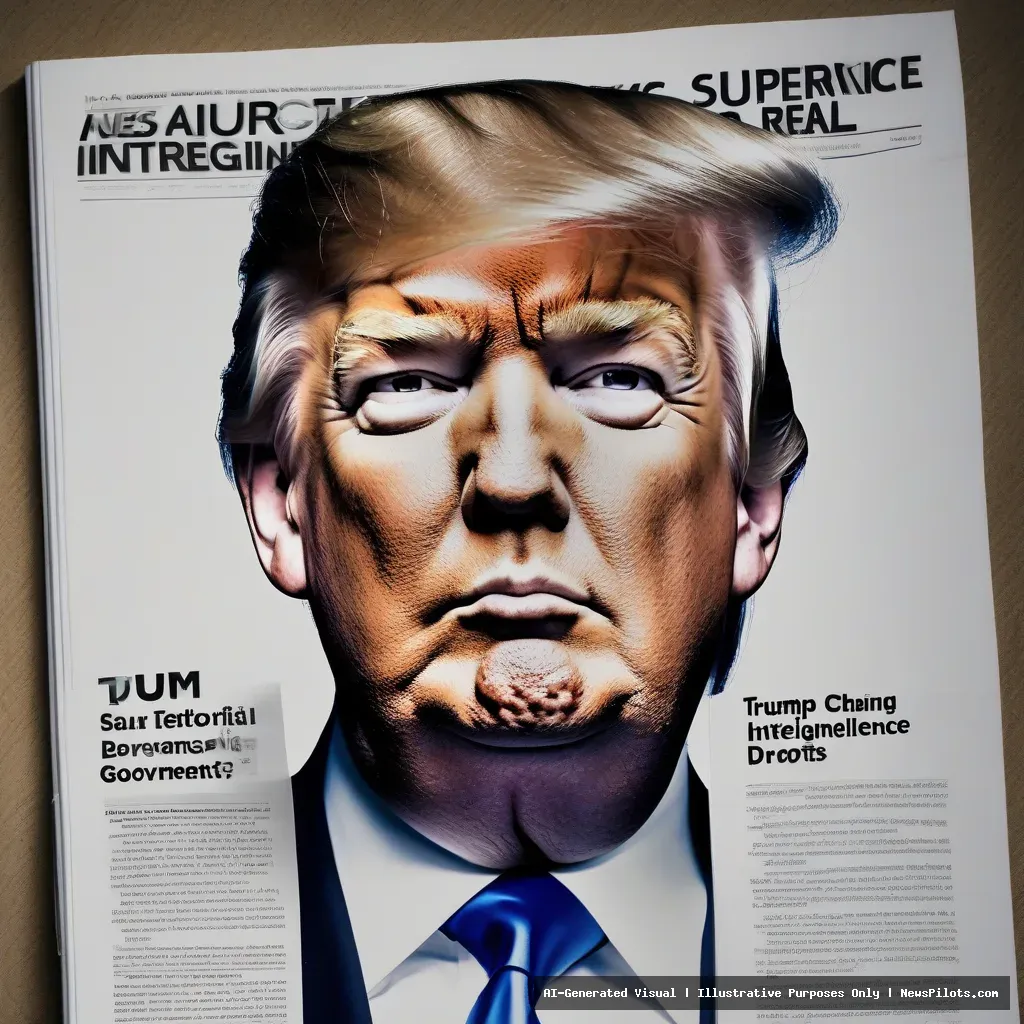
On September 22, 2026, former President Donald Trump announced a sweeping terminology shift for artificial intelligence (AI) in federal documents. He directed every U.S. agency to replace the phrase “artificial intelligence” with “super intelligence,” a change that will appear in reports, policy papers and official communications across the government.
Official Directive Issued by the President
Breaking Defense reported that Trump issued an order requiring all federal agencies to adopt the new terminology. The directive was issued in writing and applies to all departments, including defense and intelligence, ensuring a uniform reference to AI in official documents.
Coverage Across Major Media Outlets
The announcement was reported by a range of national and international outlets. The Washington Post described Trump’s statement that he was renaming AI to “super intelligence.” Telangana Today noted that he proposed replacing “artificial intelligence” with “superintelligence.” Gizmodo highlighted that the new term would appear on government documents, while NDTV Profit emphasized that the change would end the use of the word “artificial.” The Korea Times reported that the U.S. will henceforth call AI “super intelligence.” PBS covered Trump’s remarks at the United Nations, where he dismissed concerns about AI risks and said he would not rein in its development.
Implications for Federal Communications
With the directive in place, all agencies will update internal guidelines, memos, and public releases to reflect the new terminology. The change is purely nominal; it does not alter the legal framework or regulatory approach to AI. The government’s intent appears to be a rebranding effort rather than a shift in policy stance.
Trump’s Position on AI Growth
India Today summarized Trump’s broader view that the United States will not stifle AI growth. He linked the terminology change to a pro‑innovation agenda, suggesting that “super intelligence” better captures the technology’s capabilities. This perspective aligns with his comments at the UN, where he emphasized that the U.S. would not impose new restrictions on AI development.
Next Steps for Agencies
While the exact implementation timeline has not been specified, agencies are expected to begin revising their internal documents and public-facing materials. The transition will involve updating naming conventions in reports, policy briefs, and other official documents. The government has not announced any legal or regulatory changes accompanying the terminology shift.
International Attention
The directive has attracted attention beyond U.S. borders, with international media outlets reporting on the policy shift. The coverage underscores the significance of the change, as it signals a high‑level endorsement of AI’s evolving role in government operations.