
What Changed
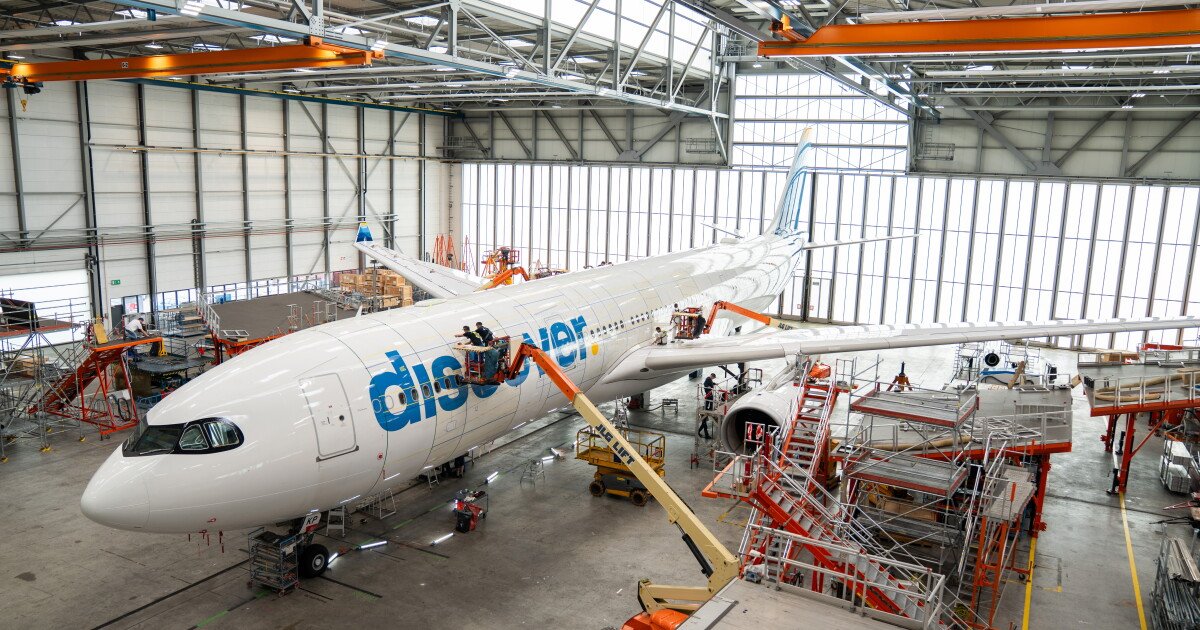
Lufthansa Technik has received official approval from the European Union Aviation Safety Agency (EASA) to install its AeroSHARK bionic skin on an Airbus A330-300 Discover airliner. The certification marks a milestone for the technology, expanding its application beyond existing platforms into a new segment of the global long-haul fleet. The Lufthansa fleet approved for new bionic shark skins milestone represents a concrete step toward integrating biomimetic materials into commercial aviation operations.
AeroSHARK is an artificial polymer film designed to improve aircraft flight efficiency. The film features microscopic grooves embossed into its surface, measuring 50 micrometers in size. These grooves are engineered to replicate the geometry, height, and spacing of shark denticle ridges. By mimicking nature, the surface modification targets the physics of fluid dynamics around the fuselage during high-speed flight.
Context and Technical Explanation
To understand the significance of this development, it helps to examine the aerodynamic challenges of commercial flight. Skin-friction drag accounts for approximately 50 percent of the total aerodynamic drag experienced by a modern airliner cruising at high altitudes and speeds.
When a standard aluminum or composite aircraft fuselage moves through the air, boundary layer turbulence forms along its surface, creating resistance that engines must work harder to overcome. The 50-micrometer grooves of the AeroSHARK polymer film work by altering this boundary layer flow. By smoothing out micro-turbulences and channelizing airflow across the hull, the bionic skin reduces overall skin-friction drag.
Prior to this latest approval, AeroSHARK has already been tried out on 22 aircraft within the Lufthansa Group’s own Boeing 777 fleet. Operational data from those deployments indicates that the technology has saved up to 19 tonnes of fuel per day across that fleet.
Key Benefits and Projected Efficiency
According to company claims, the application of AeroSHARK delivers a reliable one percent reduction in fuel consumption and carbon emissions per flight. Furthermore, efficiency gains can scale up to two percent when the specialized polymer skin is applied not only to the fuselage but also to the wings and empennage.
Executives within the corporate alliance have highlighted the broader environmental and operational impacts. Grazia Vittadini noted that AeroSHARK serves as an excellent example of how innovations from the Lufthansa Group can make concrete contributions to greater efficiency and lower emissions. Christian Götting added that the planned certification for the Airbus A330ceo unlocks the potential of another significant portion of the global long-haul fleet.
Business Implications and the Innovation Alliance
The deployment of this technology involves a multi-party collaboration. The innovation alliance backing the initiative includes Lufthansa Technik, Discover Airlines, and financial services giant Mastercard. Christian Götting noted that this partnership demonstrates how strong partners from different sectors can drive industrial progress together.
For airlines facing stringent environmental regulations and high fuel expenditures, incremental percentage savings translate into substantial operational expenditure reductions over an aircraft’s lifecycle. By expanding the certified platform types from the Boeing 777 to the Airbus A330-300, Lufthansa Technik increases the addressable market for its surface-modification product among global operators.
Limitations, Risks, and Uncertainties
Despite the promising efficiency gains, commercial operators must weigh several limitations and operational uncertainties before widespread adoption.
A primary question involves durability and maintenance overhead. Industry observers and source discussions note uncertainties regarding whether the aerodynamic benefit lasts long-term under harsh flight conditions, or if airborne debris, erosion, and routine wear-and-tear reduce its effectiveness quickly. Because the polymer film relies on precise 50-micrometer geometries, any degradation of the microscopic ridges could diminish its drag-reduction capabilities.
Additionally, surface modifications require careful installation protocols and inspection regimes during heavy maintenance checks to ensure the film remains securely bonded to the aircraft exterior without introducing peeling or additional weight penalties.
What to Watch Next
As the newly approved Airbus A330-300 Discover airliner enters operational service with the AeroSHARK skin, aviation analysts will monitor its real-world fuel performance against the baseline figures established by the Boeing 777 deployments.
Key developments to watch include potential follow-on approvals from EASA and other international regulators for additional aircraft families, expansion of the film installation to wings and empennages to capture the projected two percent savings threshold, and long-term durability data tracking how the bionic polymer withstands thousands of flight hours in diverse climatic zones.