
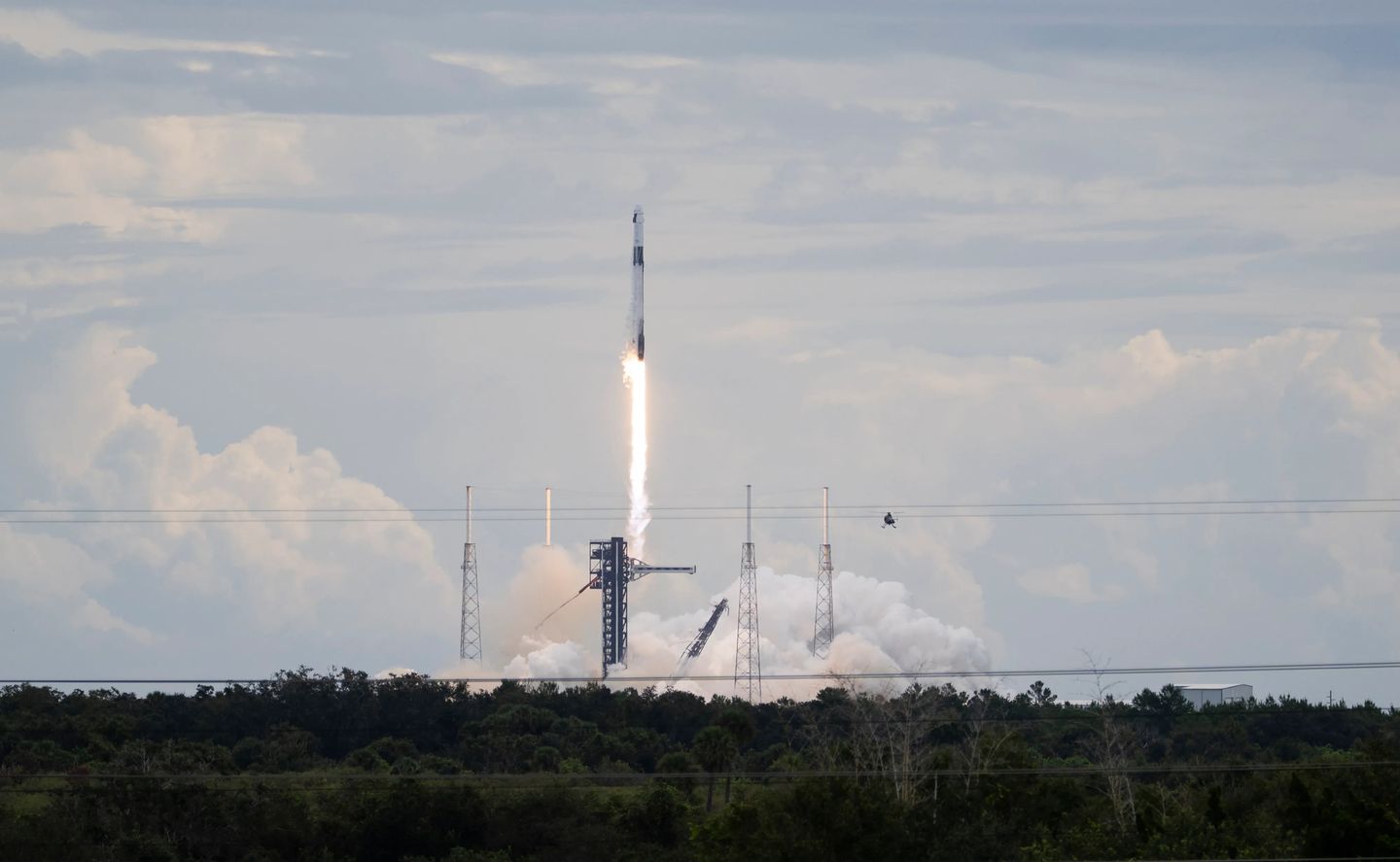
Factual Lead: NASA’s SpaceX Crew-13 Mission Takes Off
In a significant deployment for low Earth orbit operations, NASA’s SpaceX Crew-13 launches 4 crew to the International Space Station. According to news reporting published on October 1, 2026, by the Washington Times, the mission represents a continuation of scheduled crew rotations designed to maintain full operational capabilities aboard the orbiting research facility. The dispatch of 4 crew members underscores the ongoing dependency on commercial transportation frameworks to sustain human spaceflight infrastructure.
What Changed: Details of the Crew-13 Launch
The primary development in this operational update is the successful execution of the Crew-13 flight, carrying 4 personnel off Earth and toward the International Space Station. Managed under the collaborative framework between public space agency NASA and commercial aerospace company SpaceX, the launch marks the thirteenth official operational crew rotation under this specific program designation.
By placing 4 crew members en route to the space station, the flight fulfills fundamental staffing requirements necessary to maintain continuous human presence in microgravity. The transition from previous expeditionary teams to incoming personnel allows station operational schedules to proceed without gaps in coverage or maintenance delays.
Context: Public-Private Partnerships in Low Earth Orbit
To fully understand the context of the Crew-13 deployment, it is useful to examine the structural transition in space flight management over the past decade. Public space programs have increasingly shifted routine transportation tasks to private sector contractors. Rather than owning and operating every vehicle directly, federal space agencies contract crew transportation services from commercial providers.
This public-private enterprise model allows NASA to focus institutional resources on deep-space exploration initiatives while leveraging commercial innovation and efficiency for routine access to low Earth orbit. SpaceX’s involvement in these rotation missions has established a standardized cadence for crew transfers, turning what was once a rare institutional endeavor into a predictable operational routine.
Why It Matters: Continuity of Scientific Research and Station Maintenance
The arrival of 4 fresh crew members aboard the International Space Station is critical for several key reasons:
- Uninterrupted Scientific Operations: Experiments conducted aboard the station often require manual intervention, monitoring, and ongoing data collection. A full crew complement ensures research pipelines remain fully staffed.
- Facility Upkeep and Systems Integrity: Life support systems, solar arrays, thermal management units, and communication hardware require continuous monitoring, routine servicing, and occasional extravehicular repair work.
- International Cooperation: Operating an orbital complex demands precise coordination among participating nations and agencies, which relies on steady rotation schedules and clear operational handover periods.
Technical and Business Implications
From a business and operational standpoint, the flight demonstrates the ongoing maturity of commercial launch models. Key implications include:
Contractual Stability
Routine mission executions like Crew-13 validate multi-year service contracts between government agencies and commercial aerospace firms, establishing predictable revenue models for private launch providers.
Supply Chain and Launch Readiness
Sustaining regular human spaceflight operations requires robust hardware fabrication, strict quality control standards, and reliable launch pad turnaround capabilities. Each operational success reinforces industry confidence in commercial supply chains.
Risk Allocation and Safety Standards
Commercial crew transport operates under strict safety thresholds established by government space authorities. Successful launches reinforce the viability of joint safety oversight protocols, where private engineering teams work under public regulatory standards.
Sector Impact: Aerospace Economy and Orbital Infrastructure
The execution of NASA’s SpaceX Crew-13 mission contributes to a broader stabilization of the low Earth orbit economy. Reliable crew transport is a foundational prerequisite for future commercial station planning, microgravity manufacturing trials, and private research ventures.
As government agencies plan the eventual long-term transition toward private orbital destinations, the operational cadence proved by missions such as Crew-13 creates an empirical foundation for commercial flight safety, insurance frameworks, and operational risk assessment.
Who May Be Affected
The successful launch impacts several key stakeholder groups across the space science and defense technology sectors:
- Station Researchers and Academic Institutions: Scientists whose microgravity experiments depend on active crew participation benefit directly from sustained staffing levels.
- Commercial Aerospace Contractors: Suppliers, system integrators, and engineering firms associated with launch vehicles and spacecraft support systems gain continuous operational feedback.
- Space Agency Logistics Planners: Mission control teams can execute medium-term schedules with greater confidence when transportation milestones are achieved on schedule.
Limitations, Uncertainties, and Source Attribution
To ensure factual accuracy and avoid speculation, several limitations regarding the available research data must be acknowledged:
- Source Material: Information regarding this flight is sourced directly from news coverage published on October 1, 2026, by the Washington Times.
- Unverified Telemetry and Flight Details: Exact launch time, precise launch facility location, launch vehicle telemetry, and orbital inclination figures are not detailed in the provided source record.
- Crew Identities and Duration: The specific names, nationalities, background qualifications, and assigned duration of the 4 crew members are not specified in the primary reference document.
- Spacecraft Serial Designation: The specific capsule serial number utilized for Crew-13 is not provided in the research material.
As a strict newsroom editorial standard, unconfirmed parameters are omitted rather than assumed.
What to Watch Next
Following the initial launch report, key milestones to track in subsequent agency briefings and official updates include:
- Completion of orbital rendezvous and autonomous docking with the International Space Station.
- Official hatch opening procedures and operational welcome ceremonies aboard the orbital outpost.
- In-flight briefings from NASA and SpaceX mission commanders outlining specific scientific objectives for the expedition.
- The scheduled return timeline for the outgoing station crew members whom the Crew-13 team is replacing.