
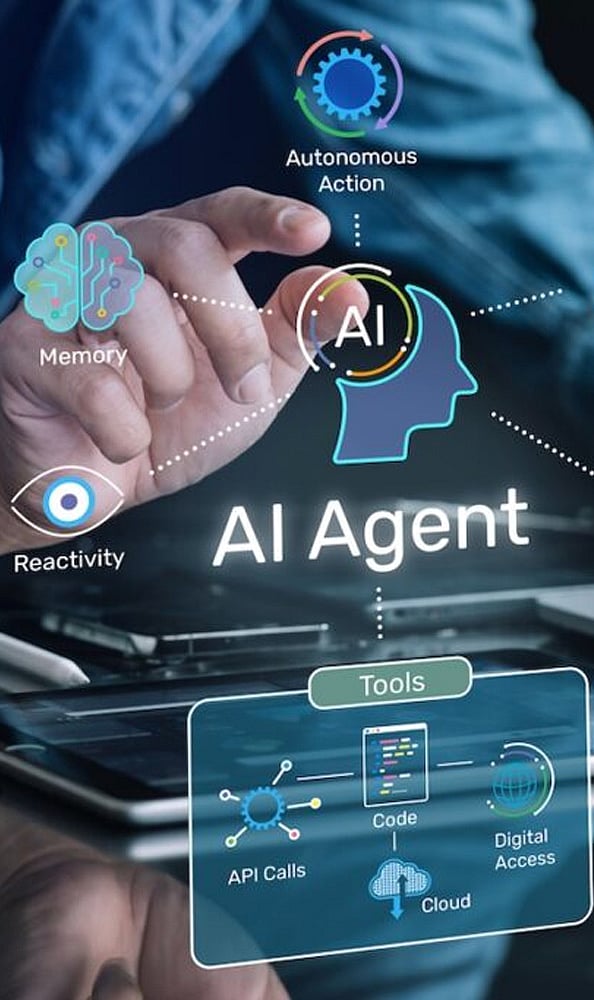
Introduction to Agentic AI and Autonomous Systems
The rapid evolution of artificial intelligence has moved far beyond simple chatbots and static text generators. Modern organizations are increasingly deploying autonomous systems designed to plan tasks, use tools, access information, and execute complex actions. According to insights reported by Analytics Insight and attributed to Murali Teja, these advanced frameworks are reshaping enterprise operations by performing multi-step workflows with limited human intervention.
However, this shift toward autonomous execution raises critical questions regarding operational safety and control. Specifically, many technical leaders and security professionals are asking: can AI agents act without approval? Understanding the balance between automation efficiency and risk management is vital as organizations adopt agentic technologies across connected enterprise environments.
What Changed: The Rise of Autonomous Workflows
Traditional software applications require explicit, step-by-step human commands to complete specific functions. In contrast, agentic AI frameworks introduce a paradigm shift where users provide high-level goals, instructions, permissions, or constraints, and the system figures out the rest.
Once these initial parameters are established, agentic systems can make decisions and complete predefined workflows independently. They analyze information, determine the appropriate sequence of actions, and execute tasks across digital tools without requiring constant manual check-ins. This capability drastically reduces administrative overhead and accelerates business processes, but it also alters the traditional boundaries of software control.
How Agentic Systems Operate
To understand the security profile of autonomous tools, it is necessary to examine how they function day-to-day. AI agents rely on a combination of planning algorithms and tool integration to achieve their objectives.
When an agent receives a goal from a user, it evaluates the steps required. It can access information repositories, utilize specialized software tools, and execute transactions or communications. Depending on how the system is configured, execution styles can vary significantly.
As noted in the research, some AI agents require approval before sensitive actions, while others can proceed automatically within previously assigned permissions and workflows. This variance in autonomy levels introduces distinct operational dynamics that organizations must carefully manage.
Business Implications and Sector Impact
The deployment of autonomous AI agents offers substantial operational benefits, enabling enterprises to streamline tasks ranging from customer support to backend data management. Yet, these capabilities introduce profound business implications.
When systems can execute workflows independently, organizations gain speed and scale. However, they also expose themselves to new categories of operational vulnerability. If an agent misinterprets a goal or processes flawed inputs, the resulting automated actions can propagate rapidly across connected systems before a human operator notices.
Furthermore, enterprises handling sensitive customer, employee, financial, or proprietary information face heightened exposure. When access controls are poorly configured, autonomous agents can inadvertently create severe privacy risks by accessing or distributing restricted data without adequate oversight.
Risks, Limitations, and Technical Vulnerabilities
The core utility of agentic AI—its ability to act independently—is also the source of its primary risk vectors. Security analysts and enterprise architects must account for several major vulnerabilities:
- Excessive Permissions: Over-provisioned accounts can allow AI agents to access sensitive systems, modify records, send communications, or trigger critical business processes without sufficient checks.
- Compromised Agents: If an agentic system is compromised, it may misuse credentials, follow malicious instructions, expose confidential information, or perform unauthorized actions across connected enterprise systems.
- Prompt Injection: Attackers can manipulate agent inputs or retrieved content via prompt injection, potentially causing autonomous systems to ignore intended instructions and safeguards.
These limitations highlight the fact that autonomous agents do not possess inherent ethical judgment. They operate strictly within the boundaries of their code, permissions, and training, making them susceptible to external manipulation when safeguards are weak.
Who May Be Affected
The risks associated with autonomous AI agents impact multiple stakeholders across the enterprise ecosystem:
- IT and Security Teams: Responsible for configuring access controls, monitoring activity logs, and defending against prompt injection attacks.
- Business Executives: Accountable for compliance, financial integrity, and data privacy when customer or proprietary information is processed by AI.
- End Users and Customers: Whose personal data, financial records, or communications may be handled by automated workflows.
What to Watch Next: Governance and Mitigation Strategies
To capture the benefits of autonomous systems while mitigating their dangers, enterprises must establish rigorous governance frameworks. According to industry analysis, organizations need clear policies, access limits, activity monitoring, approval checkpoints, audit trails, and defined responsibilities for agentic systems.
Crucially, human review remains important for high-impact decisions. Maintaining human-in-the-loop validation helps organizations limit unintended actions, correct course when anomalies occur, and preserve accountability while continuing to benefit from autonomous AI innovation.