
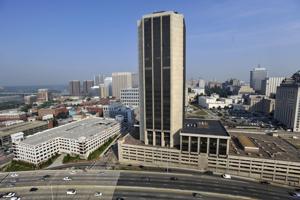
The state of Virginia is holding a one-day public fire sale of surplus property at the James Monroe Building, marking a major milestone in the winding down and pending sale of the aging downtown Richmond skyscraper. With multiple state agencies having already relocated to new offices across the city, the Virginia Department of General Services is clearing out remaining office equipment, furniture, and furnishings to prepare the 45-year-old property for its next chapter.
What Changed
The Virginia Department of General Services is opening the doors of the James Monroe Building, located at 101 N. 14th St., for a one-day public surplus sale. The event takes place on Saturday from 8 a.m. to 2 p.m. on the first floor of the building. Free public parking for attendees is available at 190 Old 14th St., situated behind the Virginia Department of Transportation Annex Building on East Broad Street.
According to state officials, the Department of General Services previously offered the surplus property to other state agencies first. Only after fulfilling internal state needs did the agency decide to offer the remaining items to the general public. Items available for purchase include office chairs, sofas, tables, desks, filing cabinets, and various other types of equipment previously utilized by state government operations.
Department of General Services spokesperson Macilyn Lipford highlighted the pragmatic nature of the event, explaining that the public offering creates cost-saving opportunities for the community while keeping durable goods in circulation. Buyers attending the Saturday event must abide by strict logistics rules: the state accepts cash or credit cards, all transactions are cash-and-carry, and buyers bear full responsibility for loading their purchased items into their own vehicles.
Context and Background on the James Monroe Building
The James Monroe Building is a 29-story state government office tower that has stood in downtown Richmond for 45 years. However, years of operational wear led state leaders to reevaluate its viability. The General Assembly and then-Governor Glenn Youngkin mutually agreed that it was no longer cost-effective to renovate the towering structure and replace its essential operating systems. Consequently, leaders made the strategic decision to either sell or demolish the high-rise.
The state officially placed the building on the market in the fall of prior years. By June, the Department of General Services confirmed it had secured a prospective buyer under a proposal for residential development. While negotiations continue, DGS spokesperson Macilyn Lipford stated that a firm sale date will be determined as those talks conclude. Lipford also noted that the identity of the buyer will remain confidential until negotiations are entirely finalized, and she expects the building to be fully vacant by the end of the year. This timeline aligns with earlier expectations shared by DGS Director Banci Tewolde, who told state legislators early in the year that she anticipated the building would be empty by June.
Sector Impact and Agency Relocations
The winding down of the James Monroe Building has triggered a widespread logistical redistribution of state government entities across downtown Richmond and surrounding areas. To maintain continuous public administration, multiple departments and divisions have been relocated to alternative leased spaces and state facilities:
- The Department of Accounts and the Department of Human Resources Management relocated to Main Street Centre at 6th and Main streets.
- The Office of the State Inspector General moved to Reid’s Row on Governor Street near Capitol Square.
- The Department of Veterans Services and the Department of Small Business and Supplier Diversity secured leased space at 600 E. Broad St.
- The Auditor of Public Accounts established offices at Riverfront Plaza on East Byrd Street.
- Portions of the Department of Education moved to leased space at 701 E. Franklin St.
- The Virginia Department of Health Division of Pharmacy Services shifted operations to 7870 Villa Park Drive in Henrico.
- A state employee personnel agency clinic moved into the Madison Building on Governor Street.
- The Department of General Services information systems and services operation relocated to the Washington Building on Capitol Square.
- Additionally, the State Council of Higher Education for Virginia (SCHEV) has planned a move into leased space located in the Truist Building on East Main Street.
Future Site Redevelopment Plans
The transition extends beyond the James Monroe Building itself. Virginia has laid out an extensive timeline to redevelop the adjacent site of the Virginia Department of Transportation Annex. The state plans to construct a brand-new state office building on the VDOT Annex site. Demolition of the annex is scheduled for next year, with construction slated to begin in 2028 and final completion expected by 2031.
Limitations and Uncertainties
While the broad strokes of the property transition are clear, certain details remain subject to ongoing negotiations. Notably, the exact identity of the prospective buyer for the James Monroe Building has not yet been publicly disclosed by the Department of General Services. Furthermore, while state officials anticipate that negotiations will conclude and finalize the sale soon, an exact calendar date for the final transaction closure has not been formally announced.
Business Implications and What to Watch Next
The surplus property fire sale offers a practical mechanism for the state to dispose of heavy office inventory without adding to municipal waste streams, while simultaneously providing affordable furniture options for local businesses and residents. For downtown Richmond real estate watchers, the conversion of a 29-story state office tower into residential use represents a significant shift in urban land-use patterns, balancing government consolidation with private downtown housing development.
Observers and stakeholders will be watching for the formal conclusion of the building sale negotiations, the official identification of the residential developer, and the initiation of the VDOT Annex demolition scheduled for next year as the multi-year redevelopment roadmap moves forward.