
What Changed in NASA’s Commercial Crew Strategy
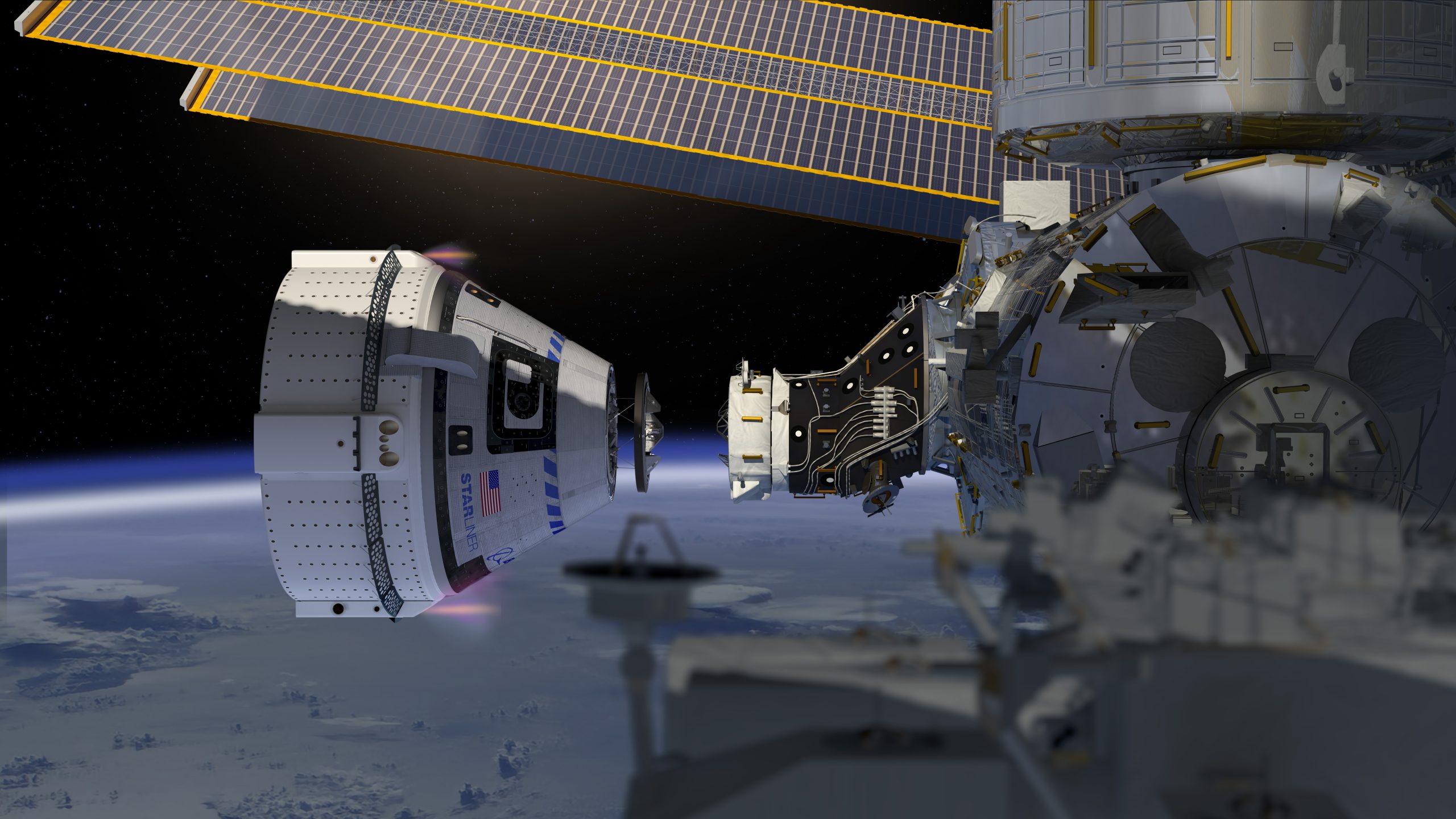
NASA has formally revised its approach to low-Earth orbit access by injecting an additional $359 million into Boeing’s commercial crew efforts while committing to multiple future operational flights. Under this updated arrangement, the agency is contracting with Boeing to fly its Starliner capsule at least five more times, with the scope potentially expanding up to seven missions. The renewed commitment follows emerging shifts in the private launch sector, primarily SpaceX’s strategic pivot toward next-generation infrastructure.
The announcement was delivered by NASA Administrator Jared Isaacman during a press conference on Monday. Isaacman confirmed that SpaceX intends to sunset its legacy systems, creating an operational requirement for NASA to secure continuous domestic access to the International Space Station (ISS). Isaacman stated: “SpaceX intends to sunset older platforms like Falcon and Dragon as they concentrate on their next-generation capability, Starship.” In light of this strategic redirection, the Boeing Starliner contract has become the central vehicle for NASA’s near-term operational redundancy.
The agency affirmed its reliance on the platform as its long-term bridge, declaring that “Starliner has an important role to play” and adding that “Starliner is what we’re intending to fly into the future.” The transition secures a commercial lifeline for the aerospace manufacturer at a time when the future of its space transport architecture had faced significant operational and corporate questions.
Detailed Financial Breakdown: The $359 Million Modification and Program Outlays
The newly allocated $359 million represents targeted development and remediation capital designated specifically to remodel the Starliner vehicle. Prior to this award, NASA had provided Boeing with $5.1 billion under a fixed-price arrangement within the Commercial Crew Program. With the integration of this $359 million supplemental payment, total agency disbursements to Boeing will reach $5.5 billion before the spacecraft successfully completes its first operational crew-rotation mission.
To contextualize these expenditures within the broader Commercial Crew framework, NASA’s total payments to SpaceX across 13 Commercial Crew missions through its scheduled final flight, Crew-17, will total $5.9 billion. While SpaceX achieved regular operational cadence under its baseline commitments, Boeing’s path to service has required structural financial adjustments, taking cumulative disbursements to $5.5 billion across development and remediation phases.
Industry reporting, including analysis from Rich Smith, indicates that Boeing was reportedly considering walking away from the Starliner program prior to NASA providing this new financial incentive. The substantial capital commitment under the revised Boeing Starliner contract was therefore instrumental in ensuring the contractor remained engaged in delivering an operational transport capsule for low-Earth orbit missions.
Flight Manifest and Milestone Timeline: Starliner 1 and Starliner 2
The revised operational roadmap establishes a deliberate, multi-year flight schedule designed to validate engineering redesigns before full crew rotations begin. Under the schedule revealed by NASA leadership, the return to flight will begin with an uncrewed validation test designated as Starliner 1.
- Starliner 1 (Uncrewed Flight): Slated to launch in either December 2026 or January 2027. This mission will serve as an uncrewed orbital flight to demonstrate the efficacy of system re-engineering.
- Evaluation and Integration Pause: An 18-month programmatic pause will immediately follow Starliner 1. This window will allow NASA and Boeing technical teams to analyze telemetry, examine physical systems, and confirm flight integrity.
- Starliner 2 (Crewed Operational Flight): Scheduled to launch in mid-2028, this mission will transport crew to the International Space Station, marking the vehicle’s formal integration into routine operational rotations.
- Subsequent Contracted Flights: Following Starliner 2, the contract covers at least four additional missions, with the potential to reach up to seven flights in total.
The extensive interval between Starliner 1 and Starliner 2 underscores the methodical approach NASA and Boeing are taking to certify the platform, deliberately building in an 18-month buffer to evaluate all mission milestones before committing agency personnel to standard rotation flights.
Technical Remodeling: Addressing Valves, Helium Leaks, and Thrusters
The capital injection provided by the $359 million modification is earmarked directly for engineering overhauls targeting several distinct mechanical anomalies that have challenged the platform throughout its developmental testing. Engineering evaluations conducted during past operations—involving personnel including astronauts Butch Wilmore and Suni Williams alongside Commercial Crew Program management such as Dana Weigel and Boeing executive John Mulholland—identified acute hardware vulnerabilities that required hardware remodels.
The engineering scope supported by the funding focuses on three primary technical challenges:
- Stuck Valves: Past flight attempts and integration processing revealed propellant valve sticking caused by environmental corrosion and chemical interactions, requiring redesign of valve seals, actuation mechanisms, and isolation protocols.
- Helium Leaks: The spacecraft’s propulsion manifold suffered localized helium leaks within its pressurization system, necessitating line re-evaluations, redesigned coupling components, and improved seal integrity.
- Thruster Failures: Degradation and unexpected shutdowns among reaction control thrusters during orbital maneuvers highlighted the need for revised thermal protection, propellant feed reconfiguration, and modifications to thruster housing geometries.
By directing the $359 million specifically toward remodeling these subsystems, NASA intends to clear the remaining hardware hurdles that have prevented the platform from receiving full flight certification.
SpaceX Fleet Sunset: Phasing Out Falcon 9 and Crew Dragon
The operational necessity driving the expanded Boeing Starliner contract stems directly from SpaceX’s scheduled retirement of its heritage low-Earth orbit architecture. According to agency disclosures, SpaceX plans to phase out both its Falcon 9 reusable launch vehicle and its Crew Dragon human-rated capsule.
The operational phaseout includes the following baseline schedule milestones:
- Launch Order Cutoff: SpaceX has reportedly stopped taking new commercial orders for Falcon 9 launches after 2028.
- ISS Mission Termination: SpaceX will discontinue all operational flights to the International Space Station after 2030.
- Strategic Pivot to Starship: SpaceX’s operational refocusing is centered entirely on developing, certifying, and deploying Starship as its consolidated heavy-lift and crew transport vehicle.
- Contractual Culmination: SpaceX’s active commitment to NASA’s ISS crew rotation culminates with mission Crew-17, bringing its cumulative earnings under the Commercial Crew Program to $5.9 billion across 13 missions.
Because SpaceX has placed a definitive shelf life on the Falcon 9 and Crew Dragon systems, NASA requires an alternative American platform to maintain persistent access to the orbiting laboratory through the planned lifespan of the ISS.
Business and Strategic Implications for Boeing and NASA
The contract modification carries profound business implications for Boeing’s defense, space, and security portfolio. Having incurred significant absorption costs under the original $5.1 billion fixed-price agreement, Boeing faced ongoing commercial friction. With reports confirming that the corporation was considering walking away from Starliner entirely, NASA faced the risk of a single-provider monopoly followed by a total domestic transport gap once Crew Dragon is retired.
By structuring a deal providing an additional $359 million for vehicle remediation, NASA protected its dual-provider strategy while preserving institutional redundancy. Furthermore, the contract relies on launch services coordinated through United Launch Alliance, maintaining the wider supply chain that supports national space architecture.
From NASA’s perspective, the decision preserves operational certainty. Boeing’s Starliner is currently assessed as the spacecraft closest to being ready to fulfill the operational role being vacated by Crew Dragon. Without Starliner, the agency would risk losing sovereign crew access to low-Earth orbit after 2030 should alternative private launch platforms experience extended development delays.
Risks, Uncertainties, and Operational Limitations
Despite the substantial capital injection, several key uncertainties remain embedded in the revised schedule:
- Uncrewed Test Launch Window: There is uncertainty regarding whether the initial Starliner 1 test flight will lift off in December 2026 or January 2027. Minor supply chain adjustments or technical validations could push the target date across calendar years.
- Eventual Flight Total: While NASA has definitively contracted for five operational flights, it remains unconfirmed whether the agency will exercise options to expand that total up to the maximum potential of seven missions.
- Corporate Resolve: Although the $359 million incentive successfully addressed Boeing’s reported considerations about exiting the program, the timeline leaves an 18-month gap between missions, during which cost controls and program milestones will face continued oversight.
- Technical Verification: Remodeling stuck valves, persistent helium leaks, and thrusters involves resolving interrelated propulsion and manifold issues that cannot be fully certified until telemetry is analyzed following the Starliner 1 flight.
Sector Impact and What to Watch Next
The developments announced by Administrator Isaacman signal a critical multi-year transition for the commercial space flight sector. Moving forward, observers, industry participants, and program managers should track several key milestones:
- Remodeling Execution: Boeing’s technical progress throughout late 2026 as it completes engineering modifications on Starliner’s valves, thruster assemblies, and helium lines.
- Starliner 1 Launch Execution: The uncrewed test flight window slated for December 2026 or January 2027, which will validate whether the hardware remodeling has resolved previous anomalies.
- 18-Month Technical Review: The telemetry evaluation and hardware inspection process scheduled between late 2026/early 2027 and mid-2028.
- SpaceX Sunset Cadence: SpaceX’s gradual wind-down of Falcon 9 orders approaching the 2028 order cutoff and the final operations leading to Crew-17.
- Starliner 2 Mission Readiness: The operational milestone in mid-2028 when Starliner returns to crewed operations to deliver astronauts to the ISS.
By investing $359 million into remodeling the capsule and committing to as many as seven total flights, NASA has secured its backup pathway for low-Earth orbit access, establishing the Starliner program as the successor platform for ISS transport as the Falcon and Dragon era winds down.