
Canada fast-tracks Pacific Link oil pipeline
Canada has designated the proposed Pacific Link oil pipeline as a project of national interest, a move that allows for a speedier regulatory review of the infrastructure project. The decision has drawn immediate criticism from Washington state officials, who have raised concerns about environmental risks and the region’s capacity to respond to potential oil spills.
The pipeline, which would run from the Edmonton region in Alberta to a new export terminal at the Port of Vancouver’s Roberts Bank in British Columbia, is a significant infrastructure development. It is designed to carry one million barrels of crude oil per day over a distance of 775 miles. The project is expected to utilize the existing Trans Mountain Pipeline corridor and leverage established relationships with First Nations communities.
Governor Ferguson's reaction
Washington Governor Bob Ferguson has publicly stated that he is “disappointed” by the decision to fast-track the pipeline. In a statement, Ferguson emphasized that the resources currently available to respond to a major oil spill are insufficient. He and Washington State Attorney General Casey Sixkiller asserted that if the project proceeds, it must come with a corresponding commitment to increase the region’s capacity to prevent and respond to a catastrophic spill.
Ferguson noted that if the project moves forward, it is critical that the Canadian government make detailed commitments to safeguard the shared marine waters and address the gaps in current response capabilities. The shared waters in question include the Salish Sea, the Strait of Juan de Fuca, and North Puget Sound, which are ecologically sensitive and economically vital for both Washington and British Columbia.
Project details and timeline
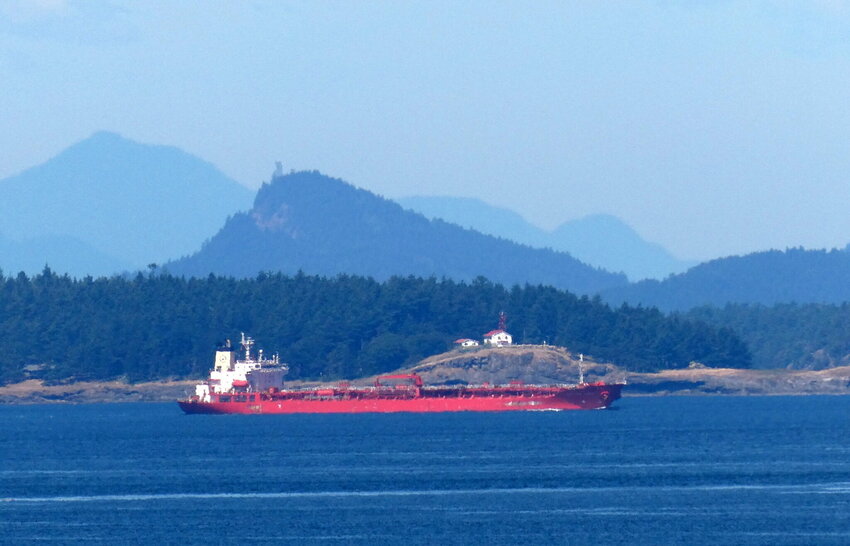
The Pacific Link pipeline is a major expansion of Canada’s oil export infrastructure. The project would increase tanker traffic through the shared border waters of Washington and British Columbia. The supertankers envisioned for the route would have a capacity of 92 million gallons of oil, which is eight times the volume of the Exxon Valdez spill. This significant increase in tanker traffic has raised concerns among environmental groups and local communities.
The pipeline is expected to be operational by the early 2030s, with oil potentially flowing through the system by that time. The project’s designation as a project of national interest by Prime Minister Mark Carney on a Thursday in 2026 has accelerated the regulatory process, allowing for a faster review of the project’s environmental and economic impacts.
Environmental and community concerns
The fast-tracking of the Pacific Link pipeline has drawn criticism from environmental groups and local communities. The Georgia Strait Alliance, an environmental group in British Columbia, has opposed the export terminal at Roberts Bank. Maithili Devadas of the Georgia Strait Alliance stated that the project is being fast-tracked without concern for long-term impacts on ecosystems, communities, and people who depend on them.
Northern Washington tribes, including the Lummi, Samish, Swinomish, and Makah, have opposed a previous Canadian pipeline expansion. Their opposition is rooted in concerns about the environmental and cultural impacts of increased oil transport through their traditional territories. The tribes have raised concerns about the potential for oil spills, which could have devastating effects on their way of life and the marine ecosystems they depend on.
U.S. congressional response
U.S. Representative Rick Larsen has also voiced concerns about the Pacific Link pipeline. He stated that the project is “not ready for prime time” and that speeding up the review process will only make the situation worse. Larsen claimed that Canada’s plan puts sensitive marine habitats at risk and raises the chance of a devastating spill occurring before the U.S. and Canada can put updated plans in place.
Larsen’s comments reflect a broader concern among U.S. officials about the environmental and economic risks associated with the pipeline. The shared marine waters of Washington and British Columbia are home to a diverse range of marine life, including salmon, orcas, and other species that are vital to the region’s ecosystem and economy. An oil spill could have long-lasting effects on these species and the communities that depend on them.
Regulatory and legal implications
The designation of the Pacific Link pipeline as a project of national interest has significant regulatory and legal implications. It allows for a faster review of the project’s environmental and economic impacts, but it also raises questions about the adequacy of the current regulatory framework. Washington state officials have called for a more rigorous review of the project, arguing that a project of this scale should face an especially high level of scrutiny.
The Washington State Department of Ecology and the Washington State Department of Fish and Wildlife are monitoring the project and its potential impacts on the state’s environment and natural resources. The departments are working with federal and state agencies to ensure that the project meets all environmental and safety standards. They are also engaging with local communities and environmental groups to gather input on the project’s potential impacts.
Economic and business implications
The Pacific Link pipeline is expected to have significant economic and business implications for both Canada and the United States. The project is expected to create jobs and stimulate economic growth in the regions where it is located. It is also expected to increase Canada’s oil exports to international markets, which could have implications for global oil prices and supply.
However, the project has also raised concerns about the economic risks associated with increased tanker traffic. The potential for an oil spill could have significant economic consequences for the fishing, tourism, and shipping industries in the region. The cost of cleaning up an oil spill could be substantial, and the long-term economic impacts could be even greater.
What to watch next
The fast-tracking of the Pacific Link pipeline is likely to lead to further debate and controversy in the coming months. Washington state officials are expected to continue to raise concerns about the project’s environmental and economic risks. Environmental groups and local communities are also likely to continue to oppose the project, arguing that it poses a significant threat to the region’s ecosystem and way of life.
The regulatory review process is expected to be a key focus in the coming months. The outcome of the review will have significant implications for the project’s future and the region’s environment and economy. It will also have implications for the relationship between the U.S. and Canada, as both countries work to balance their economic interests with their environmental responsibilities.