
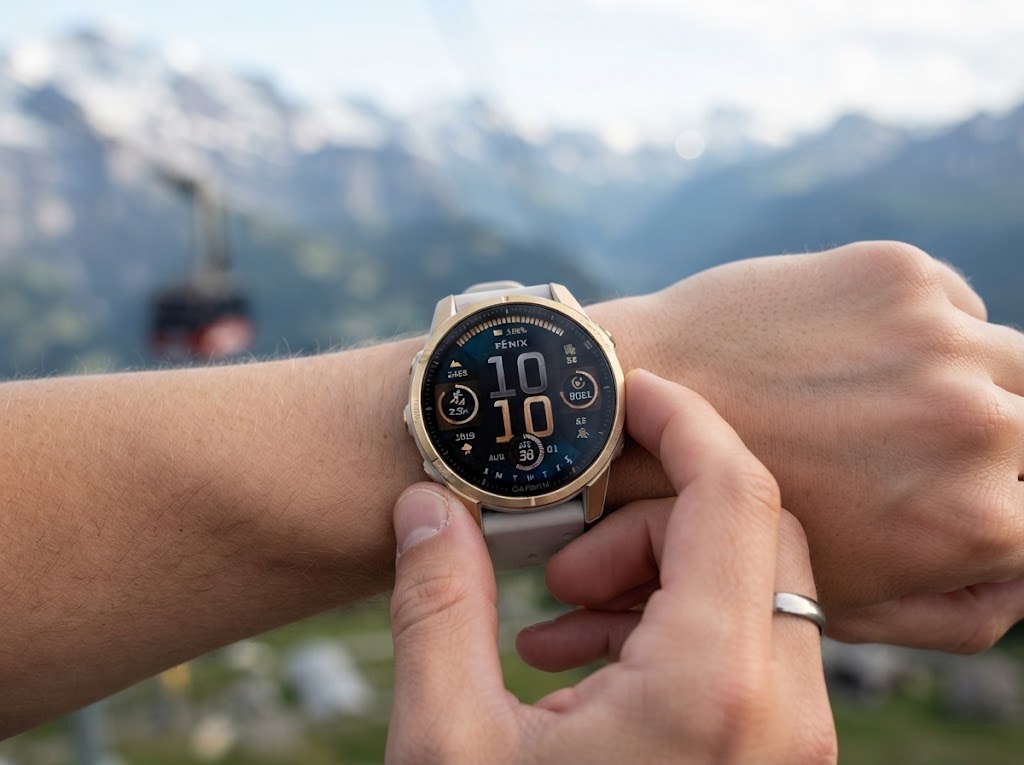
Garmin Fenix 8 users report problems and missing features following update cycles that were ostensibly designed to improve device stability and introduce new capabilities. According to user reports circulating following the completion of the rollout for firmware version 23.39, the update has introduced critical hardware integration issues for a segment of the device base, disabling core optical monitoring features and disrupting health tracking metrics.
While software updates for high-end multisport and smartwatches are routine maintenance events intended to patch legacy vulnerabilities and roll out enhancements, this particular iteration has triggered widespread user frustration. Because modern fitness wearables rely entirely on continuous physiological data streams to drive recovery algorithms, training load calculations, and daily health assessments, software-induced sensor failures degrade the fundamental utility of premium hardware.
What Changed
The core issue centers on firmware version 23.39. Garmin completed the rollout of version 23.39 to address existing bugs and introduce several new features, including the ‘OK Garmin’ voice wake phrase, a running workout, and Garmin Coach improvements. However, instead of delivering a seamless operational experience, the update has caused unexpected hardware malfunctions for numerous owners.
Affected users report that firmware version 23.39 disables the optical heart-rate sensor entirely. Specifically, owners describe the sensor’s LEDs going dark and readings vanishing from the display. Because the optical heart-rate sensor acts as a primary data input for multiple dependent features, its failure cascades into other tracking metrics. The disabled sensor also halts Pulse Ox monitoring and overnight heart rate variability (HRV) calculations. Additionally, some users report missing sleep and Body Battery data following the installation.
Complaints regarding software instability are not entirely new to this release cycle. Similar user complaints also appeared with earlier software version 23.31, indicating that underlying stability hurdles may have persisted across successive patches.
Scope and Limitations of the Issue
Determining the exact scale of the disruption remains challenging. Garmin has completed the rollout of version 23.39, but available reports do not indicate that every watch is affected. Many owners have successfully updated without experiencing hardware disruptions, suggesting that the trigger may involve specific device configurations, regional variants, or hardware batch differences.
Furthermore, the problem may extend beyond the Fenix 8. Similar reports have emerged from Tactix 8 users following recent software updates, suggesting that the underlying firmware architecture shared across Garmin’s high-end tactical and multisport platforms might be susceptible to identical sensor integration faults. However, attribution regarding whether the issue definitively extends beyond the Fenix 8 remains provisional based strictly on these parallel Tactix 8 reports.
Troubleshooting Steps and Variable Fixes
As of now, there is no universal fix provided by Garmin or discovered by the user community. Workarounds vary significantly in their effectiveness, leaving affected owners to experiment with manual troubleshooting procedures.
Some owners have successfully restored the optical heart-rate sensor by powering the watch down completely for at least 90 seconds before restarting it. Others have resorted to performing a factory reset to clear out corrupted system caches or lingering configuration errors from the update process.
However, these recovery methods are not foolproof. Reinstalling the firmware or performing an extended shutdown has not worked for everyone, leaving a portion of the user base stuck with non-functional sensors and incomplete health logs until an official patch or dedicated hotfix is deployed.
Business Implications and User Impact
For high-end sports technology manufacturers, device reliability forms the cornerstone of brand loyalty. Premium multisport watches command substantial financial investments from consumers who expect uninterrupted performance during training regimens and daily wear. When firmware updates disable essential monitoring hardware like optical heart-rate sensors, it erodes trust in the automated over-the-air update ecosystem.
Athletes and health-conscious consumers depend on longitudinal data—such as overnight HRV, sleep staging, and Body Battery scores—to manage training intensity and prevent overtraining. The sudden loss of these metrics, combined with the frustration of troubleshooting persistent bugs spanning versions 23.31 and 23.39, highlights the ongoing challenge manufacturers face in balancing rapid feature expansion against rigorous regression testing across diverse hardware iterations.
What to Watch Next
As affected users continue to share troubleshooting workarounds and document their hardware status online, attention turns to Garmin’s engineering response. Observers will be monitoring for an official advisory or a subsequent firmware hotfix designed to address the optical sensor failures permanently. Additionally, confirmation is needed regarding whether the anomalies observed in Tactix 8 units stem from the exact same root cause affecting the Fenix 8 ecosystem.