
Introduction: A Milestone Anniversary for Contemporary Craft
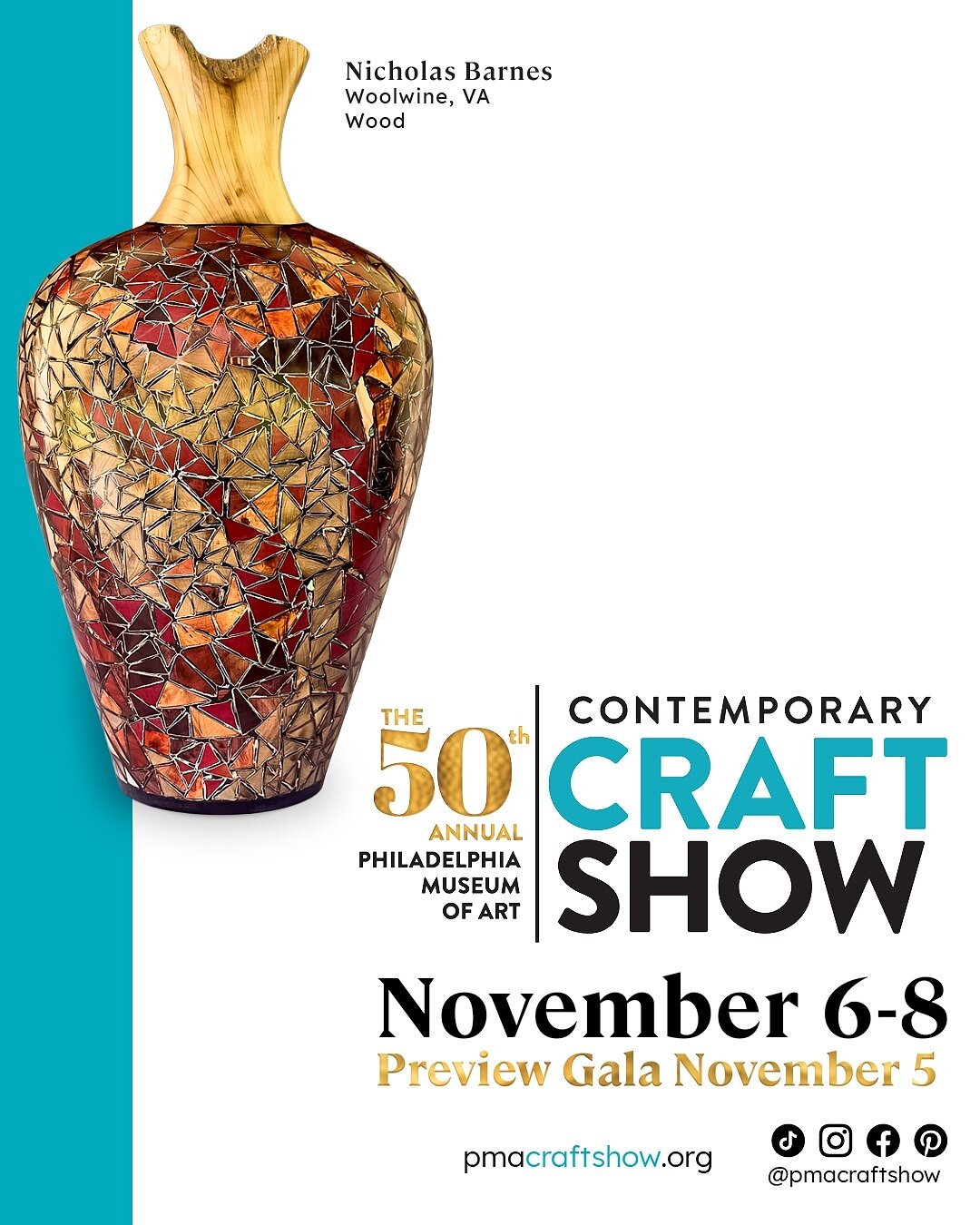
The 50th annual Philadelphia Museum of Art Contemporary Craft Show will take place from Friday, November 6 through Sunday, November 8, 2026, at the Pennsylvania Convention Center. Preceding the public weekend opening, an exclusive Preview Party will be held on Thursday, November 5, 2026. As one of the preeminent retail craft expositions in the United States, the event brings together 195 contemporary craft artists who were chosen through a competitive jury process. This golden anniversary marks five decades of bridging the contemporary maker community with cultural philanthropy.
Organizers have framed this year’s landmark gathering as both a retrospective honoring creative achievement and a preview of future directions in contemporary craft. “For half a century, we have championed the artists, makers, and visionaries who prove that handmade work is not only relevant but essential. This year’s show is a celebration of that legacy and a bold look at where contemporary craft is headed,” organizers stated, adding: “We invite everyone to come experience the extraordinary talent gathered under one roof this November.”
What Changed: Event Dates, Venue, and Schedule
The 2026 schedule centers on a four-day footprint at the Pennsylvania Convention Center in Philadelphia. The program formally begins with the Preview Party on Thursday, November 5, 2026, giving patrons early access to the works of the 195 juried artists. The general public exposition runs across three days:
- Thursday, November 5, 2026: Preview Party
- Friday, November 6, 2026: Public exposition day one
- Saturday, November 7, 2026: Public exposition day two, featuring scheduled guest speaker presentations
- Sunday, November 8, 2026: Public exposition concluding day
A central feature of the Saturday, November 7 program is a slate of presentations by three prominent guest speakers: Syd Carpenter, Roberto Lugo, and Adebunmi Gbadebo. Their involvement brings active critical dialogue and personal artistic perspectives into the weekend’s public schedule, highlighting ongoing conversations within the contemporary craft field.
The Jury Selection and 195 Participating Artists
Participation in the Contemporary Craft Show is strictly regulated by a competitive jury process. Each year, artists from across the nation submit their portfolios to an independent panel tasked with evaluating originality, technical execution, and artistic voice. For the 50th annual event, 195 contemporary craft artists earned entry.
The competitive nature of the jury review ensures that the show represents a diverse cross-section of handmade craft disciplines. Selected makers present their work directly to institutional curators, private collectors, interior designers, and general attendees. The retail format establishes a marketplace where makers can sell directly to the public while simultaneously raising proceeds that benefit museum operations.
Institutional Context and Origins Since 1977
The craft show was established in 1977 and has operated on an annual cadence ever since. It is presented jointly by The Women’s Committee of the Philadelphia Museum of Art and the Craft Show Committee. Longtime leadership and committee representation, including figures such as Nancy O’Meara, have maintained the institutional structure that guides the event from year to year.
The show carries historical distinction: it is described as the first retail craft show organized by a volunteer committee to benefit a non-profit institution. Prior to its launch in 1977, museum auxiliary fundraising typically centered on balls, auctions, or traditional benefit galas. Establishing an expansive, commercial-scale retail market curated by an expert jury constituted a novel approach to cultural fundraising. This volunteer-led mechanism created a recurring revenue stream while expanding the visibility of contemporary craft inside an institution historically celebrated for historic fine arts.
The entity behind the show’s inception—The Women’s Committee of the Philadelphia Museum of Art—boasts an even longer operational heritage. Founded in 1883, the group is claimed to be one of the oldest women’s organizations supporting a cultural institution in the United States. For more than 140 years, the Women’s Committee has spearheaded auxiliary initiatives, of which the annual craft show has become the largest and most commercially successful.
Why It Matters: Financial and Sector Impact
Beyond its aesthetic and cultural significance, the event represents a substantial economic and operational engine for the Philadelphia Museum of Art. Over its lifespan, the craft show has raised more than $15 million in cumulative proceeds dedicated to the museum’s institutional priorities.
Museum fundraising models often struggle to create predictable, unrestricted, or dedicated funds for foundational museum functions. The more than $15 million generated by the craft show has bypassed this constraint by directly underwriting two primary institutional areas: educational programs and the museum’s Conservation Department.
Funding Educational Outreach and Public Programs
A major allocation of craft show revenues flows directly into museum educational programming. These funds help sustain public community access, educational tours, interpretive workshops, and youth learning initiatives designed to connect the regional population with the museum’s collections. By channeling retail marketplace proceeds into pedagogical services, the event supports broad public engagement with the arts.
Direct Capital Support for Museum Conservation
Equally critical is the financial lifeline the show extends to the Philadelphia Museum of Art Conservation Department. Art conservation is among the most resource-intensive disciplines in the cultural heritage sector, requiring cutting-edge technological infrastructure, highly specialized scientific instruments, and dedicated laboratory spaces.
Rather than relying solely on general operating budgets or intermittent endowment grants, the Conservation Department has leveraged dedicated craft show allocations to purchase vital analytical tools. Specifically, funds raised by the show have purchased specialized conservation equipment, including:
- A New X-Ray Source: Advanced non-destructive diagnostic imaging depends on high-precision radiation sources. In conservation laboratories, X-ray sources allow specialists to peer beneath outer paint or material layers, discovering underlying structural sketches, hidden structural armatures, repairs, and past degradation without damaging fragile artifacts.
- A New Camera System: State-of-the-art digital photographic documentation forms the baseline of technical art history and conservation logging. A specialized camera system enables high-resolution multispectral, ultraviolet, and macro photography, preserving detailed records of object conditions before and after restoration treatments.
- A Portable Microscope: In situ microscopic examination is essential when analyzing monumental, fragile, or permanently installed works that cannot easily be relocated to a centralized analytical laboratory. A portable microscope enables conservators to inspect paint layers, fiber weaves, metal patinas, and micro-fissures directly on site across museum galleries and storage archives.
These equipment acquisitions underscore the direct line between retail craft sales and high-level scientific preservation. Each transaction on the convention floor contributes indirectly to modernizing the analytical suite used to safeguard the Philadelphia Museum of Art’s permanent collections.
Business Implications for Contemporary Makers and Non-Profits
The continued longevity of the Philadelphia Museum of Art Contemporary Craft Show carries distinct business implications across cultural commerce and non-profit administration:
1. The Resilience of Juried Retail Models
In an era dominated by digital e-commerce marketplaces and online art brokerages, the enduring demand for an in-person, juried exposition demonstrates that tactile retail experiences remain commercially vital for high-end contemporary craft. Patrons, collectors, and interior designers seek direct engagement with the makers to appreciate material nuances, weight, texture, and technical intricacy—elements that digital storefronts cannot replicate.
2. Independent Artist Revenue Streams
For the 195 participating artists, acceptance into the show represents an important business benchmark. High foot traffic, institutional validation, and an audience of serious patrons provide these independent studios with substantial retail revenue, direct client relationships, and custom commission opportunities that support their practices year-round.
3. Volunteer-Led Philanthropic Governance
The partnership between The Women’s Committee and the dedicated Craft Show Committee demonstrates the sustained efficacy of volunteer auxiliary governance. While modern museum administration has grown increasingly professionalized, the volunteer committee model remains uniquely capable of executing high-overhead event logistics while directing millions of dollars back into museum operations.
Analytical Timeline and Institutional Uncertainties
While the official institutional communications celebrate the milestone as the “50th annual” exposition celebrating “50 years” or “half a century” of craft, the historical records and text reflect a nuanced timeline. Specifically, reference materials note developments taking place “Over its 49-year history,” alongside references to a 21% figure and its 1977 founding date.
When measuring time from the inaugural 1977 show to the November 2026 event, exactly 49 calendar years elapse between the baseline year and the current edition. However, when counting annual occurrences sequentially—beginning with the first show in 1977—the 2026 edition represents the 50th occurrence of the annual exposition. Institutional communications alternate between celebrating “50 years” of programmatic presence and citing the operational reality of its “49-year history.” Such minor variations in phrasing are common in multi-decade cultural institution milestones, reflecting the difference between elapsed operational years and numbered show editions.
Who May Be Affected
The execution of the 50th annual event directly affects several distinct stakeholder groups:
- Craft Artists and Makers: The 195 selected artists gain a premier venue to exhibit, sell work, and network with institutional leaders and collectors.
- Museum Conservators and Curators: Staff in the Philadelphia Museum of Art Conservation Department benefit from ongoing capital reinvestment in essential diagnostic and preservation equipment.
- Museum Visitors and Students: Beneficiaries of the museum’s educational programs gain access to resources underwritten by the event’s ongoing financial proceeds.
- The Regional Cultural Economy: Philadelphia’s hospitality, exhibition, and convention sectors receive direct economic activity driven by out-of-town artists, collectors, and visitors gathering at the Pennsylvania Convention Center.
What to Watch Next
As the November 2026 dates approach, attention will center on the logistical execution of the show and the public response to the 50th milestone edition. Key indicators to monitor include:
- Public Attendance and Retail Volume: Tracking attendance numbers across the November 6–8 public schedule, beginning with patron turnout at the November 5 Preview Party.
- Speaker Presentations: Public reception to the guest lectures delivered by Syd Carpenter, Roberto Lugo, and Adebunmi Gbadebo on Saturday, November 7.
- Fundraising Yields: The net financial return generated by the 50th edition, which will add to the more than $15 million raised since 1977.
- Future Capital Acquisitions: Announcements regarding future analytical instruments or educational initiatives slated to receive allocations from the 2026 show proceeds.
By pairing rigorous artistic jury standards with dedicated institutional support, the Philadelphia Museum of Art Contemporary Craft Show enters its fifth decade as a benchmark for museum-based retail fundraising.