
What Changed in Global Energy Markets
Global crude oil prices retreated on Wednesday as major consuming nations intervened to soothe fuel market volatility, reversing gains recorded earlier in the trading session. The initial upward momentum had been driven by intensified regional military activity in the Middle East, where fresh strikes carried out by Iran-backed Houthi militants against Saudi Arabia temporarily eclipsed signs of physical supply recovery. However, that upward trajectory reversed after member states of the International Energy Agency (IEA) confirmed an agreement to prioritize emergency diesel reserves.
By the close of trading, international benchmark Brent crude futures dropped 38 cents to settle at $100.20 a barrel. In the United States, West Texas Intermediate (WTI) crude futures experienced an even steeper decline, shedding $1.16 to finish the trading day at $88.28 per barrel. The downward settlement highlighted how quickly coordinated multilateral policy interventions can alter short-term market momentum, even against a backdrop of severe geopolitical friction across critical export corridors.
Price Action: Reversing the Geopolitical Risk Premium
Earlier in the Wednesday session, the market had priced in a sharp escalation of geopolitical risk. Brent crude had climbed following reports of cross-border strikes against Saudi infrastructure and elevated maritime friction near the Persian Gulf. Traders initially concluded that the expanding geographic scope of militant operations would overwhelm incremental additions to physical supply.
The subsequent retreat to $100.20 for Brent and $88.28 for WTI illustrated the market’s delicate balance. Traders weighed physical flow restoration against the threat of unexpected supply disruptions. When the IEA announced coordinated action targeting refined product tightness, the immediate supply-side fear subsided sufficiently to push both contracts into negative territory for the day.
The IEA Intervention: Prioritizing Emergency Diesel Stocks
The turning point in Wednesday’s session emerged when IEA member states confirmed a policy shift designed to ease fuel market pressure. Global energy authorities agreed to focus on “the prioritisation of the release of diesel stocks, to the extent possible, given the current tightness in diesel markets.” Surging fuel prices have placed acute pressure on global transportation networks and heavy industry, prompting governments to consider targeted product releases rather than relying solely on conventional crude drawdowns.
The announcement followed diplomatic coordination among leading industrialized economies. G7 nations agreed on Friday to release diesel reserves following pressure from the Trump administration. The concerted push demonstrated an ongoing willingness among political leaders to leverage strategic petroleum reserves to suppress fuel price spikes.
Addressing market readiness, the IEA signaled flexibility regarding additional actions, declaring that member nations remain “ready to release more of these stocks to the market if and when required.” This commitment provided psychological reassurance to market participants who had grown concerned about tightening product availability.
Strategic Reserves: The Numbers Behind the Action Plan
The current emergency intervention operates within a broader historical depletion of strategic emergency buffers established earlier in the year. Under the emergency action plan adopted in March, IEA member countries have already deployed approximately 325 million barrels of oil. That distribution leaves roughly 100 million barrels still unreleased under that specific March mandate.
Despite those substantial distributions, significant strategic cover remains available. Across all IEA member states, emergency reserves stand at an equivalent of 1.1 billion barrels. Within that 1.1-billion-barrel total, member nations hold more than 200 million barrels of diesel stocks. It is this specific 200-million-barrel diesel reserve that forms the foundation for the latest market stabilization efforts.
Supply Recovery: Saudi East-West Pipeline Resumes Operations
The policy measures enacted by consumer nations came alongside signs of recovery in core Middle Eastern delivery infrastructure. Saudi Energy Minister Prince Abdulaziz bin Salman reported that crude oil pumped through the Kingdom’s vital East-West pipeline had reached 5.8 million barrels as of Tuesday morning. The achievement marked a critical operational rebound for state oil infrastructure.
The East-West pipeline had been forced to shut down in early September after sustaining damage from drone strikes. The pipeline provides a crucial bypass across the Arabian Peninsula, enabling crude oil to reach Red Sea export terminals without passing through maritime chokepoints. Restoring throughput to 5.8 million barrels by Tuesday confirmed that physical transport repairs had progressed significantly, providing tangible evidence of supply restoration.
Geopolitical Escalation: Cross-Border Strikes and Aviation Targets
Despite the pipeline’s operational progress, regional security conditions worsened mid-week, injecting substantial volatility into daily trading. Iran-backed Houthi militants in Yemen launched fresh strikes against targets inside Saudi Arabia. These operations highlighted the ongoing physical vulnerability of Saudi industrial and transit hubs.
According to reports Tuesday from the Saudi aviation authority, airport facilities in the southern cities of Jazan and Najran were targeted in two separate attacks. The strikes on civilian aviation hubs near the Yemeni border reinforced trading desk fears that militant groups retain the operational reach to disrupt regional transport logistics and support facilities at will.
Maritime Tensions: Strait of Hormuz and Tanker Risks
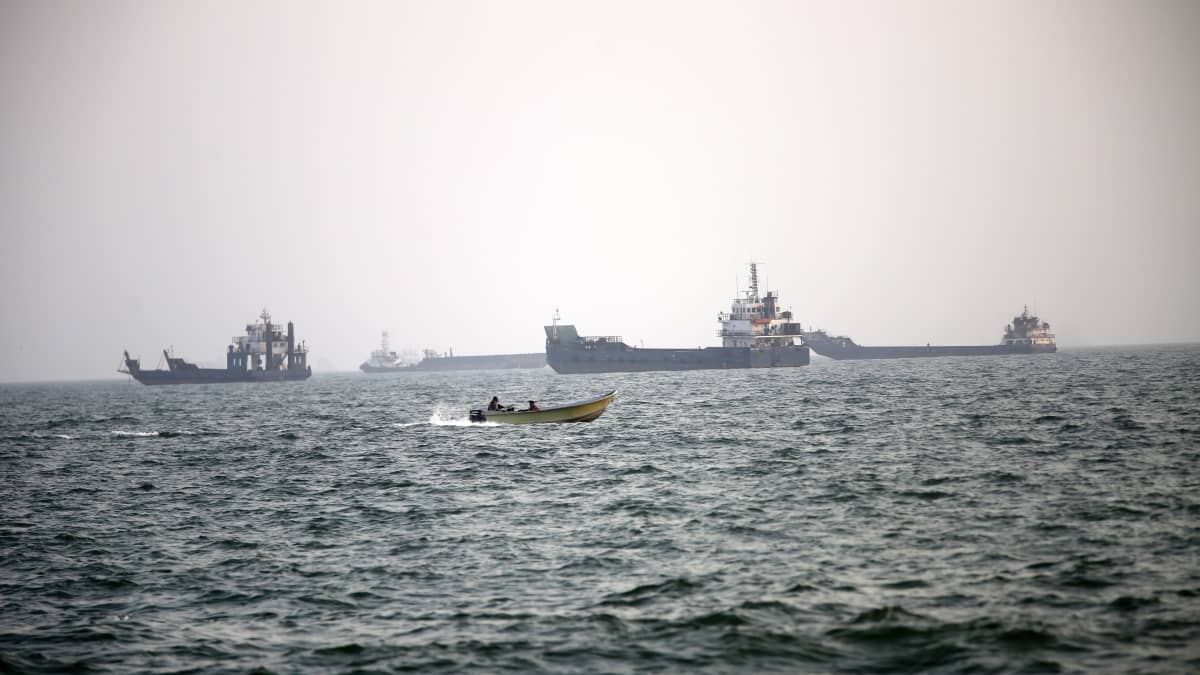
The cross-border drone and missile strikes were compounded by rising friction in the maritime trade lanes of the Persian Gulf. Iran made moves to step up attacks on commercial oil tankers transiting through the Strait of Hormuz. The strait represents the world’s most critical crude export passage, handling a major share of seaborne energy flows.
Renewed harassment of commercial shipping along this waterway reignited deep-seated anxieties among international commodity traders. Harassment of transit vessels creates immediate insurance and logistical hurdles, raising shipping freight rates and discouraging standard maritime operations, which contributed directly to the intraday price spike observed prior to the IEA intervention.
Market Analysis: Caught Between Supply and Geopolitical Risk
Market observers emphasized that the oil market is navigating contradictory fundamental forces. Market commentary from financial institutions, including perspectives from Naeem Aslam of Zaye Capital Markets and Samer Hasn of XS.com, noted that crude trading has become “caught between improving physical supply and persistent geopolitical risk.”
Analysts warned that supply risks remain structurally elevated despite ongoing pipeline recoveries. Specifically, market analysis highlighted that “The sustained ability of the Houthis in Yemen to target oil facilities hundreds of kilometers from the border keeps the risks of a renewed large-scale crude supply disruption present and high, and these risks could worsen if the Houthis feel the need to apply more pressure as a result of losing more territory.” This asymmetric capability ensures that any recovery in crude infrastructure remains shadowed by the prospect of abrupt disruptions.
Business and Sector Implications
The market developments witnessed on Wednesday carry tangible consequences across several key industrial segments:
- Downstream Refining and Fuel Distribution: The decision by the G7 and IEA to release diesel reserves directly targets acute tightness in the middle distillates market. Refiners and commercial distributors face shifting margin dynamics as governments release product inventories.
- Maritime Shipping and Freight Logistics: Escalating attacks on tankers transiting the Strait of Hormuz increase the risk profiles for tanker operators, maritime insurers, and charterers, placing upward pressure on shipping premiums.
- Aviation and Regional Transport: Drone and missile strikes targeting Jazan and Najran airports illustrate how regional military operations disrupt civil infrastructure, generating secondary operational disruptions for commercial aviation and supply chains.
- Upstream Energy Producers: Producers continue to navigate volatile realization prices, with Brent holding around $100.20 and WTI near $88.28, fluctuating between geopolitical conflict premiums and government-managed inventory drawdowns.
Limitations and Market Uncertainties
While the IEA and G7 declarations succeeded in halting Wednesday’s price advance, substantial operational uncertainties remain unresolved. Foremost among these is execution detail: despite the announcement prioritizing middle distillates, it is still unclear how much diesel will be deployed from the 200-million-barrel stockpile.
Without explicit release schedules, volume allocations by individual member states, or definitive timelines for delivery into commercial channels, physical fuel markets may remain vulnerable to sudden supply shocks. Furthermore, emergency strategic reserves represent finite government buffers rather than permanent additions to global daily production capacity.
What to Watch Next
Traders and corporate energy buyers are tracking several critical indicators to gauge the direction of the market:
- IEA Diesel Deployment Specifications: Clarification on the specific volumes of diesel to be released from the available 200 million barrels, as well as the drawdown timetable across G7 member states.
- March Action Plan Balance: Market reception if and when the remaining 100 million barrels from the March emergency action plan are triggered.
- East-West Pipeline Operations: Whether throughput volumes from the Saudi East-West pipeline maintain stability or expand further past the 5.8-million-barrel mark recorded on Tuesday morning.
- Regional Conflict Developments: Further military actions by Houthi forces against Saudi infrastructure and additional Iranian activity targeting commercial tankers in the Strait of Hormuz.