
Factual Lead
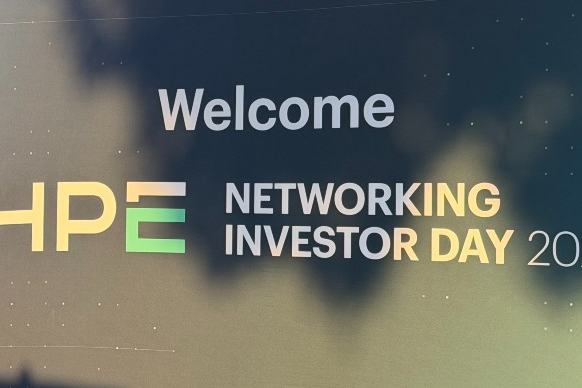
Hewlett Packard Enterprise (HPE) holds major strategic ambitions for its Juniper Networks-enhanced networking business. However, during a recent HPE Networking investor day, executives noticeably avoided mentioning market leader Cisco by name across multiple presentations, a panel discussion, and executive questioning sessions. Analysts attending the event observed this reticence and expressed that HPE needs to be far more aggressive in targeting its larger networking rival if it truly hopes to capture meaningful market share.
What Changed
Over a year has passed since the completion of HPE’s acquisition of Juniper Networks, a deal that required over a year of regulatory review to gain government approval. At the time the deal closed, Rami Rahim stated that combining technologies and teams was intended to compete directly with Cisco and the broader competitive landscape.
Yet, during the recent investor event, the operational posture told a different story. While HPE Networking head Rami Rahim touted successful integration efforts, financial synergies exceeding initial expectations, and a handful of combined market wins, direct references to Cisco were conspicuously absent from official stage presentations. Analysts noted that this guarded approach stands in stark contrast to smaller industry rivals and Cisco itself, neither of which shies away from naming competitors directly.
Despite the stage silence, leadership acknowledged the need for a more combative posture in private and separate discussions. Rami Rahim admitted during a one-on-one interview at the event that HPE needs to be aggressive and lean in across marketing, sales, and product development, although he still avoided uttering Cisco’s name directly during that exchange. Meanwhile, Sujai Hajela, EVP and GM for enterprise campus and branch at HPE Networking, noted that in certain European environments when fighting for competitive wins, “all gloves were off” regarding mentioning their larger rival.
Context and Background
The strategic tension follows a period of heavy corporate maneuvering. Earlier in the year, Cisco and HPE held their respective major customer and partner events in Las Vegas, located days and casino properties apart from one another.
When the Juniper Networks transaction officially closed, Rahim expressed visible enthusiasm as a technologist, framing the combination of teams and technologies as a direct challenge to the vibrant and competitive networking landscape, specifically calling out Cisco. Yet translating that initial executive rhetoric into day-to-day market aggression has proven complex.
Furthermore, technical positioning between the competitors has grown increasingly sharp. Sujai Hajela previously dismissed Cisco’s agentic AI efforts, stating that Cisco’s agent knows what to do but not how to do it, whereas HPE’s framework is already in production and running in the wild.
Why It Matters
Market share acquisition in the enterprise networking sector relies heavily on clear differentiation, aggressive sales execution, and direct competitive positioning. When a challenger brand avoids naming the undisputed market leader during major financial and strategic updates, analysts interpret it either as a cautious transitional phase or as an indicator of corporate hesitation.
To alter enterprise buyer behavior and convince customers to switch vendors, channel partners and enterprise clients need a clear narrative from HPE. Observers note that HPE’s upcoming combined sales channel aims to provide partners with a more robust inventory of products and services, creating the operational foundation required to challenge an incumbent.
Business Implications
HPE’s path forward involves turning its internal integration successes into outward market momentum. Rahim highlighted that financial synergies are tracking beyond initial expectations, which could provide the capital necessary to fund expanded marketing and sales initiatives.
The upcoming unified sales channel is designed to equip partners with a broader portfolio. However, business analysts emphasize that supply-side synergies alone will not drive enterprise customer migration away from established vendor ecosystems without a concerted, aggressive go-to-market strategy.
Risks or Limitations
Uncertainty remains regarding whether HPE’s lack of direct references to Cisco at the investor event represents a temporary, measured step toward ramping up competitive efforts or merely a sign of maintaining an overly comfortable status quo. If executives continue to shy away from direct confrontation in public forums, it may signal to the market that HPE is content nibbling at the edges rather than challenging Cisco head-on.
Furthermore, while technical assertions regarding agentic AI—such as Hajela’s claim that HPE’s framework is running live in the wild while competitors’ agents lack operational “know-how”—provide strong marketing talking points, translating these technical distinctions into enterprise-wide deployments remains an ongoing execution challenge.
Sector Impact
The enterprise networking sector thrives on intense rivalry. With HPE integrating Juniper Networks and attempting to reshape its competitive standing, the broader industry is watching to see how aggressive the combined entity will become. As smaller players watch how HPE handles its market leader rival, the overall competitive dynamics across campus, branch, and data center networking environments hang in the balance.
What to Watch Next
Industry stakeholders will monitor upcoming sales execution, marketing campaigns, and executive keynotes to determine if HPE’s field-level aggression—such as the “all gloves were off” European skirmishes noted by Hajela—begins to manifest consistently on a global scale. The rollout of the combined sales channel and its adoption by partners will serve as a primary indicator of whether HPE can successfully leverage its expanded portfolio to pressure the market leader.
Attribution
This reporting is based on statements, executive interviews, and presentations from HPE Networking’s investor day event, featuring insights from Rami Rahim, Sujai Hajela, and attending industry analysts.