
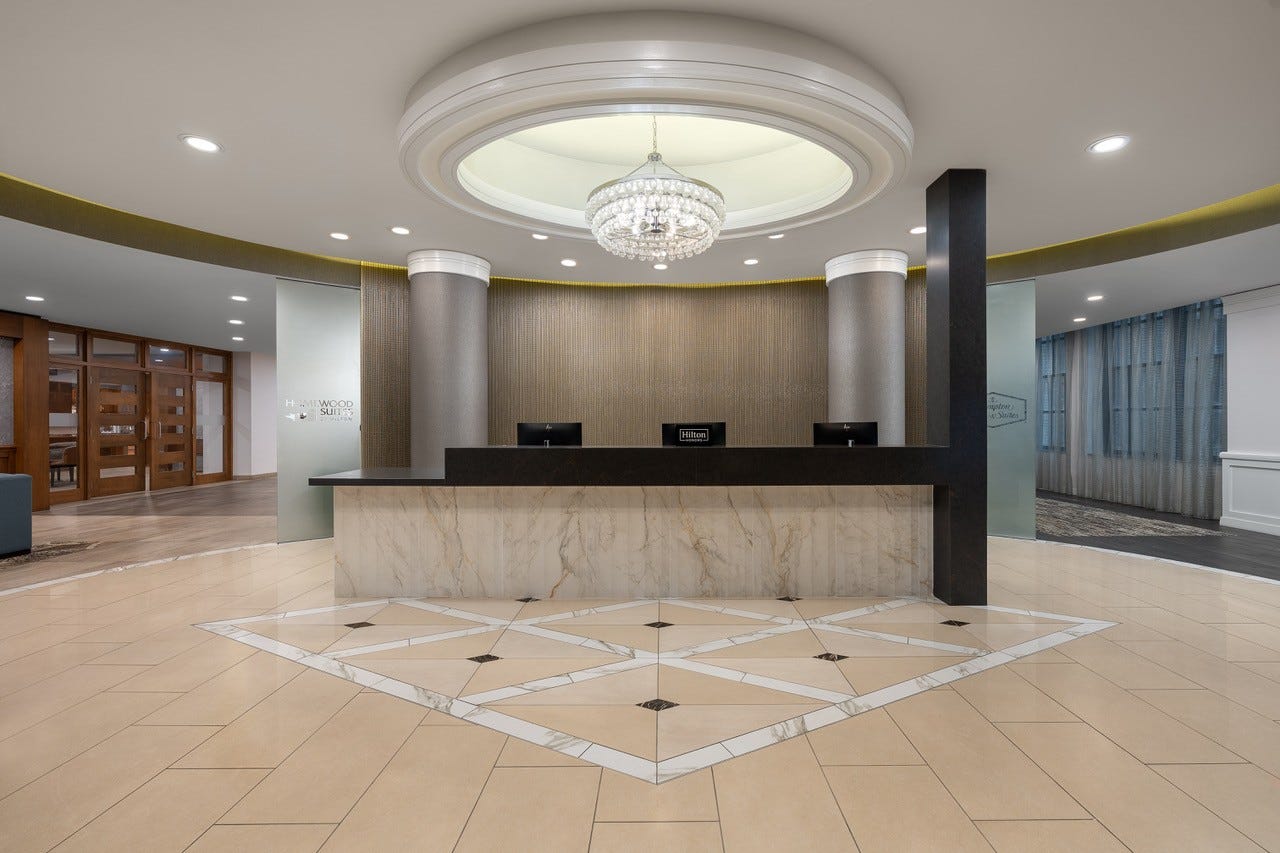
Executive Overview: A $5.5 Million Renovation on Vine Street
A historic Cincinnati hotel property housing dual Hilton hospitality brands has officially completed a major $5.5 million capital renovation project along the city’s prominent Vine Street corridor. According to news reports published on October 9, 2026, the comprehensive upgrades enhance the property operating as a combined Hampton by Hilton and Homewood Suites by Hilton location in downtown Cincinnati, Ohio. The multi-million-dollar reinvestment marks a significant milestone for the historic building, reflecting broader commercial real estate trends focused on preserving architecturally significant urban structures while modernizing guest facilities to meet contemporary hospitality standards.
The completion of the $5.5 million capital improvement initiative highlights the evolving dynamics of urban hotel management, where property owners and brand operators must balance historical architectural preservation with updated technical, functional, and aesthetic requirements. Located along Vine Street—a historic arterial road central to Cincinnati’s downtown business district and urban core—the property serves both transient short-term visitors and extended-stay guests through its dual-branded configuration. By refreshing interior spaces, guest accommodations, and operational infrastructure, the project seeks to bolster the asset’s competitive standing within the regional Midwest lodging market.
What Changed: The Scope of the Renovation Project
The newly unveiled upgrades represent a $5.5 million financial investment dedicated to modernizing the historic physical plant and guest-facing spaces across both the Hampton by Hilton and Homewood Suites by Hilton operations. While specific room counts and line-item architectural drawings remain unpublicized in initial local reporting, capital expenditure allocations of this scale typically address both front-of-house guest environments and critical building infrastructure.
In a dual-branded property of this nature, capital improvements are distributed strategically between shared public areas and brand-specific guest rooms. The project encompasses refreshed interior finishes, updated room amenities, restored structural elements appropriate for a historic property, and modernized technology infrastructure designed to align with Hilton’s global brand guidelines. By executing the $5.5 million upgrade, the property owner preserves the historical character of the Vine Street building while ensuring full compliance with current select-service and extended-stay hospitality expectations.
Dual-Branding Model Architecture
The Vine Street property is configured under a dual-branding operational strategy, hosting both Hampton by Hilton and Homewood Suites by Hilton under a single roof. This operational design allows two distinct hotel concepts to co-exist within one physical footprint, maximizing land usage and operational efficiency in dense urban real estate markets.
- Hampton by Hilton: Positioned primarily toward upper-midscale, transient corporate, and leisure travelers seeking short-term lodging with standard upper-midscale select-service amenities.
- Homewood Suites by Hilton: Tailored toward extended-stay guests, offering residential-style accommodations suitable for multi-night business assignments, relocations, or extended family visits.
By executing a unified $5.5 million renovation across both brand footprints, property management streamlines capital allocation while refreshing both transient and extended-stay inventories simultaneously.
Dual-Branding Strategy in Urban Hospitality Real Estate
The utilization of a dual-branded model within a single historic hotel property represents an established commercial real estate strategy aimed at optimizing operational efficiency and revenue management. In dense metropolitan corridors like downtown Cincinnati, land constraints and historic building footprints often require innovative space utilization.
Operational Synergies and Cost Efficiency
Combining two hospitality brands within a single historic structural envelope allows property operators to consolidate essential back-of-house operations. By utilizing unified management teams, shared laundry facilities, streamlined housekeeping operations, and consolidated administrative staff, dual-branded properties reduce baseline operating overhead compared to standalone facilities. The $5.5 million capital investment yields dual returns by simultaneously enhancing two distinct hotel inventories under a single renovation management structure.
Diversification of Revenue Streams
From an asset management perspective, housing both Hampton and Homewood Suites within the same Vine Street building mitigates demand volatility. Transient leisure and corporate travel patterns—which primarily fuel occupancy at Hampton by Hilton—often fluctuate based on day-of-week demand and local events. Conversely, extended-stay demand associated with Homewood Suites provides stable, baseline occupancy during periods of softer transient demand. Modernizing both concepts in a single $5.5 million project ensures that neither segment lags in physical quality or guest satisfaction ratings.
Commercial Context: Vine Street and Downtown Cincinnati Real Estate
The location of the renovated property along Vine Street places it at the center of downtown Cincinnati’s ongoing urban commercial evolution. Historic urban corridors present unique opportunities and structural challenges for hospitality investors, requiring careful capital deployment to maintain profitability and regulatory compliance.
The Role of Historic Preservation in Asset Value
Historic hotel properties possess distinct architectural details, facade character, and spatial configurations that distinguish them from modern, standardized lodging construction. However, maintaining historic assets requires ongoing capital investment to address aging structural elements, specialized building materials, and vintage interior engineering. The $5.5 million expenditure reflects the required financial commitment to adapt a historic structure for contemporary commercial usage without compromising its structural or aesthetic heritage.
Urban Corridor Revitalization and Foot Traffic
Vine Street serves as a vital pedestrian and commercial artery in Cincinnati, connecting central business districts, entertainment venues, and residential neighborhoods. Capital reinvestments in major hospitality assets along Vine Street contribute directly to local streetscape vitality, commercial foot traffic, and corporate travel infrastructure. Renovating existing historic properties reinforces urban density, leveraging established municipal transit and commercial amenities rather than expanding into suburban greenfields.
Key Benefits for Regional Lodging and Corporate Travel
The completion of major upgrades at the Vine Street property provides tangible benefits for local corporate travel coordinators, regional tourism stakeholders, and hospitality consumers visiting Cincinnati.
Enhanced Guest Infrastructure and Experience
By updating guest room interiors, common areas, and operational systems across both the Hampton and Homewood Suites footprints, the property elevates the overall guest experience. Standardized modern conveniences—such as updated high-speed digital connectivity, modernized climate control systems, refreshed furniture fixtures and equipment (FF&E), and refreshed dining spaces—ensure that the historic property meets modern traveler expectations.
Support for Regional Economic and Business Activity
Downtown Cincinnati hosts major corporate headquarters, legal institutions, healthcare complexes, and cultural venues. High-quality lodging along primary corridors like Vine Street is essential to support visiting corporate executives, contract consultants, healthcare workers, and regional tourists. The renewed inventory provided by the $5.5 million renovation ensures that the local market retains high-grade, brand-affiliated room inventory capable of supporting major regional conventions, corporate meetings, and seasonal tourism events.
Technical and Operational Implications of Historic Renovations
Executing a $5.5 million renovation within an active historic hotel property involves complex engineering, architectural design, and operational choreography.
Managing Brand Standard Compliance
Major international hospitality franchisors like Hilton maintain stringent brand standards regarding interior finishes, lighting specifications, acoustic isolation, safety compliance, and technological integration. Integrating these uniform brand mandates into a non-standard historic building framework requires specialized architectural planning. Designers and contractors must fit modernized mechanical, electrical, and plumbing (MEP) infrastructure within existing vintage building envelopes, structural columns, and historical floor plans.
Phased Construction and Operational Continuity
Renovating a operating hotel requires carefully phased construction sequences to minimize disruption to current guests and ongoing revenue generation. Property management typically completes work in floor-by-floor or wing-by-wing stages, isolating noise, dust, and staging areas from operational guest quarters. Executing a $5.5 million scope within an active downtown building demands precise logistics management regarding material delivery, waste removal, and contractor access along busy corridors like Vine Street.
Sector Impact and Hospitality Market Dynamics
The announcement of the completed Vine Street project reflects broader macroeconomic trends currently shaping the North American commercial real estate and hospitality sectors.
Shift Toward Adaptive Reuse and Property Improvement Plans
Amid elevated interest rates and rising ground-up construction costs, commercial real estate developers and institutional property owners have increasingly prioritized property improvement plans (PIPs) and adaptive reuse projects over new greenfield developments. Investing $5.5 million into an existing, well-located historic asset offers a faster path to market and lower capital exposure than constructing a new multi-story downtown structure from the ground up.
Competitive Positioning in the Greater Cincinnati Market
As new hotel developments and residential conversions enter the greater Cincinnati lodging market, existing property owners must periodically reinvest in physical assets to maintain market share and Average Daily Rate (ADR) performance. Unveiling comprehensive upgrades enables the Vine Street Hampton and Homewood Suites property to defend its market penetration index against competing midscale and extended-stay properties in downtown Cincinnati and northern Kentucky submarkets.
Risks, Limitations, and Unresolved Questions
While the completion of the $5.5 million renovation represents a positive operational milestone, several commercial and technical factors warrant consideration by industry observers.
Absence of Granular Financial and Operational Specifications
Public reporting regarding the renovation announcement does not disclose granular operational metrics, such as specific room counts, square footage allocations, contractor details, or specific line-item breakdowns of the $5.5 million budget. Consequently, external financial analysts cannot precisely measure the exact return on invested capital (ROIC) or net operating income (NOI) lift resulting directly from the upgrade project.
Long-Term Maintenance Overhead of Historic Structures
While interior and system renovations significantly improve short-to-medium-term operational performance, historic properties inherently carry ongoing baseline maintenance risks. Exterior masonry, historic window assemblies, and vintage structural foundations require higher long-term capital expenditure allocations compared to contemporary construction, requiring sustained oversight by property asset managers.
Macroeconomic Sensitivities in Travel Demand
The ultimate commercial success of the renovated Vine Street property remains tied to broader macroeconomic travel patterns. Fluctuations in business travel budgets, corporate remote-work policies, regional tourism spend, and broader economic conditions will dictate occupancy and room rates across both the transient Hampton and extended-stay Homewood Suites segments regardless of physical property upgrades.
What to Watch Next
Industry stakeholders, real estate analysts, and local business communities should monitor several key operational indicators following the unveiling of the Vine Street renovation:
- Guest Satisfaction and Review Scores: Tracking post-renovation guest feedback across major travel platforms to assess consumer response to updated room designs and public amenities.
- Submarket ADR and RevPAR Trends: Observing whether the $5.5 million capital investment allows the property to command higher Average Daily Rates and Revenue Per Available Room compared to downtown Cincinnati peer groups.
- Surrounding Commercial Real Estate Activity: Monitoring whether continued private reinvestment in historic Vine Street lodging assets encourages further commercial, retail, or dining developments along the immediate corridor.
The $5.5 million renovation of the historic Vine Street hotel property underscores the enduring commercial value of well-located urban real estate when paired with adaptive dual-brand operational strategies and sustained capital reinvestment.