
President Donald Trump traveled to Baltimore to announce a $7 billion deal with defense tech firm Anduril to build autonomous submarines and components for the Navy’s Virginia-class attack submarines. The announcement brings national attention to a major shift in how the United States approaches naval manufacturing, raising questions about whether a technology-focused startup can disrupt a traditionally entrenched defense industrial base.
What Changed
For decades, American submarines have been built exclusively by traditional defense contractors General Dynamics and Huntington Ingalls Industries. The new agreement introduces Anduril into the primary manufacturing pipeline. Established in 2017, Anduril has primarily focused on building autonomous drones and sea vehicles, alongside developing AI-enabled software to operate them. Under the terms of the announcement, the defense tech firm will construct autonomous submarines and components for the Navy’s Virginia-class attack submarines.
The initiative is also expected to revitalize the Sparrows Point area of Baltimore, Maryland. Sparrows Point once employed nearly 30,000 people at a steel mill and shipyard run by Bethlehem Steel, making the project a notable industrial development for the region, even though Maryland voted for Kamala Harris by nearly 30 points in 2024.
Context and Historical Background
The push for alternative manufacturing partners comes amid persistent struggles within the U.S. Navy’s broader shipbuilding programs. According to military analyst and veteran Marine Corps captain Dan Grazier, programs such as the Zumwalt-class destroyer, Littoral Combat Ship, and Constellation-class program are described as complete failures. Furthermore, the USS Ford entered service years behind schedule and billions over budget.
Submarine production has faced similar downward trends. In 2015, Navy leaders discussed expanding attack submarine production from two to three boats each year. Members of Congress subsequently added $250 million to strengthen the submarine industrial base in 2018, followed by $3.3 billion in critical investments by 2024. Despite investing billions of dollars to improve the submarine construction problem, the situation has worsened. Data shows that the production rate for attack submarines went from two per year in 2015 down to 1.3 in 2026.
This production squeeze coincides with international commitments like the AUKUS deal between the U.S., United Kingdom, and Australia, which involves Australia receiving three Virginia-class submarines in the coming years. Meanwhile, the Government Accountability Office reported that the shipbuilding industrial base needs 174,000 new workers in the next decade to keep pace with the Navy’s needs.
Business Implications and Sector Impact
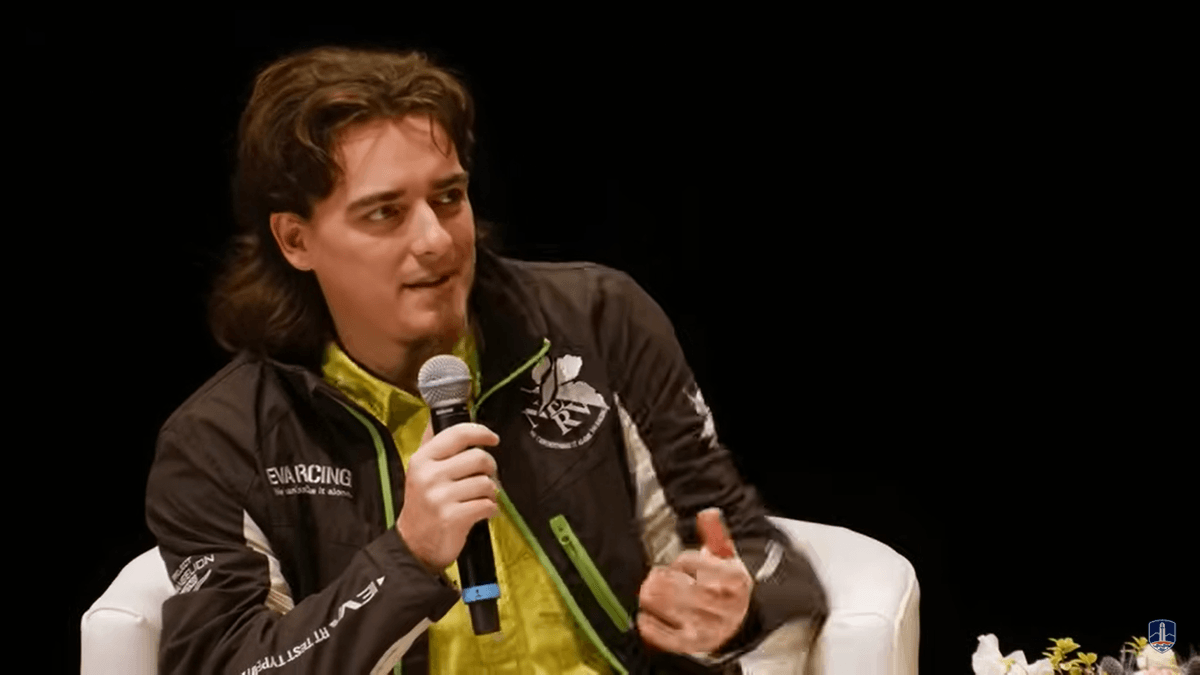
Bringing a non-traditional defense contractor into submarine manufacturing carries major business implications. Anduril’s leadership has deep ties to broader federal technology initiatives. Founder Palmer Luckey was appointed as a co-lead, alongside Elon Musk and Newt Gingrich, on a Pentagon study about AI-powered weapons and the future of warfare.
For the established defense sector, the $7 billion contract signals that the federal government is willing to look outside legacy primes to solve systemic production delays. However, transitioning from software and autonomous drones to heavy naval construction is a massive undertaking. Anduril will undoubtedly face a steep learning curve as it expands into more traditional defense contracts, such as building components like torpedo tubes and scaling up to hull sections.
Risks and Limitations
While the agreement aims to supplement lagging output, significant risks and operational limitations remain. It remains to be seen how Anduril will fare building components for crewed vessels, to say nothing of scaling up to eventually build hull sections. Furthermore, Anduril’s expansion will add to existing shipbuilding workforce demands in an environment where the broader industrial base already faces a severe labor deficit of 174,000 workers.
Who May Be Affected
Several key entities and groups will feel the effects of this policy shift. General Dynamics and Huntington Ingalls Industries will see their long-standing monopoly on submarine construction challenged by a venture-backed tech firm. Workers and local businesses in the Sparrows Point area of Baltimore will be directly impacted by the planned revitalization of the former Bethlehem Steel site. Additionally, the U.S. Navy and international partners relying on the AUKUS agreement will watch closely to see if the new partnership can reverse declining delivery rates.
What to Watch Next
Observers will monitor how quickly Anduril can break ground and scale operations at Sparrows Point. Key milestones will include the successful delivery of autonomous submarines, the manufacturing timeline for Virginia-class components like torpedo tubes, and whether traditional shipbuilders adjust their output in response to new market competition. With production currently sitting at 1.3 boats per year against a historical target of two or more, the success or failure of this $7 billion experiment will heavily influence future defense procurement strategies.