
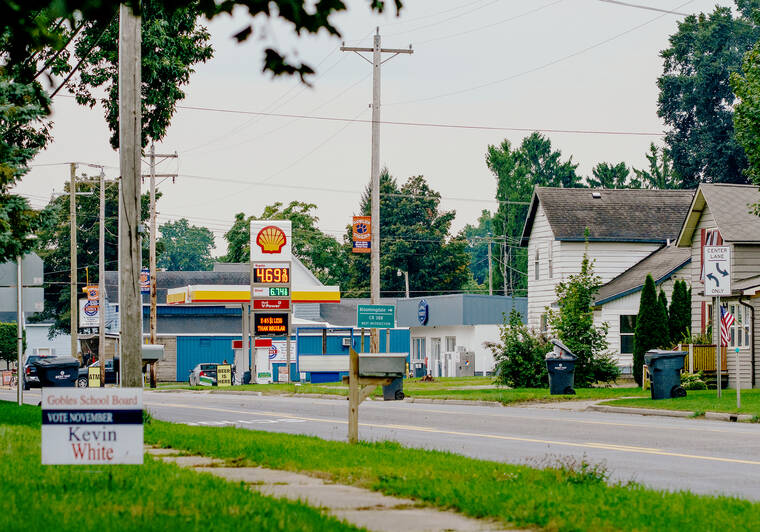
Three weeks before Election Day 2026, widespread economic discontent and a low presidential approval rating expanded competitive political contests into previously solid Republican areas, forcing major shifts in national campaign spending and strategy.
Rising energy costs, supply chain pressures, and broad affordability concerns have altered the competitive landscape across the country. Campaign arms and political action committees are rapidly reallocating capital to defend historically reliable seats, while candidates in both parties navigate intense national and regional headwinds.
What Changed: Campaign Resources Shift Amid Growing Pressure
With three weeks remaining before voters head to the polls, party strategists and major financial committees have executed sweeping resource reallocations. Widespread financial pressures have eroded Republican advantages in regions previously considered safe, compelling leadership groups to defend core territories.
Super PAC Realignment in Texas and Kansas
In Texas, a leading Senate Republican super PAC committed an additional $30 million in advertising to bolster attorney general Ken Paxton’s Senate bid. The massive infusion underscores how competitive dynamics have expanded into traditionally conservative strongholds.
Concurrently, Democratic groups have moved to capitalize on expanding maps. Senate Majority PAC reserved $5 million in advertising time in Kansas, signaling a decision to contest races deep in traditionally Republican territory. These expenditures reflect a changing political calculus driven by shifting voter sentiment.
Withdrawal and Reallocation in Nebraska and North Carolina
Republicans have simultaneously redirected Senate campaign funds away from North Carolina, where Sen. Thom Tillis is retiring, shifting those resources toward contests in Kansas and South Carolina. This movement of capital highlights a strategic defensive posture aimed at securing core Senate seats.
In the U.S. House of Representatives, similar reallocations are unfolding. The Congressional Leadership Fund made the decision to remove advertising funds from a Nebraska House district where Rep. Don Bacon is retiring. The move drew criticism from local campaign observers, with one source remarking on the strategic withdrawal: “I wish they could have shown a little more patience. The No. 1 issue is the president is not popular in the district.”
Key Rating Changes and Midwest Contests
Independent nonpartisan analysts have tracked these shifts closely. The Cook Political Report officially moved the rating for Iowa Rep. Zach Nunn’s seat to ‘lean Democratic’. The rating shift reflects growing electoral vulnerabilities for incumbent Republicans across the Midwest as local economic conditions weigh on voter preferences.
Economic Factors Driving the 2026 Political Landscape
At the core of the shifting political environment is persistent financial strain felt across key demographic groups. Voters across multiple battlegrounds cite inflation, rising fuel costs, and trade disruptions as central concerns entering the final weeks of the campaign.
Soaring Diesel Costs and Agricultural Pressures
Agricultural communities have experienced severe operational cost increases, particularly regarding fuel. Iowa State Senator Sarah Trone Garriott recounted a local farmer claiming it would cost $16,000 more to harvest crops in 2026 due to diesel costs alone. These agricultural cost spikes have added severe strain to rural business operations and broadened economic dissatisfaction in farm belt communities.
Tariffs, Energy Prices, and Impact on Blue-Collar Voters
Former Republican Vince Bjorling noted that tariffs and the ongoing war in Iran have generated significant affordability issues for everyday consumers. These systemic issues have particularly resonated with key voting demographics that shifted politically in recent election cycles.
Republican strategist Paul Shumaker emphasized how these cost increases affect core constituencies, stating: “The lower-income, blue-collar voters that Donald Trump brought to his winning coalition for Republicans is the demographic group of voters who are being impacted most by the higher energy costs.” Rising fuel and utility bills have reduced disposable income for these families, creating economic friction in key industrial and rural corridors.
Voter Sentiment on Corporate Price-Gouging and Monopolies
Beyond energy and fuel, broader voter dissatisfaction centers on corporate power and pricing dynamics. Observations from the campaign trail indicate growing frustration with large commercial entities. As one campaign sentiment highlighted: “The voters are just tired of big corporations. They’re either price-gouging us, or they’re monopolies.” This populist economic frustration spans partisan lines, complicating traditional business-oriented campaign messaging.
Federal Relief Initiatives and White House Executive Actions
In response to escalating economic discontent, President Donald Trump and federal officials have rolled out targeted financial interventions and executive decisions aimed at providing immediate relief to consumers.
Direct Senior Cash Payouts and Healthcare Rebates
To cushion the impact of rising living expenses, President Trump announced $90 payouts for Medicare seniors. In addition, the administration oversaw the delivery of $500 rebate checks to certain Affordable Care Act customers. These targeted measures were designed to directly offset medical and everyday inflationary pressures for vulnerable populations.
Proposed $5,000 Citizen Checks Tied to Congressional Control
As part of a broader economic campaign platform, President Trump promised a $5,000 check for every adult U.S. citizen if Republicans maintain control of Congress following the 2026 midterm elections. This proposals highlights the administration’s emphasis on direct cash transfers as a policy mechanism to address voter cost-of-living grievances.
Executive Orders on Diesel Fuel Restrictions and Russian Imports
Addressing fuel shortages and high diesel prices directly, President Trump signed an executive order during an appearance in Nebraska that loosened regulatory restrictions on tax-free diesel fuel. During the announcement, Trump also stated he would allow Russian diesel imports to expand domestic supply and reduce farm and transport costs.
Regional Campaign Strategies and Local Messaging Contests
Across individual battlegrounds, Republican and Democratic candidates are adapting their platforms to address localized economic and political realities, sometimes diverging from national party lines.
Michigan Senate Race: Moratoriums and Foreign Policy Messaging
In Michigan, Republican Senate nominee Mike Rogers has adopted a tailored platform targeting local economic and industrial developments. Rogers publicly backed a one-year moratorium on data center developments across the state, addressing local infrastructure and resource allocation concerns. Furthermore, Rogers has openly advocated for an end to the Iran war and the ongoing tariff war, aligning his campaign with voter demands for lower consumer prices and economic stability. The Michigan race features prominent regional political figures and observers, including Jim Runestad, Carrie Rheingans, and Abdul El-Sayed, as candidates navigate complex state political dynamics.
Minnesota Fraud Scandals vs. National Referendum Battles
In Minnesota, local issues have created a distinct messaging battle between the major parties. Former Minnesota Governor Tim Pawlenty claimed that Minnesota voters blame a spate of recent state fraud scandals on Democrats. Pawlenty outlined the contrasting strategic focuses of both campaigns, stating: “Democrats are trying to make the election a referendum on President Trump while the Republicans are trying to make it a referendum on fraud.”
Strategic Distancing and Party Headwinds in Off-Year Elections
Candidates in midterm cycles frequently face structural challenges when the white house is held by their own party. Veteran Republican strategist Colin Reed commented on the necessity of independence, stating: “You shouldn’t walk in lock step… In an off-year election when the president of your party is in office, there is always a headwind.”
Other prominent party figures and strategists, including Austin Barbour, Haley Barbour, and entities like MAGA Inc., continue to evaluate national strategy as leadership manages competing demands. Meanwhile, House Speaker Mike Johnson reflected on political life and public service, remarking: “If God moves on our hearts and says we should, you know, go back to my hometown of Shreveport and start a lawn business, I’ll do that with equal fervor.”
Political Analysis, Key Quotes, and Expert Perspectives
Political analysts emphasize that national presidential approval figures heavily influence down-ballot competitiveness across federal and state contests.
Strategist Insights on Presidential Approval Ratings
According to Colin Reed, President Trump’s job approval rating sits in the high 30s. Reed described the mechanical difficulty this creates for down-ballot candidates: “When you’ve got a sitting president whose job approval rating is in the high 30s, it makes it really difficult for any Republican candidate to compete and win.”
Mobilization Dynamics: Voter Anger and Turnout Realities
Turnout dynamics remain central to both parties’ ground operations in the final three weeks. Political observers note that voter dissatisfaction drives higher participation rates among aggrieved blocs. As one political axiom circulating among strategists highlights: “Angry people vote and satisfied people don’t.”
However, veteran strategists also caution against over-interpreting short-term polling volatility. A long-standing perspective among campaign veterans remains: “It’s never as bad as it seems or as good as it seems.”
Former President Obama's Assessment on Red-State Contests
Despite favorable trends for Democrats in several expanded battlegrounds, party leaders warn against complacency. Former President Barack Obama delivered a sober assessment regarding competitive red-state races, noting: “There are states right now in play that I would not have imagined being in play… We could end up losing all of them by two points… But we have a chance.”
Obama’s perspective highlights the reality that close contests in conservative-leaning states can easily swing back to Republicans depending on late voter turnout and final campaign spending surges.
Business Implications, Sector Impact, and Limitations
The political and economic climate carries significant operational implications for businesses, agricultural producers, and industrial sectors.
Agricultural and Transportation Sector Impact
High energy costs and fuel volatility directly impact operating margins for agricultural producers and logistics networks. The reported $16,000 increase in harvest costs for Midwest grain farmers illustrates how energy inputs spill over into crop production, transportation overhead, and ultimately consumer food prices. White House decisions regarding tax-free diesel regulations and Russian diesel imports represent direct attempts to alter fuel supply lines and ease logistics overhead.
Industrial Energy Demands and Technological Infrastructure
Mike Rogers’ proposed one-year moratorium on data center developments in Michigan highlights growing friction between expanding technology infrastructure and local energy grids. As data centers demand substantial electricity and water resources, regional municipalities and state leaders face policy choices balancing technological investments against local grid stability and utility costs for residents.
Key Risks and Uncertainties
Several critical uncertainties remain unresolved as the campaign enters its final three weeks:
1. Effectiveness of Strategic Distancing: It remains uncertain whether distancing from President Trump in the final three weeks of the campaign will be sufficient for individual Republican candidates to secure victories in tight districts.
2. Electoral Outcomes and Governance: The final electoral results determining control of the U.S. House of Representatives, U.S. Senate, state governorships, and state legislatures remain highly uncertain.
3. Red-State Margins: As highlighted by Barack Obama, Democratic candidates in traditionally red states risk losing highly competitive races by narrow two-point margins if voter mobilization falls short.
Attribution and Sourcing
Reporting and factual claims in this article are derived from reporting published by West Hawaii Today (via a New York Times News Service article authored by Patricia Mazzei and Shane Goldmacher), polling data conducted by the New York Times/Siena University, and seat vulnerability classifications established by the Cook Political Report.