
Factual Lead
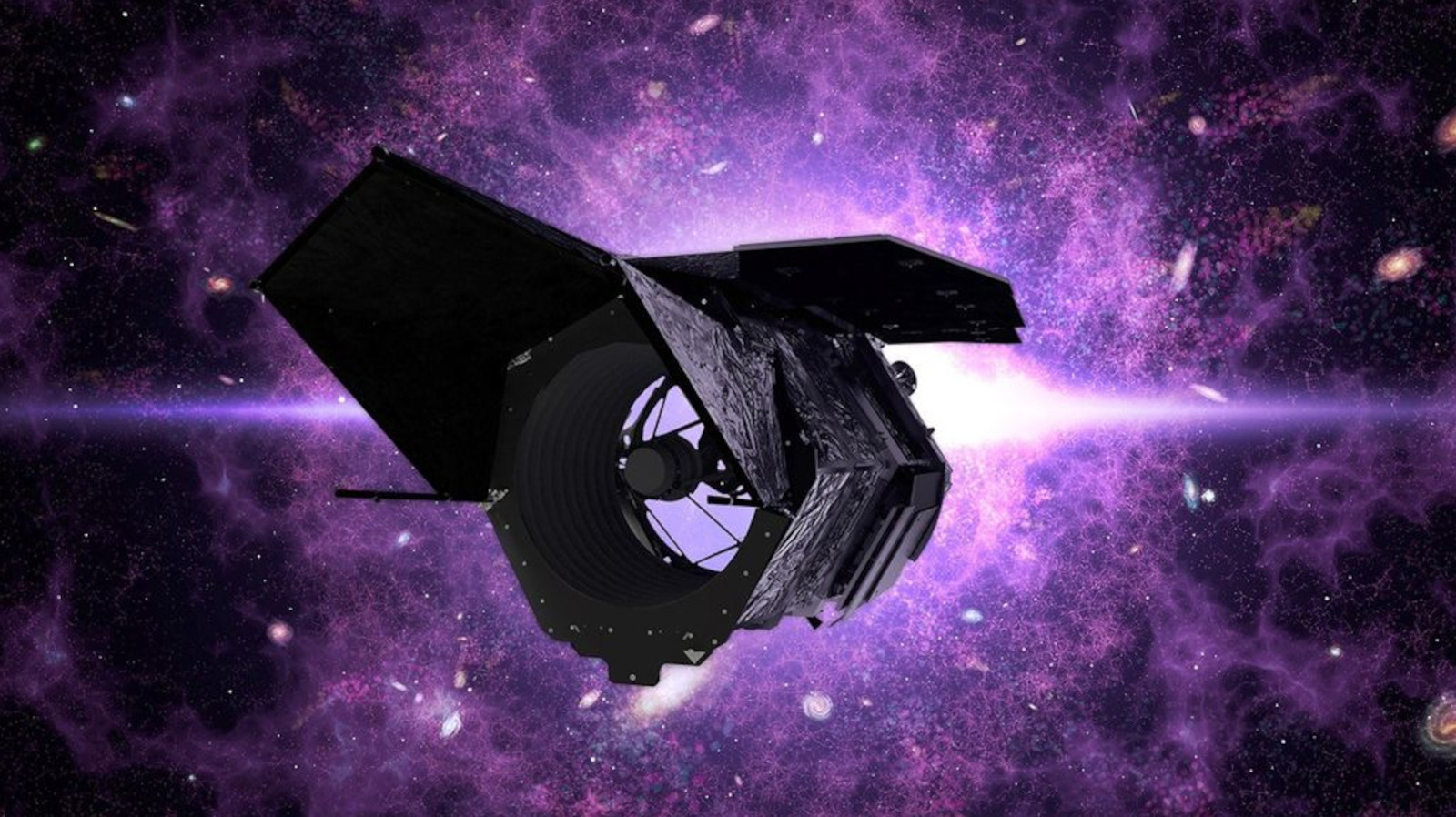
NASA’s Nancy Grace Roman Space Telescope is on its way to its service station, 930,000 miles away from Earth, where it will operate alongside the James Webb Space Telescope. While both instruments operate at Earth’s Lagrange Point 2 (L2), they feature fundamentally different optical designs, sensor arrays, and operational capabilities that allow them to fulfill distinct scientific mandates.
What Changed
NASA is advancing the Nancy Grace Roman Space Telescope toward its destination at Lagrange Point 2 (L2), located 930,000 miles away. The observatory is expected to arrive at its destination sometime late 2026 or early 2027 (with sources noting arrival late this year or early next year). Once operational at the same space location where the James Webb Space Telescope is already located, Roman will begin its mission to capture unprecedented astronomical data using a design optimized for wide-area sky surveys.
Technical Specifications and Architecture
The two space telescopes approach deep space observation through distinct structural and optical choices:
- Primary Mirrors: The James Webb Space Telescope features a primary mirror composed of 18 hexagonal segments combined into a roughly circular shape, reaching 21.3 feet in diameter, making it the largest mirror put into space. In contrast, the Nancy Grace Roman Space Telescope features a mirror built as one giant segment measuring 7.9 feet in diameter—matching the diameter of Hubble’s mirror while weighing only one-fourth as much.
- Thermal Management: Webb stays cooled to -364 degrees Fahrenheit to prevent infrared light from the segments’ warmth from interfering with observations. Roman operates at a slightly warmer -288 degrees Fahrenheit.
- Imaging Sensors and Field of View: Webb’s near-infrared NIRCam features eight 2,048 x 2,048 pixel sensors with a 260×130 arcsecond field of view, prioritizing high resolution. Meanwhile, Roman’s Wide-Field Instrument (WFI) features 18 sensors at 4,096 x 4,096 pixels each, providing a massive 2700×1280 arcsecond field of view.
Key Benefits and Capabilities
The primary divergence between the two observatories lies in Roman’s ultra-wide field of view versus Webb’s high-resolution narrow focus. Roman has a very wide field of view designed to capture huge patches of the sky at once, while Webb has a narrower field of view paired with higher resolution.
Furthermore, Roman includes an onboard Coronagraph Instrument equipped with flexible or ‘deformable’ mirrors. This instrument uses a series of masks and prisms to block a star’s light, allowing researchers to see surrounding planets in greater detail. According to mission parameters, the Coronagraph’s mirrors can reshape with enough precision to offset an error the width of a strand of DNA.
Sector Impact and Collaborative Workflow
The pairing of Roman and Webb at Lagrange Point 2 creates a complementary ecosystem for astrophysics. Because Roman is expected to find billions of never-before-seen stars and sweep across massive sky segments rapidly, NASA plans to send in Webb to check out new and exciting things discovered by Roman. This tag-team approach allows Roman to act as a wide-angle scout, identifying targets of interest that Webb can subsequently analyze in high-resolution detail.
Limitations and Uncertainties
While the mission architecture is well-defined, exact timelines carry minor operational windows. Roman is expected to arrive at its destination sometime late this year or early next year (specifically noted as late 2026 or early 2027). Additionally, maintaining the distinct thermal thresholds—such as Webb’s -364 degrees Fahrenheit and Roman’s -288 degrees Fahrenheit—remains critical to preventing thermal infrared interference across their respective sensor suites.
Business Implications
From a mission economics and resource allocation perspective, operating two heavy-duty assets at Lagrange Point 2 (L2) optimizes NASA’s deep space infrastructure. By utilizing a shared gravitational and thermal stable point 930,000 miles from Earth, mission controllers can streamline communication relays and operational oversight. The lighter single-segment mirror design of Roman (measuring 7.9 feet but weighing one-fourth as much as historical equivalents) also demonstrates manufacturing and payload efficiencies for large-scale space hardware.
Who May Be Affected
The collaborative deployment directly impacts the global astronomical research community, astrophysicists, and planetary scientists who rely on public NASA data archives. Researchers focusing on exoplanet direct imaging will benefit directly from Roman’s Coronagraph Instrument, while cosmologists analyzing large-scale galactic structures will utilize the Wide-Field Instrument’s expansive datasets.
What to Watch Next
Observers should monitor NASA’s updates regarding Roman’s transit progress toward the 930,000-mile mark at Lagrange Point 2 (L2). Key milestones include arrival confirmation expected in late 2026 or early 2027, followed by instrument calibration phases and the eventual initiation of coordinated target handoffs between Roman and the James Webb Space Telescope.