
Introduction and Factual Lead
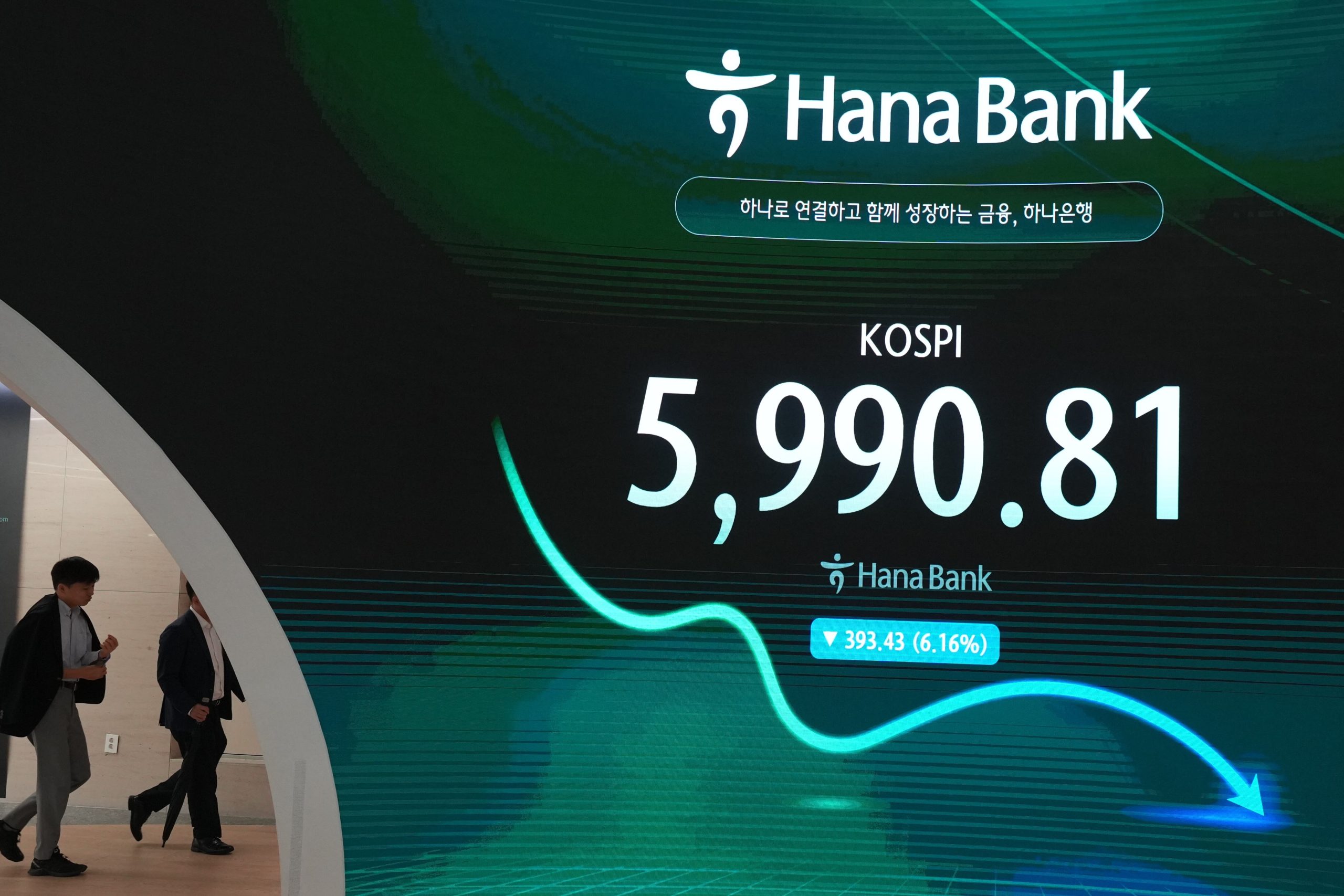
Global financial markets experienced heavy volatility as South Korea’s Kospi index sinks more than 7% on semiconductor share sell-off over AI boom worries, highlighting intense anxiety across international technology sectors. The regional downturn coincided with a mixed session on Wall Street, where U.S. stock indexes finished little changed near record highs following a batch of summertime profit reports that topped analysts’ expectations. While major indexes such as the S&P 500, Dow Jones Industrial Average, and Nasdaq composite hovered near flatlines, computer chip stocks saw sharp downward action due to worries about chip prices in the artificial intelligence technology frenzy and reports that China’s memory chipmaker CXMT is making advances challenging industry heavyweights.
What Changed in Global Markets
The core catalyst for the regional Asian market shock centered on the semiconductor sector. South Korea’s Kospi stock index tumbled 5.5% for its worst day in nearly two months, pressured by heavy losses among major domestic heavyweights like Samsung Electronics and SK Hynix. This sharp correction was triggered by mounting market concerns that semiconductor prices may have risen too high due to the artificial intelligence frenzy, coupled with reports regarding competitive advancements by China’s memory chipmaker CXMT.
In the United States, Micron Technology fell 3.6%, serving as the single heaviest weight on the S&P 500 index. Meanwhile, broader U.S. indices showed resilience despite the tech-sector friction. The S&P 500 edged down by less than 0.1% or 1.79 points to 7,805.45, the Dow Jones Industrial Average fell 180.45 points or 0.3% to 51,670.10, and the Nasdaq composite dipped 0.2% or 41.52 points to 27,204.38. Across other asset classes, the yield on the 10-year Treasury slipped to 5.21% from 5.24% late Friday, and Brent crude oil fell 0.9% to $105.69 per barrel.
Context and Corporate Earnings Reports
The semiconductor sell-off occurred against the backdrop of the summertime earnings reporting season. Analysts forecasted overall S&P 500 profit growth of nearly 30% for the summer from a year earlier, according to FactSet. Major financial institutions and corporations delivered varied results that influenced market sentiment:
- Goldman Sachs: Jumped more than 4% at the start of trading after reporting July-through-September profit that beat expectations, though it eventually finished down 0.2%. The firm benefited from strong growth for its business offering loans to clients for trading stocks.
- UnitedHealth Group: Reported stronger profit and revenue than expected and raised its full-year 2026 profit forecast, though its stock finished down 0.2% after earlier rallying up to 5.6%.
- Wells Fargo: Dropped 3.1% after reporting weaker-than-expected revenue, which CEO Charlie Scharf partly attributed to weaker revenue from venture capital investments.
- JPMorgan Chase: Reported a weaker profit than expected but gave a net interest income forecast for the current quarter topping estimates; its stock fell 0.9%.
Outside of banking and tech, transaction activity continued. Bumble leaped 56.6% after agreeing to a $1.3 billion, all-cash buyout by Ithaca Holdings.
Business and Technical Implications
The tech-share sell-off underscores a growing tension between massive capital expenditure in artificial intelligence infrastructure and the actual long-term pricing sustainability of memory and processing hardware. Investors are increasingly sensitive to valuation pressures after sustained rallies. Furthermore, competitive threats from emerging suppliers like CXMT challenge the historical pricing power of established memory leaders in South Korea and the United States.
Banking executives emphasized a complex operating environment. Wells Fargo CEO Charlie Scharf stated that bank data shows consumer and business customers are doing well overall. However, JPMorgan Chase CEO Jamie Dimon pointed to elevated asset prices, high inflation, rising interest rates, and geopolitical conditions as potential risks, noting that while these forces may be manageable, institutions remain prepared for a wide range of outcomes.
Limitations, Risks, and Uncertainties
Market analysts note several ongoing uncertainties that could continue to drive volatility. These include general uncertainty about the macro economy, persistent high inflation, increased pressure from the bond market, geopolitical conflicts such as the war with Iran, and ongoing questions regarding whether chip stock prices have been bid up beyond realistic fundamentals by the AI frenzy.
Attribution and Summary
Reporting on these market developments draws from Associated Press dispatches filed by journalists including Chan Ho-him, Matt Ott, and Yuki Iwamura. While U.S. markets maintained relative stability near record territory, the sharp correction in South Korea demonstrates the acute vulnerability of export-driven semiconductor economies to shifts in global AI sentiment and emerging international competition.