
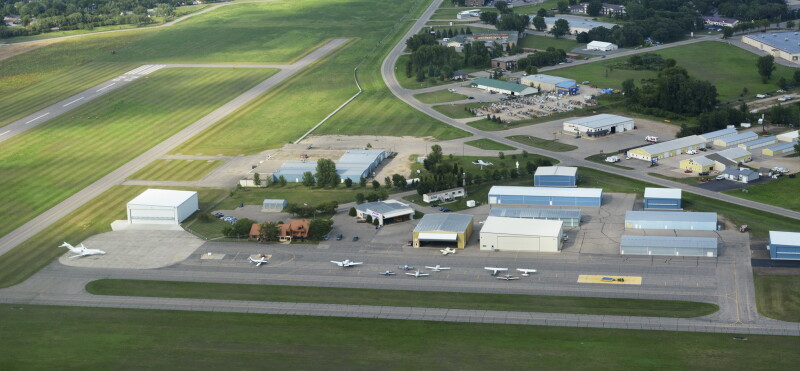
The Alexandria City Council formally accepted a quote from Alexandria Electric totaling $98,500 to perform essential security gate improvements at the Alexandria Airport. This project directly addresses long-standing property and pilot safety concerns that have been incorporated into the airport’s capital improvement plan for years.
While the facility features perimeter fencing, an assessment revealed that the property currently contains seven unrestricted access points. According to city and airport evaluations, these gaps present a safety concern for both the general public and aircraft operations. The newly funded security upgrades at Alexandria Airport focus on access points by replacing inoperable electronic closures, repairing damaged gates, installing new motorized openers in place of manual ones, and strategically relocating or installing fencing equipped with fresh electronic closures.
What Changed at the Facility
The approved project overhaul represents a direct response to infrastructure vulnerabilities. Up to this point, the presence of seven unrestricted access points along the fenced perimeter compromised site integrity. The accepted proposal from Alexandria Electric addresses these specific physical security gaps.
In addition to the physical perimeter and gate enhancements, the airport infrastructure is receiving a separate technology and hardware upgrade. The facility’s fuel system credit card reader is slated for replacement, carrying an estimated cost of $23,636.
Technical Context and Operational Pain Points
The existing fuel system credit card reader has created persistent operational bottlenecks. According to operational feedback, the legacy card reader currently functions properly only one to two times out of ten swipes. This high failure rate has generated a notable increase in customer complaints, particularly during off-peak windows such as early morning flights, weekends, and evenings when on-site administrative support is unavailable.
State classifications treat the airport fuel system as a revenue-generating facility. Consequently, the state proposed a 60/40 cost-participating rate for the credit card reader project. This arrangement establishes a local funding share of $9,454.40, which has been proposed to draw from the airport development 406 fund.
Funding and Financial Breakdown
The comprehensive security and infrastructure improvements rely on a multi-source funding strategy. Previous financial estimates for the security gate work ranged between $98,000 and $110,000, making the accepted $98,500 quote from Alexandria Electric fall efficiently on the lower end of expectations.
Funding for the security gate improvements is split across two primary municipal sources:
- The airport development 406 fund contributes $65,000.
- The city Capital Improvement Plan (CIP) fund covers the remaining $35,500.
Meanwhile, the fuel system upgrade utilizes the 60/40 state cost-sharing model, limiting the local airport development 406 fund exposure to $9,454.40 out of the total $23,636 price tag.
Business Implications and Sector Impact
For regional aviation facilities, maintaining reliable perimeter security and self-service amenities is critical for continuous operations and revenue generation. Unrestricted access points introduce liability and risk unauthorized personnel entering active aircraft movement areas. By formalizing electronic closures and automating manual gates, the Alexandria City Council mitigates potential liabilities.
Similarly, resolving the fuel system hardware failure addresses direct commercial friction. A credit card reader that fails eight to nine times out of ten attempts directly inhibits fuel sales and frustrates pilots relying on 24/7 self-service capabilities. Upgrading the reader ensures consistent revenue collection and improves user satisfaction during unstaffed hours.
Limitations and Future Considerations
While the security gate project and the fuel reader replacement resolve immediate operational hurdles, the scope remains strictly bounded to the funded line items. The project plan does not encompass a total replacement of the entire airport perimeter or unrelated historical underground infrastructure. Stakeholders will continue to monitor municipal and airport development funds to address subsequent capital needs as outlined in ongoing facility master planning.