
Executive Summary and Key Declaration
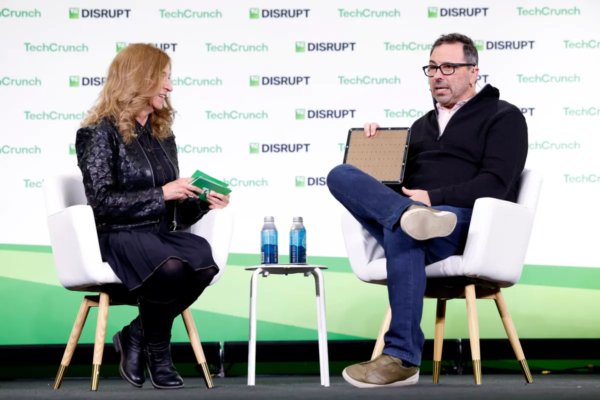
In a recent public assertion, the CEO of semiconductor enterprise Cerebras stated that society is nearing a future where every individual will have a personal AI assistant at home. The remark highlights a projected shift in how artificial intelligence capabilities will be integrated directly into daily residential environments, moving automated intelligence from specialized commercial or technical settings into standard households.
While the statement reflects broad confidence from leadership within the high-performance artificial intelligence hardware industry, the initial report omits key contextual elements. The source disclosure does not provide the specific name of the executive making the statement, nor does it specify exact technical architecture, product release schedules, pricing structures, or underlying system requirements. Consequently, the declaration serves as a high-level industry perspective on consumer artificial intelligence adoption rather than a formal technical product roadmap.
What Changed
The core development centers on a formal prediction from executive leadership at Cerebras. According to the reported statement, the industry is accelerating toward broad access to customized domestic intelligence systems. The executive explicitly claimed that “we’re nearing a future where everyone has a personal AI assistant at home.”
This statement marks a bold assessment of consumer market readiness. Rather than positioning advanced artificial intelligence strictly as an enterprise productivity tool or a cloud-hosted software feature for specialized workplaces, the projection places domestic interactive intelligence as an imminent universal standard. The assertion focuses on accessibility and ubiquitous deployment, suggesting that household environments will soon routinely support personalized computational assistants.
Scope of the Prediction
The vision outlined by the Cerebras leadership implies a significant transition in computing distribution. A universal personal AI assistant in every home suggests several structural developments across hardware design, computational efficiency, and digital user interfaces:
- Ubiquitous Consumer Access: Transitioning personal assistance from simple scripted digital voice agents to complex, highly performant automated systems capable of contextual household support.
- Infrastructure Expansion: Increasing demand for computational architectures capable of serving continuous personal artificial intelligence workloads at scale.
- Domestic Integration: Establishing artificial intelligence processing as a core component of household technology infrastructure alongside standard consumer electronics.
Technical and Structural Context
Compute Infrastructure and In-Home AI Demands
Deploying a performant personal AI assistant inside individual homes presents fundamental engineering questions regarding compute location, latency, bandwidth, and energy consumption. While the executive statement did not detail whether these upcoming assistants will run locally on dedicated edge hardware or rely on cloud-based processing infrastructure, both approaches require substantial technological support.
For cloud-supported systems, serving millions of individual personal assistants simultaneously demands low-latency inference infrastructure capable of processing high volumes of real-time interactions. Alternatively, if domestic assistants run locally within the home, hardware providers must deliver efficient edge compute hardware that fits within strict residential power and thermal constraints. As a processor design firm, Cerebras focuses on specialized compute architectures, placing its leadership in a position to observe infrastructure demand trends across AI model hosting and processing scale.
Processing Workloads and Scalability Constraints
Delivering personalized AI capabilities across broad populations requires substantial scalability improvements. Highly performant assistants depend on large language models and multi-modal processing pipelines that require reliable chip execution. The statement from Cerebras indicates an industry expectation that these processing challenges are being reduced to a level that allows universal household distribution.
Business Implications for the AI and Hardware Sectors
Infrastructure Providers and Specialized Hardware
If the forecast of standard in-home personal AI deployment proves accurate, compute hardware suppliers face altered demand dynamics. Broad consumer adoption requires significant back-end processing power to train models, fine-tune personalized data, and execute constant real-time queries. Companies specializing in AI acceleration hardware stand to play a key role in building the data center or edge processing backbones necessary to sustain universal consumer access.
Consumer Adoption and Ecosystem Integration
For consumer technology firms and software developers, widespread personal AI assistant adoption implies a shift in software ecosystems. Applications will increasingly need to interface with centralized domestic AI agents. Standardizing interactions between personal hardware, automated tools, and external services will become a key priority for software providers seeking to integrate into the home compute ecosystem.
Who May Be Affected
The widespread rollout of residential AI assistants impacts several key stakeholders across the tech industry and end-user markets:
- End Consumers: Individuals stand to gain access to continuous automated assistance for home management, scheduling, communication, and information processing.
- AI Hardware Manufacturers: Chipmakers and system builders must prepare for shifting demand across data center hosting and residential hardware edge products.
- Software Developers: Application engineers will need to design platforms that seamlessly communicate with autonomous, continuously active personal AI agents.
- Telecommunications and Network Operators: High-bandwidth interactive assistants may increase steady-state home network demands, requiring reliable internet connectivity and efficient data delivery routes.
Critical Limitations, Missing Details, and Uncertainties
While the statement provides insight into executive expectations, several key facts and details remain unconfirmed and unstated in the source material:
Unstated Executive Attribution and Corporate Identity
The underlying source report attributes the prediction directly to the “Cerebras CEO” but does not explicitly print the executive’s full name within the text. Readers and industry analysts must note this reporting limitation when evaluating attribution context.
Absence of Concrete Timelines and Technical Metrics
The reported declaration omits several essential operational details required for thorough technical validation:
- Timeline: No specific target year or date range was provided for when “everyone” is expected to have a personal AI assistant at home.
- System Specifications: The source text contains no details regarding hardware requirements, model parameters, power consumption, or target hardware costs.
- Deployment Model: The statement does not clarify whether processing will occur locally via dedicated home devices or via remote cloud data centers.
- Corporate Strategy: The disclosure does not mention specific Cerebras product releases, commercial partnerships, or pricing models tied directly to consumer assistant hardware.
What to Watch Next
To evaluate the progress of this executive projection, market observers should monitor several upcoming industry checkpoints:
- Formal Executive Clarifications: Further public statements or formal keynote addresses from named Cerebras leadership providing detailed contexts for consumer AI infrastructure.
- Hardware Product Announcements: Official disclosures regarding low-latency inference chips or localized edge compute hardware designed for residential AI workloads.
- Ecosystem Partnerships: Strategic alliances between high-performance AI chip designers and consumer hardware manufacturers aimed at bringing continuous AI assistance to residential end users.
- Infrastructure Metrics: Benchmark testing and latency reports evaluating the real-world feasibility of scaling continuous personal AI assistance to millions of household environments simultaneously.