
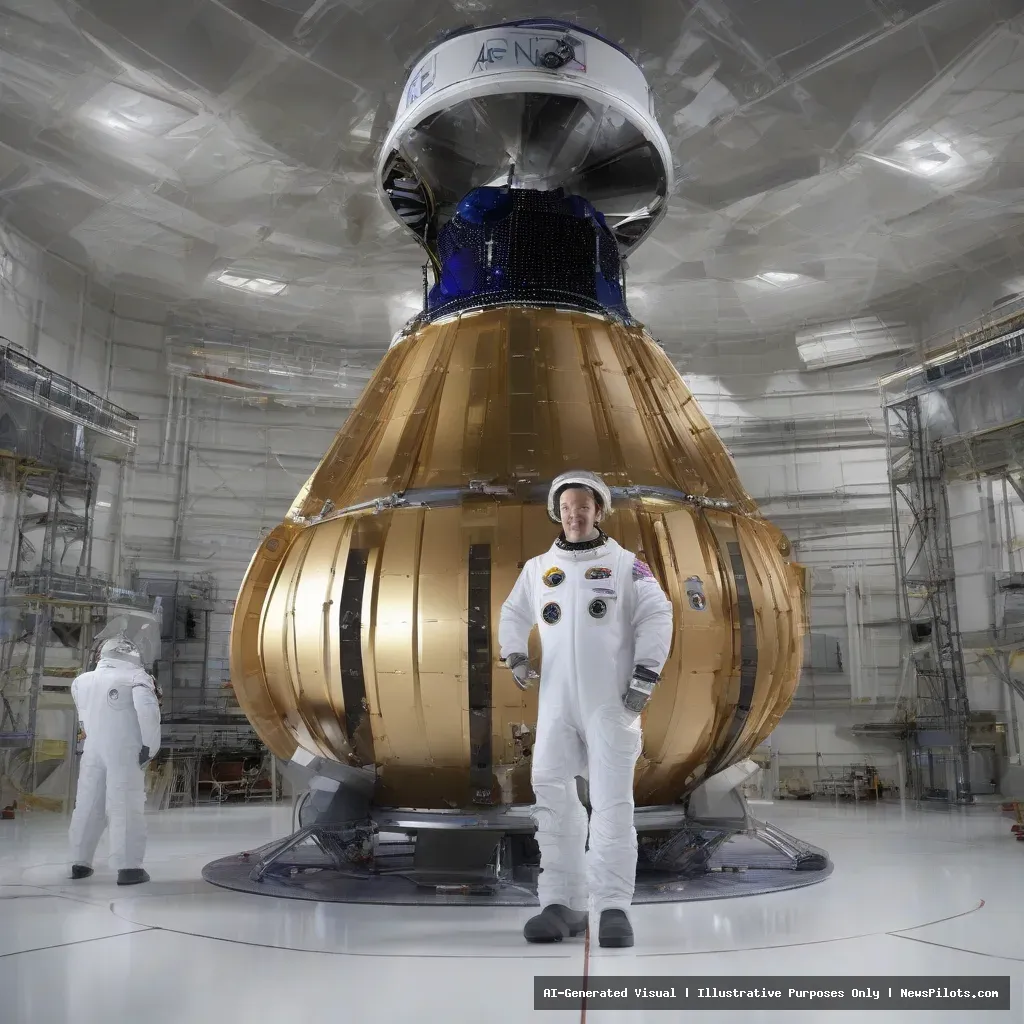
In a move that could reshape how small satellites operate, a new air‑breathing propulsion system is slated for its first orbital test in very low Earth orbit (VLEO). The technology, developed by a consortium of aerospace engineers, promises to extend the operational life of satellites without the need for on‑board fuel. air‑breathing satellite thruster is an important part of the developments covered in this report.
air‑breathing satellite thruster: What It Means and Why It Matters
What Is an Air‑Breathing Thruster?
Unlike conventional chemical rockets, an air‑breathing thruster draws atmospheric oxygen from the thin air in VLEO to combust with a stored fuel source. By using the planet’s own air, the system can generate thrust while shedding mass that would otherwise be carried as propellant. The design is particularly suited to orbits below 400 km, where atmospheric density is sufficient to support combustion but high enough to allow satellites to remain in orbit for extended periods.
Why Very Low Earth Orbit Matters
VLEO is a frontier for satellite operators seeking lower orbital altitudes to reduce launch costs and improve imaging resolution. However, atmospheric drag in this region quickly degrades orbit, forcing satellites to either burn fuel to maintain altitude or risk re‑entry. An air‑breathing thruster could provide a continuous, low‑thrust correction that counters drag, effectively turning the atmospheric drag from a liability into a resource.
Upcoming Test Mission
The first test is scheduled aboard a small satellite launched by a commercial launch provider in the next quarter. The satellite will carry a 2‑in‑1 propulsion module that combines the air‑breathing engine with a small electric propulsion system for fine attitude adjustments. The dual‑mode design allows the satellite to switch between high‑thrust air‑breathing mode for orbit maintenance and low‑thrust electric mode for precise positioning.
Complementary Advances in Orbital Propulsion
The air‑breathing thruster is part of a broader wave of innovations aimed at reducing the fuel burden on space missions. NASA is testing an orbital “gas station” concept that would allow spacecraft to refuel in orbit, extending missions to the Moon and Mars. Meanwhile, a superconducting thruster that harnesses Earth’s magnetic field has entered its first orbital test, offering a fuel‑free method of acceleration.
Other projects underscore the diversity of propulsion research. Reflect Orbital has received FCC approval to launch its first space mirror, a technology that could provide passive power or communication solutions for future spacecraft. Meanwhile, Space Forge has established the first commercial semiconductor factory in space, a step toward manufacturing critical components beyond Earth’s atmosphere.
Implications for the Satellite Industry
If successful, the air‑breathing system could dramatically lower the cost of maintaining small satellite constellations. Operators would no longer need to carry large propellant tanks, freeing up mass for payloads or additional solar arrays. The continuous thrust capability also opens the door to more agile orbits, allowing satellites to reposition themselves on demand without large propellant burns.
Moreover, the technology could benefit Earth observation missions that demand high‑resolution imaging from low altitudes. By sustaining a stable orbit in VLEO, satellites can capture finer detail while also reducing launch vehicle requirements. The dual‑mode propulsion also enhances mission flexibility, enabling satellites to perform station‑keeping, collision avoidance, and targeted de‑orbit burns with minimal fuel consumption.
Challenges Ahead
Several technical hurdles remain before the air‑breathing thruster can be widely adopted. The thin atmosphere at VLEO requires precise control of the combustion chamber to avoid over‑burn or flame loss. Thermal management is also critical; the engine must dissipate heat generated by combustion while operating in the harsh vacuum of space.
Additionally, the system’s reliability over long periods is untested. The test mission will provide the first real‑world data on how the thruster performs under continuous operation, including its impact on satellite structure and electronics.
Looking Forward
As the first in‑space test approaches, industry analysts expect the results to influence future satellite design. A successful demonstration would validate a propulsion concept that turns atmospheric drag into a propulsion advantage, potentially redefining orbital mechanics for low‑Earth missions.
With complementary technologies such as orbital refueling, superconducting magnetic thrusters, and in‑orbit manufacturing on the horizon, the space sector is poised for a new era of sustainable and efficient propulsion. The air‑breathing satellite thruster stands at the forefront of this transformation, offering a glimpse of a future where satellites can breathe the Earth’s atmosphere and keep orbiting without carrying the weight of their own fuel.
Related Articles
- Amgen Cyberattack Exposes Patient Health Data and Intellectual Property
- Starcloud Secures $250 Million to Expand Orbital Data Centres
Original Source: Space