
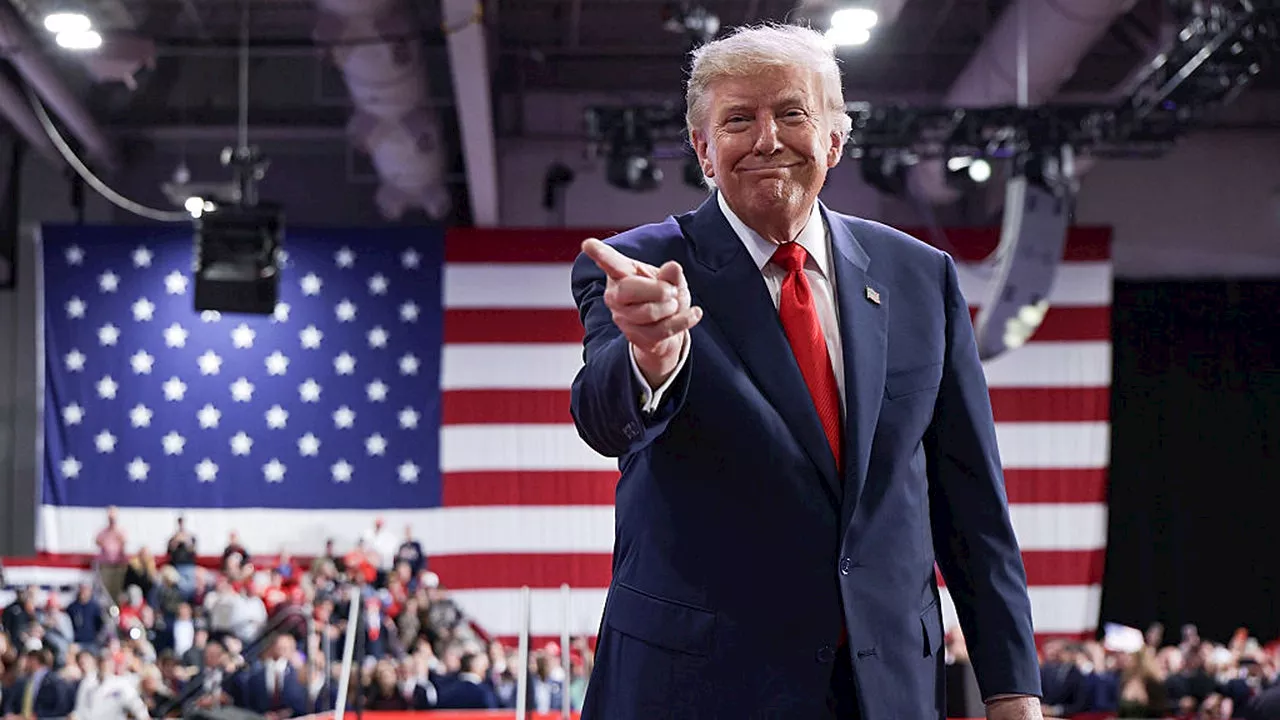
Executive Overview: Trump Addresses Central New York at the Oncenter
On Friday, October 9, 2026, President Donald Trump headlined a high-profile midterm election rally at the Oncenter in Syracuse, New York. Addressing an energetic audience in central New York, the event served as a major political platform highlighting top regional economic investments, key congressional races, and statewide conservative leadership campaigns. The Trump Syracuse rally brought central New York’s economic transformation to the forefront of national midterm coverage, pairing regional industrial policy with federal political rhetoric. Throughout his address, Trump asserted that the United States has entered a prosperous national era, declaring, “We’re in the Golden Age of America,” while urging conservative voters to turn out heavily in the upcoming midterm elections.
The gathering at the Oncenter focused heavily on economic competitiveness, energy costs, tax reform, and regional industrial growth. Trump used the Syracuse platform to formally endorse Republican candidate Bruce Blakeman in his bid for New York Governor, alongside backing Republican candidate Kailee Buller in her high-stakes race against incumbent Democratic Representative John Mannion in New York’s 22nd Congressional District. The rally also featured a surprise stage appearance by former heavyweight boxing champion Mike Tyson, who expressed strong personal support for Trump. Underpinning the economic discussion was Micron’s massive ongoing project in central New York, an industrial undertaking projected to generate 50,000 jobs statewide, including 9,000 direct positions at Micron itself.
What Changed: Key Endorsements and Campaign Strategies
The Syracuse rally marked a concerted political effort to bolster Republican candidates across New York State ahead of the midterm elections. Trump leveraged his personal brand and political capital to align national political priorities with localized economic concerns in Onondaga County and the broader central New York corridor.
Endorsement of Bruce Blakeman for New York Governor
A central political outcome of the event was Trump’s public endorsement of Bruce Blakeman, the Republican candidate for Governor of New York. Blakeman took the stage to detail his platform, emphasizing sweeping fiscal and administrative reforms designed to make the state more competitive for both corporate entities and resident families. Blakeman stated that his administration would focus squarely on cutting taxes and reducing household utility bills to ease financial pressures on state residents. Addressing the state’s economic and demographic challenges, Blakeman told the crowd, “We have to create good jobs, good benefits to keep our young people here.”
Blakeman also outlined a fundamental shift in how state government ought to interact with the private sector. Positioned as a pro-business reformer, he criticized current economic approaches, emphasizing to the audience, “We gotta look at business not as the enemy, but as a partner.” Blakeman’s agenda combines tax cuts, lower utility overhead, public safety enhancements, and active corporate partnerships to stem out-migration and restore economic growth across New York state.
The Battle for New York’s 22nd Congressional District
In addition to the gubernatorial race, Trump turned national attention to New York’s 22nd Congressional District, a critical house seat in central New York. Trump formally backed Republican challenger Kailee Buller in her campaign against incumbent Democratic Representative John Mannion. The 22nd Congressional District encompasses Syracuse and key surrounding areas, making it a focal point for federal legislative power balances. By introducing Buller to the Oncenter crowd, Trump sought to energize local turnout and firmly link her campaign to broader national themes of lower taxation, domestic energy expansion, and regional economic development.
Trump’s Personal Framing of the Midterm Ballot
Although Trump himself was not a candidate on the local election tickets, he framed the midterm outcomes as direct referendums on his policies and executive vision. Emphasizing the personal stake for his supporters, Trump explicitly urged the crowd: “Please pretend I’m on the freaking ballot.” He expanded on this narrative by adding, “And in a really, in a certain way, I am on the ballot because they can take away everything that we, that we got.” Through this framing, Trump aimed to ensure high conservative voter enthusiasm and mobilize the electorate behind endorsed local figures like Blakeman and Buller.
The Industrial Anchor: Micron Technology and Central New York
Beyond political campaigning, the economic core of the rally centered on high-tech manufacturing and the expansion of the semiconductor sector in central New York. Syracuse and the surrounding region have increasingly become central figures in national domestic supply chain strategies, anchored by Micron’s massive manufacturing footprint.
Semiconductor Manufacturing Scale and Jobs Footprint
The manufacturing project led by Micron in central New York represents one of the largest industrial investments in state history. Research facts confirm that the overall Micron project is expected to generate 50,000 jobs statewide over time. Of those total opportunities, 9,000 direct jobs will be created specifically within the Micron facility itself. This dual-layer job projection highlights both direct high-tech employment—such as cleanroom operations, advanced engineering, and facility administration—and indirect economic growth across suppliers, logistics networks, construction trades, and regional consumer services.
The Western Hemisphere Semiconductor Claims
During his address, Trump spotlighted the strategic significance of the facility, describing its transformative potential for central New York and domestic high-tech manufacturing. Speaking to the scale of the facility, Trump asserted: “This will soon be the home to the largest semiconductor manufacturing facility ever built in the Western Hemisphere.” The focus on semiconductor fabrication reflects broader efforts to re-shore advanced microchip manufacturing, secure crucial technology supply chains, and build local industrial capacity in regions like Onondaga County.
Economic Platform: Business Policy, Energy, and Taxes
Throughout the Syracuse event, speakers articulated a conservative economic blueprint centered on lower overhead costs for businesses, deregulation, and cost-of-living relief for residents.
Promising Lower Taxes, Cheaper Energy, and Safer Streets
Trump outlined a straightforward policy pledge for voters electing Republican candidates to office, promising lower taxes, cheaper energy, and safer streets. He presented these three pillars as essential components for sustaining economic momentum and maximizing the localized benefits of major private sector investments like Micron. Lower energy costs were particularly emphasized as critical for both power-intensive semiconductor manufacturing facilities and everyday consumers coping with regional power bills.
Reversing Youth Out-Migration Through Corporate Partnership
Addressing state-specific trends, Bruce Blakeman highlighted the need to retain young workers and technical talent within New York. By asserting that New York must treat business as a “partner” rather than an antagonist, Blakeman argued that corporate retention and tax relief are directly connected to keeping young families and recent university graduates in the state. By offering high-quality jobs with competitive benefits, the combined platform of Blakeman and local Republican candidates aims to create long-term stability in central New York’s labor force.
High-Profile Stage Guest: Mike Tyson Joins Trump
Adding a notable cultural element to the political event, former heavyweight boxing champion Mike Tyson appeared on stage alongside Donald Trump at the Oncenter. Tyson’s presence drew significant attention from the crowd and media in attendance.
Tyson’s Remarks and Endorsement
Taking the microphone, Tyson delivered brief, emotive remarks affirming his personal loyalty and backing of Donald Trump. Tyson stated to the audience, “I’m just happy to be up here with my president, President Trump.” He went on to add, “And, there’s no way in the world I would ever be here if it wasn’t for a president like Donald Trump. Thank you. Thank you very much.”
Stage Interactions and Dialogue
Trump greeted the former heavyweight champion warmly on stage, engaging in lighthearted banter that was picked up by newsroom recordings. Reacting to Tyson’s presence and physique, Trump remarked lightheartedly, “I don’t want to fight him.” Trump then added, “You look good. Mike. What the h— are you doing?” The exchange highlighted the personal rapport between the two figures and provided one of the most widely shared moments of the Syracuse event.
Business and Regional Economic Implications
The intersection of national political rallies and local industrial policy carries concrete implications for the business environment in central New York and the broader semiconductor ecosystem.
Semiconductor Supply Chain and Domestic Manufacturing
The scale of Micron’s projected 50,000 statewide jobs underscores the extensive supply chain integration required for modern semiconductor mega-fabs. Advanced chip fabrication facilities demand robust networks of chemical suppliers, specialized equipment vendors, precision maintenance technicians, and advanced utility infrastructure. For central New York, attracting 9,000 direct high-tech manufacturing roles positions the region as a primary technology cluster in North America, competing with historical technology hubs across the globe.
Energy Demands and Utility Cost Considerations
Semiconductor manufacturing facilities are among the most power-intensive industrial operations in existence, requiring continuous, highly reliable electricity grids. The emphasis placed by both Trump and Blakeman on delivering “cheaper energy” and cutting “utility bills” aligns directly with the operational realities facing massive technology projects. Ensuring competitive utility rates and resilient grid infrastructure remains vital for fulfilling projected job numbers and maintaining long-term regional competitiveness.
Regional Labor Markets and Workforce Development
Adding 9,000 direct positions at Micron and supporting 50,000 statewide jobs necessitates substantial talent pipelines across technical trades, engineering disciplines, and facility operations. Local institutions, vocational programs, and regional universities in central New York will face sustained demand to train technicians, operators, and researchers. The ability of local government and educational partners to fulfill these labor requirements will directly govern how quickly projected job figures materialize in local payrolls.
Sector Impact and Who May Be Affected
The economic policies and candidate platforms discussed during the Syracuse rally directly touch multiple economic sectors and voter demographics across New York State.
Impact on Semiconductor and Advanced Manufacturing Sectors
For high-tech technology companies, equipment suppliers, and construction firms, the continued bipartisan emphasis on expanding domestic chip fabrication guarantees ongoing capital investment in central New York. Micron’s commitment acts as an anchor tenant, likely attracting supporting vendors and specialized contractors to Onondaga County and surrounding municipalities.
Impact on Central New York Local Economies
The local economy of the 22nd Congressional District stands to experience substantial real estate, retail, and service-sector activity as construction and operational hiring proceed. The competitive race between Kailee Buller and Rep. John Mannion reflects how heavily economic development issues weigh on local voters, who are evaluating competing political philosophies on tax policy, regulatory oversight, and public funding.
Impact on New York State Business Owners and Residents
Gubernatorial candidate Bruce Blakeman’s focus on utility bill reductions and viewing corporations as economic partners appeals directly to small business owners, real estate developers, and corporate executives seeking relief from high state tax rates. Families and young professionals are central targets of these proposed reforms, as proponents argue lower overhead and competitive benefits are necessary to halt regional population loss.
Risks, Limitations, and Analytical Uncertainties
While political rallies present optimistic visions of industrial revivals and rapid job creation, technology and economic analysts must account for practical limitations and project timelines.
Distinguishing Projections from Operational Realities
It is important to note that the figure of 50,000 total jobs generated statewide represents a full-scale macro-economic projection, encompassing indirect supplier and service employment alongside the 9,000 direct Micron hires. Multi-year industrial projects are subject to global semiconductor demand cycles, supply chain bottlenecks, local construction timelines, and broader economic conditions. Tracking actual operational milestone achievements against early estimates remains essential for accurate economic assessment.
Contextual Sidebar Uncertainties and Broader Market Context
Adjacent headlines and context mentioned in media sidebars around the coverage—such as diesel trade deals, federal regulatory investigations, and international sanction developments—remain adjacent news items without verified primary context within the specific transcript of this event body. These broader geopolitical factors nonetheless underscore the complex macro-economic environment in which domestic semiconductor manufacturing and state political campaigns operate.
What to Watch Next
As the midterm election cycle progresses toward vote counting, several key indicators will determine the trajectory of the policy platforms outlined at the Oncenter:
- Electoral Outcomes in Central New York: Election results in the 22nd Congressional District between Kailee Buller and Representative John Mannion will signal voter sentiment regarding local economic management and federal policy directions.
- New York Gubernatorial Race Developments: Bruce Blakeman’s performance against state opponents will demonstrate whether his platform of tax cuts, reduced utility bills, and pro-business partnership resonates with statewide electorate demographics.
- Micron Construction and Hiring Milestones: Tracking direct job announcements and supply chain expansions in central New York will provide concrete metrics on whether the facility moves on pace toward its 9,000 direct and 50,000 statewide job targets.
- Energy and Infrastructure Legislation: State and federal legislative debate surrounding energy grid capacity, utility pricing reforms, and industrial tax structures will be critical to sustaining high-tech manufacturing growth in the Western Hemisphere.