
Introduction to the Judiciary Proceedings
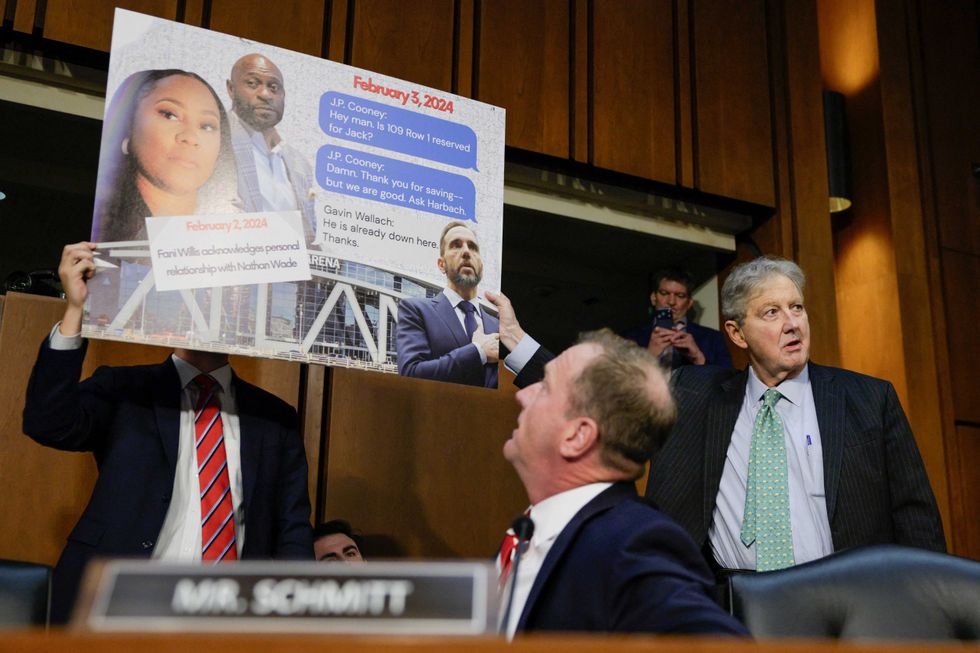
Scrutiny surrounding the recent Jack Smith Senate hearing intensified following contentious exchanges on Capitol Hill between Republican lawmakers and the former special counsel. The Senate Judiciary Committee convened on September 29, 2026, bringing former special counsel Jack Smith before lawmakers to address prior investigations and departmental actions. Among the committee members present were Senator Eric Schmitt of Missouri and Senator John Kennedy of Louisiana, both of whom participated in the high-stakes session.
The proceedings quickly drew national attention after line-of-questioning missteps unfolded during the hearing. Reporting authored by Nick Hilden and published on AlterNet on October 03, 2026, highlighted intense reactions from legal and political observers regarding the execution and strategic viability of the committee’s inquiries.
What Changed: The Capitol Hill Interrogation
During the September 29, 2026 hearing, Senator Eric Schmitt attempted to establish that Jack Smith had attended a basketball game in Atlanta. However, the line of inquiry collapsed during the exchange when the assertion was met with immediate factual corrections regarding the basic details of the event.
Specifically, the committee learned that Schmitt’s underlying claims suffered from basic factual inaccuracies, identified as involving the “wrong state, wrong team, wrong gender.” The failure to verify simple details before questioning the former special counsel prompted widespread astonishment from commentators tracking the committee’s work.
The misfire led to sharp criticism from political analyst Charlie Sykes, a former conservative commentator who broke with the Republican Party over President Donald Trump. Sykes observed: “The whole thing fell apart, and you kind of wonder – we’re worried about AI and being able to distinguish what’s real and what’s fake – this is a United States Senator…I mean, how did this happen?”
Strategic Analysis and Political Malpractice Claims
Sykes delivered a scathing assessment of the overall committee performance, characterizing the GOP’s questioning of Jack Smith as a “complete face plant” and asserting that “the term political malpractice doesn’t even seem to cover what happened.”
According to Sykes, the party’s decision to revisit past investigations represents a fundamental strategic error just weeks ahead of national elections. Describing the line of questioning as “a nesting ball of wrongness,” Sykes questioned the rationale behind revisiting former legal clashes:
“Why Republicans would choose to relitigate January 6 and Trump’s violation of the Espionage Act a month before the midterms…this is what we care about?” Sykes asked. He added: “Why would you do it right now, when people are saying, what are you caring about? Isn’t this the whole cognitive dissonance that Trump and the Republicans are having?”
Sykes argued that the focus on January 6 and Espionage Act violations projects a negative subliminal message to voters, demonstrating a severe divide between congressional focus and broader voter priorities.
Related Scrutiny: The Dismissal of Charges Against David Hearn
The broader debate over federal prosecutions and legal legitimacy extended beyond the committee room to recent judicial rulings involving the Department of Justice. Among these matters, Olympian David Hearn faced felony charges for allegedly vandalizing the Reflecting Pool. However, those charges collapsed when a federal judge dismissed the case with prejudice.
Commentator Jonathan Rauch offered a pointed critique of the Department of Justice’s handling of the prosecution, stating that the charges “fell apart at the touch of reality.”
Rauch noted: “They fell apart so badly that a federal judge dismissed the charges with prejudice. That almost never happens. But that means that the judge trusts the Justice Department so little that they’re not even allowed to bring back the charge no matter what they come up with.”
Commenting on the broader pattern of challenged allegations, Sykes remarked: “It would be funny if it weren’t so concerning… It just reminds us that the charges that are being used are totally bogus.”
Broader Context and Fiscal Priorities
The friction surrounding the Senate Judiciary Committee’s priorities comes at a moment when macroeconomic and federal expenditure figures dominate national governance discussions. With broader budgetary debates touching metrics such as $50 million program allocations, $150 billion legislative initiatives, and national fiscal exposure crossing $40 trillion, critics argue that congressional committees risk alienating an electorate seeking focus on material economic concerns.
Sykes asserted that this exact “cognitive dissonance” between the GOP’s political agenda and voter wants threatens the party’s legislative standing, claiming that the divergence will cost the party its congressional majorities in the midterm elections.
Risks, Limitations, and Unverified Factors
While commentators have levied sharp criticism against the hearing’s execution, several operational and political questions remain unresolved.
Predictive Limitations
Claims that the committee’s performance will definitively result in the GOP losing its congressional majorities in the midterm elections remain purely speculative political forecasts. Voter behavior is shaped by a wide range of factors, and whether this single committee session carries lasting electoral weight cannot be verified ahead of polling.
Unverified Staffing and Intelligence Work
The exact internal factors leading to Senator Schmitt’s mistaken information during the hearing remain unverified. It has not been established through official documentation whether the error originated from flawed staff research, unvetted external submissions, or spontaneous questioning on the dais.
What to Watch Next
In the wake of the September 29 session and the subsequent AlterNet reporting by Nick Hilden on October 03, observers are monitoring how both parties adjust their communication strategies ahead of the midterms.
Key areas to watch include:
- Whether members of the Senate Judiciary Committee, including Senators Schmitt and Kennedy, seek further public hearings or alter their lines of inquiry regarding former special counsel Jack Smith.
- The extent to which Department of Justice oversight remains central to congressional messaging following judicial dismissals like the David Hearn case.
- Whether voter sentiment reflects the concerns articulated by analysts regarding the relitigation of January 6 and Espionage Act investigations in the final month leading into the midterms.