
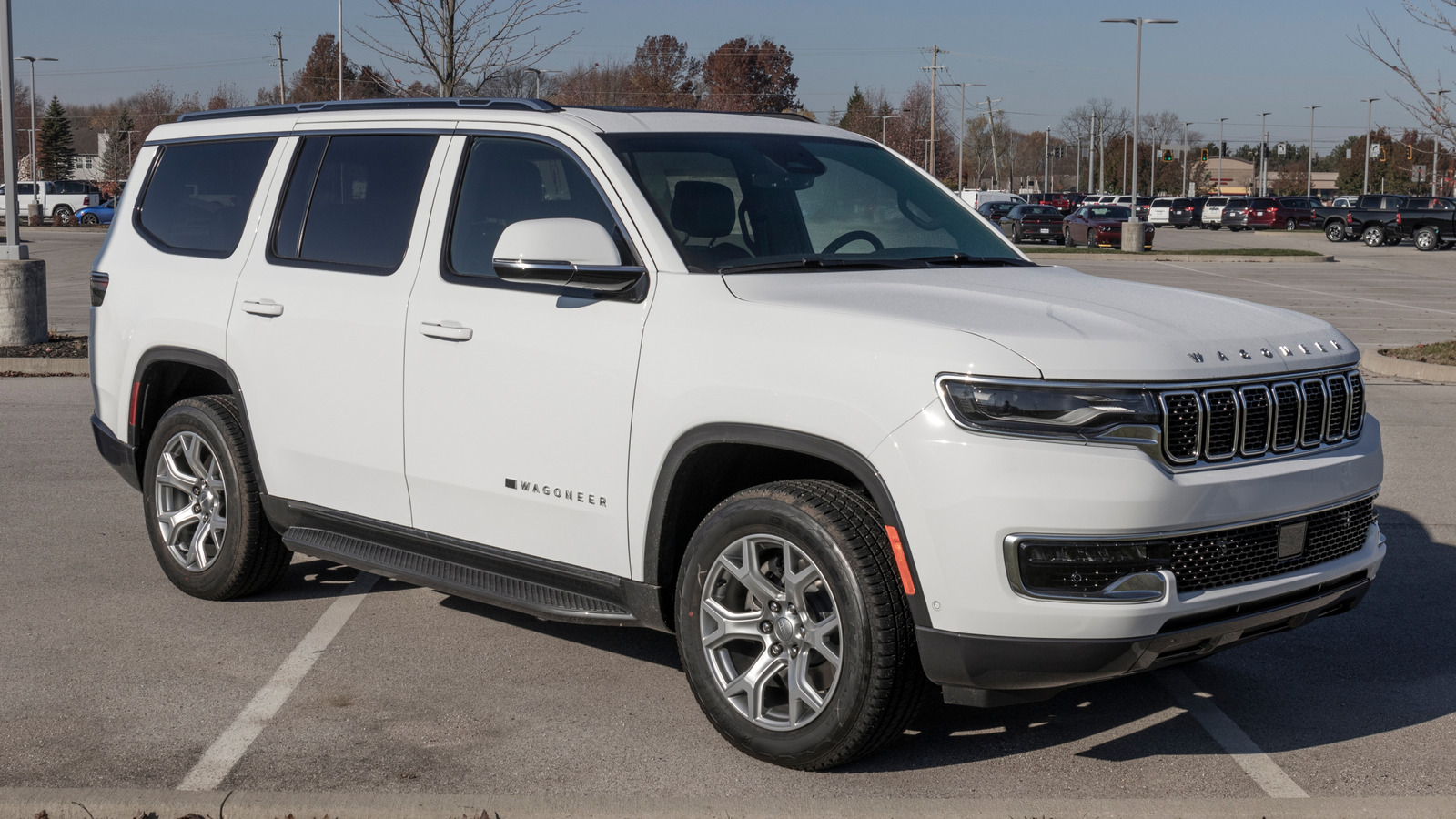
The 2022 Jeep Wagoneer marked a significant moment for the automaker, returning to the market after a three-decade absence. Built in Warren, Michigan, the full-size, three-row SUV was positioned as a premium alternative to established competitors like the Chevrolet Tahoe, Suburban, and Ford Expedition. However, four years later, the vehicle’s market value tells a story of rapid depreciation. Data from multiple valuation sources indicates that the 2022 model year has lost approximately half of its original sticker price, with some trims suffering losses exceeding 56%.
What Changed in the Market
When the Wagoneer launched for the 2022 model year, it entered a crowded segment with high price points. Sticker prices ranged from $63,995 for the entry-level trim to $83,190 for the top-tier configuration. The vehicle featured a single engine option: a 5.7-liter V8 rated at 392 horsepower, with a tow rating of up to 10,000 pounds. Despite its premium positioning and modern amenities, the vehicle has experienced a steep decline in resale value.
According to CarEdge, a 2022 Wagoneer that originally cost $72,870 is now valued at approximately $40,065. This represents a 45% loss in value over four years. While this figure is significant, it aligns with broader trends in the SUV market, where vehicles typically lose around 45% of their value after five years. However, the specific trajectory of the Wagoneer shows that the initial drop was sharper than the long-term average.
Key Depreciation Data by Source
Different valuation platforms provide slightly varying figures, but they all point to a consistent trend of substantial value erosion. Understanding these differences helps buyers and sellers navigate the used market more effectively.
CarEdge Valuations
CarEdge’s general depreciation curve suggests that a four-year-old Wagoneer retains about 50.9% of its original price. By the five-year mark, this figure drops to 47.1%. For a specific example, CarEdge notes that a vehicle with a $72,870 original price is now worth $40,065. The platform rates the 2022 model year as a “Better” value, placing it one step behind the 2024 model in terms of value retention. CarEdge also projects that the vehicle will lose another $2,656 in value during its fifth year.
iSeeCars Insights
iSeeCars reports a 37.7% depreciation after three years and a 46.8% loss after five years. Their data indicates a resale value of $31,917 at the five-year mark. This suggests that while the vehicle holds value reasonably well in the short term, the long-term outlook remains challenging for owners looking to recoup their initial investment.
Kelley Blue Book (KBB) Analysis
Kelley Blue Book provides a detailed breakdown of fair purchase prices, which range from $32,500 to $36,400 for the 2022 model. This range represents a loss of 49% to 56% against the original sticker price. KBB’s annual breakdown shows a consistent decline in private-party value: from $55,811 in 2023 to $46,315 in 2024, then $38,887 in 2025, and currently around $30,900. Each year, the vehicle loses between $7,428 and $10,404 in value. This steady decline highlights the predictable nature of depreciation for this model.
J.D. Power Data
J.D. Power’s average transaction prices for the 4WD Series I through III range from $34,460 to $37,085. This implies a loss of 46% to 53% against KBB’s original prices. Interestingly, J.D. Power scores the vehicle’s three-year resale forecast at 96 out of 100, earning it a “Best” label. This high score suggests that while the absolute value loss is significant, the vehicle performs better than many of its peers in terms of predictable depreciation patterns.
Trim-Specific Value Loss
Not all trims of the 2022 Wagoneer depreciated equally. The higher-end models, which came with more equipment and higher sticker prices, suffered the largest percentage losses.
Entry-Level Series I
The entry-level Series I, which started at $63,995, lost 49.2% of its value. This is a substantial drop, but it is slightly less severe than the losses seen in the higher trims. The lower initial price point means that the absolute dollar loss is smaller, but the percentage loss remains significant for buyers.
Mid-Range Series II Carbide
The Series II Carbide trim experienced a 56.4% loss in value. This trim was positioned as a balance between features and price, but the market did not reward this balance with strong resale value. The high percentage loss reflects the difficulty of retaining value in the mid-range segment of the luxury SUV market.
Top-Tier Series III Carbide
The top-tier Series III Carbide suffered the largest loss, at 56.2%. The drop in value for this trim was $46,790, the largest in the lineup. This suggests that buyers of the top trim are bearing the brunt of the depreciation, likely due to the high initial investment and the limited demand for used top-tier models.
Why the Wagoneer Depreciated So Quickly
Several factors contributed to the rapid depreciation of the 2022 Jeep Wagoneer. Understanding these factors can help potential buyers assess the risks and benefits of purchasing a used model.
High Initial Price Point
The Wagoneer’s sticker prices, ranging from $63,995 to $83,190, placed it in a competitive segment where buyers have many alternatives. The high initial cost means that even a moderate percentage loss results in a significant dollar amount. For example, a 50% loss on an $80,000 vehicle translates to a $40,000 reduction in value.
Limited Engine Options
The 2022 Wagoneer offered only one engine option: a 5.7-liter V8 rated at 392 horsepower. While this engine is powerful, the lack of alternative powertrains, such as a hybrid or a more fuel-efficient option, may have limited its appeal to a broader audience. In a market where fuel efficiency is increasingly important, the single-engine strategy may have contributed to slower sales and higher depreciation.
Reliability Concerns
Owner ratings and reliability scores provide additional context for the vehicle’s depreciation. KBB experts scored the Wagoneer 4.7 out of 5, indicating high overall satisfaction. However, owners rated reliability 2.9 out of 5 across 40 reviews, with only 53% saying they would recommend the vehicle. J.D. Power’s quality and reliability rating was 59 out of 100, which is considered “Fair.” These mixed signals may have affected buyer confidence and, consequently, resale value.
Competitive Landscape
The Wagoneer competes with well-established models like the Chevrolet Tahoe, Suburban, and Ford Expedition. These vehicles have a longer history in the market and may benefit from stronger brand loyalty and perceived reliability. A used 2022 Ford Expedition, for example, is listed at $28,200, which is $4,500 below a Series II Wagoneer at $32,700. This price gap suggests that buyers may prefer the Expedition for its lower cost and established reputation.
Business Implications for Buyers and Sellers
The depreciation data has significant implications for both buyers and sellers of the 2022 Jeep Wagoneer.
For Buyers
For buyers, the rapid depreciation presents an opportunity to acquire a relatively new vehicle at a lower price. A 2022 Wagoneer that cost over $70,000 new is now available for around $40,000. This price reduction makes the vehicle more accessible to buyers who may have been priced out of the new market. However, buyers should be aware of the potential for further depreciation and the costs associated with maintenance and repairs.
For Sellers
For sellers, the depreciation means that they will likely receive a lower trade-in or resale value than they might have hoped. Trade-in values for the 2022 Wagoneer range from $24,000 to $32,200, which is significantly lower than the original purchase price. Sellers should consider the timing of their sale, as the vehicle continues to lose value each year. Waiting may result in a further reduction in the amount they can receive for the vehicle.
Risks and Limitations
While the 2022 Jeep Wagoneer offers a compelling value proposition for some buyers, there are several risks and limitations to consider.
Warranty Expiration
The 3-year/36,000-mile basic warranty for the 2022 model has likely expired by now. The 5-year/60,000-mile powertrain coverage is also close to running out on mileage, with CarEdge assuming roughly 54,000 miles at four years old. This means that owners may face higher repair costs as the vehicle ages. The expiration of warranties can be a significant factor in the decision to buy or sell a used vehicle.
Insurance Costs
CarEdge estimates that the typical insurance bill for a 2022 Wagoneer is near $2,537 per year. This is a substantial cost that should be factored into the total cost of ownership. Higher insurance premiums can offset some of the savings from purchasing a used vehicle at a lower price.
Reliability Concerns
As mentioned earlier, owner ratings for reliability are mixed. A 2.9 out of 5 rating from owners and a 59 out of 100 rating from J.D. Power suggest that there may be issues with the vehicle’s long-term reliability. Buyers should consider these factors when evaluating the risk of purchasing a used Wagoneer.
Sector Impact and Market Trends
The depreciation of the 2022 Jeep Wagoneer is part of a broader trend in the SUV market. SUVs as a whole typically lose around 45% of their value after five years. The Wagoneer’s performance is in line with this trend, but the specific factors affecting its depreciation, such as high initial price and limited engine options, are worth noting.
The vehicle’s return to the market after three decades was a significant event for Jeep, but the market response has been mixed. The high depreciation rate suggests that the vehicle did not meet the expectations of buyers in terms of value retention. This could have implications for Jeep’s future strategies in the full-size SUV segment.
Who May Be Affected
The depreciation of the 2022 Jeep Wagoneer affects several groups of stakeholders.
Original Owners
Original owners of the 2022 Wagoneer are likely to experience a significant loss in value. Those who purchased the vehicle at a high price point, particularly the top-tier trims, will see the largest dollar losses. This can be a disappointment for owners who expected the vehicle to hold its value better.
Used Car Buyers
Used car buyers may benefit from the lower prices, but they should be aware of the potential for further depreciation and the costs associated with maintenance and repairs. The mixed reliability ratings suggest that buyers should conduct thorough inspections before purchasing a used Wagoneer.
Dealers and Resellers
Dealers and resellers may face challenges in selling used 2022 Wagoneers at a profit. The high depreciation rate means that the margin between the purchase price and the resale price may be thin. Dealers may need to offer competitive pricing to attract buyers, which could further reduce their profits.
What to Watch Next
As the 2022 Jeep Wagoneer continues to age, several factors will influence its future value and market position.
Future Model Years
The introduction of new model years, such as the 2024 and 2025 Wagoneers, will impact the value of the 2022 model. The 2024 Wagoneer, for example, now costs 65.6% of its original price at $48,876, while the 2022 sits at 55.0% and $40,065. This suggests that newer models are holding their value better, which could further depress the value of the 2022 model.
Changes in Jeep’s Strategy
Jeep’s strategy for the Wagoneer line will also play a role in its future value. At the 2025 Detroit Auto Show, Bob Broderdorf, then head of Jeep in North America, stated, “Wagoneer, it’s too far.” This comment suggests that Jeep may be reevaluating its approach to the Wagoneer line, which could have implications for the vehicle’s future development and market positioning.
Market Conditions
Broader market conditions, such as changes in fuel prices, consumer preferences, and economic factors, will also influence the value of the 2022 Wagoneer. If fuel prices rise, the vehicle’s single V8 engine may become less appealing, potentially leading to further depreciation. Conversely, if consumer preferences shift toward larger, more powerful SUVs, the Wagoneer may hold its value better.
Conclusion
The 2022 Jeep Wagoneer has experienced significant depreciation, losing roughly half of its value in just four years. While this may be disappointing for original owners, it presents an opportunity for used car buyers to acquire a relatively new vehicle at a lower price. However, buyers should be aware of the potential for further depreciation, the costs associated with maintenance and repairs, and the mixed reliability ratings. As the vehicle continues to age, its value will likely continue to decline, but the specific trajectory will depend on a variety of factors, including future model years, Jeep’s strategy, and broader market conditions.