
Alaska Airlines plans major upgrades for Hawaii brand following a multi-million dollar investment initiative designed to reshape the passenger experience across the Pacific. Alaska Air Group is positioning Hawaiian Airlines as its flagship brand for Hawaii travel, backed by more than $600 million in planned investments through 2030. The strategic move preserves the standalone identity of Hawaiian Airlines rather than absorbing it into Alaska Airlines, signaling a long-term commitment to the carrier’s legacy and regional footprint.
What Changed
The overarching transformation stems from the Kahuʻewai Hawaiʻi Investment Plan, a five-year funding package exceeding $600 million. Rather than dissolving Hawaiian Airlines into its parent corporation, Alaska Air Group is investing heavily to elevate the brand’s competitive position. The investment package includes a complete overhaul of Hawaiian’s Airbus A330 fleet, a new premium Leihoku Suites product, a new Honolulu lounge, upgraded airport facilities across Hawaii, a new premium economy cabin, and expanded loyalty-program benefits.
Key integration milestones achieved two years after the merger include a unified reservations platform and membership in the Oneworld alliance. These operational updates run parallel to the Alaska Accelerate plan, which targets $1 billion in incremental merger-related profit by 2027.
Fleet Refurbishments and Cabin Upgrades
The physical transformation centers heavily on aircraft modernization and configuration changes. Hawaiian’s 24 Airbus A330 aircraft will undergo a fleetwide refurbishment beginning in 2028. This update features 22 redesigned lie-flat Leihoku Suites complete with privacy doors, upgraded dining options, and concierge-style airport service.
Through these modifications, premium seating capacity on the A330s will expand from approximately 30% to about 40%. In addition to the A330 fleet upgrades, Alaska Airlines plans to add 34 lie-flat Aurora Suites to all 787 Dreamliners, launch premium transcontinental 737 first-class service in 2028, and feature 12 Aurora Suites on at least 25 737-10 MAX aircraft.
A brand new ‘Premium Reserve’ cabin debuts in 2028, featuring 35 seats on 787-9 and 787-10 aircraft, 28 on A330s, and 12 on 737-10 MAX planes. Company leadership notes that these combined offerings create the only four-cabin product offered at scale on North America-Hawaii routes.
Airport Infrastructure and Lounge Expansions
Beyond aircraft cabins, the investment plan addresses ground operations and airport hospitality. Alaska Airlines plans to open a nearly 41,000-square-foot lounge complex in Seattle’s expanded C Concourse in 2027. This facility will feature a 500-seat Alaska Lounge, a 200-seat Aurora Lounge, and an outdoor patio equipped with a fireplace.
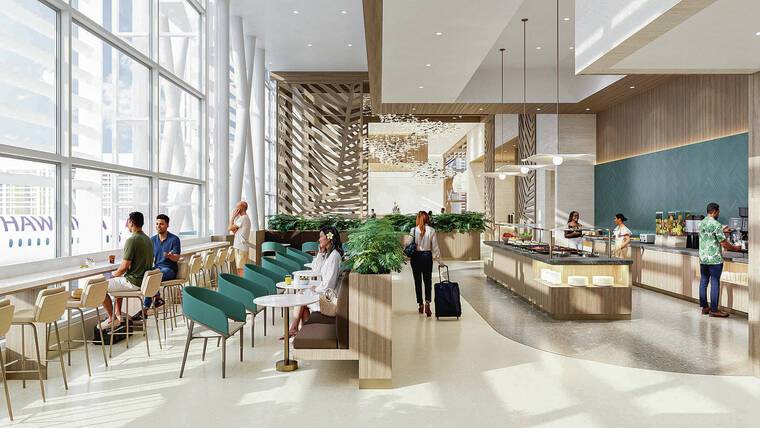
In the islands, a nearly 13,000-square-foot Hawaiian Airlines lounge is scheduled to open in early 2028 near Terminal 1’s Mauka Concourse in Honolulu. This space will accommodate about 200 guests, offering local food selections, a dedicated coffee experience, regional artwork, and functional workspaces.
Additional improvements to lobby and gate spaces across all five Hawaii airports are slated to come online between 2028 and 2029, though exact timelines for certain lobby designs remain under review over the coming months.
Loyalty Program Integration and Privileges
Frequent flyer benefits are also seeing major shifts. Legacy HawaiianMiles customers have experienced a surge in utility, with point redemption and use up 10 times relative to prior to the combination.
Under the updated framework, Atmos Rewards members can choose whether they earn rewards based on distance flown, ticket price, or flight segments, with an Atmos debit card planned for early 2027. Furthermore, Titanium status holders and passengers flying in premium suites starting in 2027 will gain access to exclusive private check-in areas and dedicated fast-track lanes on eligible routes.
Business Implications and Sector Impact
Executive leadership emphasizes that the multi-year investment plan supports a diversified financial model. Company representatives note that a primary goal is increasing the fraction of revenue generated outside the main cabin, helping establish a balanced portfolio that caters to diverse traveler budgets.
The Honolulu international hub retains a vital role due to its strategic access to the South Pacific. By leveraging the combined network reach alongside targeted capital expenditures, Alaska Air Group aims to capture a stronger foothold in the competitive transpacific aviation market while maintaining Hawaiian as Hawaii’s most trusted airline brand.
Limitations and What to Watch Next
While the roadmap is detailed, several components remain subject to rollout schedules. Most airport lobby and gate improvements across the five Hawaii airports are expected to come online between 2028 and 2029, and additional modifications to specific terminal spaces remain in design. Observers will monitor the execution of the Alaska Accelerate financial targets through 2027 alongside the physical delivery of the redesigned aircraft fleets.