
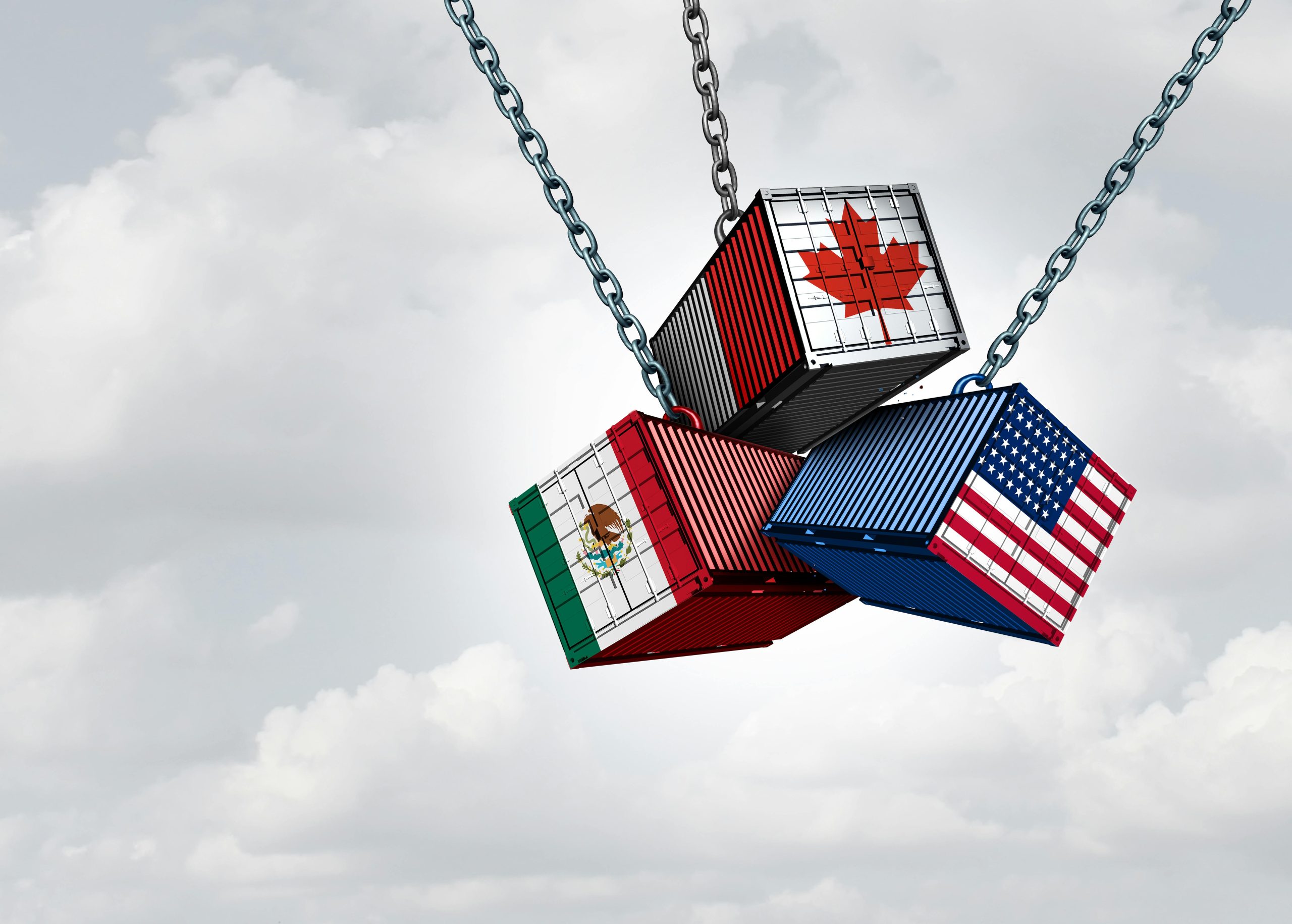
As cross-border shipping gets more complex, trade fraud is becoming a supply chain problem that challenges traditional compliance frameworks, regulatory oversight, and corporate risk management strategies. Global commerce has expanded significantly, bringing new multi-jurisdictional shipping routes, shifting trade corridors, and increasingly intricate supply chains. These developments create numerous operational vulnerabilities. As businesses navigate evolving trade patterns, bad actors exploit information gaps between physical cargo movements and digital documentation, forcing organizations to rethink how they detect and prevent fraudulent activities.
What Changed in Global Trade Patterns
The landscape of international commerce experienced major shifts according to comprehensive data released by economic agencies. Global trade in goods and commercial services reached $34.89 trillion in 2025, representing an 8% increase from the previous year, according to the World Trade Organization. This expansion reflects robust worldwide demand, but it also underscores the massive volume of transactions moving through global logistics networks.
Regional trade corridors are also transforming rapidly. According to the U.S. Census Bureau, U.S. goods imports from Canada fell 7.2% in 2025, while U.S. goods imports from Mexico increased 6.2% over the same period. Statistics Canada reported complementary findings regarding Canadian merchandise exports: exports to the United States fell 5.8% in 2025, whereas Canadian exports to countries outside the U.S. surged by 17.2%.
Furthermore, baseline figures illustrate the deep integration of North American trade. In 2024, U.S. imports from Mexico totaled about $503.1 billion, and U.S. imports from China totaled about $440.3 billion, according to the U.S. Census Bureau. Underlying routing data reveals even greater nuance. Statistics Canada found that more than 40% of Canadian imports originating in Mexico were shipped to Canada from the United States, and more than 25% of Canadian imports originating in China were first imported into the United States. These intermediate stops and transshipments create complex routing webs where origin and compliance data can easily become obscured.
Trade Complexity and the Rise of Information Discrepancies
Trade complexity involves multiple stakeholders, jurisdictions, and data points. Each handoff between suppliers, freight forwarders, customs brokers, and carriers introduces opportunities for information discrepancies and fraud.
The U.S. Census Bureau defines country of origin as the country where merchandise was grown, mined, or manufactured, and country of shipment as the country from which the merchandise was shipped. When goods pass through intermediate hubs—such as when Chinese or Mexican goods enter the United States before being forwarded to Canada—the distinction between origin and shipment becomes a focal point for regulatory compliance and potential evasion.
Traditional document-based compliance checks are increasingly insufficient for managing these realities. Abhi Arora, Managing Director at YDelay Group Inc., a technology consulting firm specializing in business transformation, process improvement, custom software development, automation, data, AI, and cybersecurity, notes the shift required in modern risk assessment. “The objective isn’t to inspect everything more aggressively,” Arora explains. “It is to identify where the relationships between pieces of information create a reason for a closer look.”
Rather than relying on isolated document reviews, organizations must analyze relationships between multiple data points for better risk detection. When data points across disparate logistics systems do not align—such as weight mismatches, ambiguous bills of lading, or unexplained routing deviations—they signal potential fraudulent manipulation.
Business Implications and Sector Impact
For enterprises managing international supply chains, the rise of trade fraud carries substantial financial and operational consequences. Regulatory penalties, cargo seizures, and supply chain delays can severely disrupt business continuity. When supply chains rely on blanket compliance controls, legitimate shipments frequently face severe operational friction and delays at borders.
Moving from blanket controls to risk-based, context-rich assessments helps reduce operational friction for legitimate shipments while focusing resources on high-risk transactions. However, achieving this balance requires sophisticated data integration. Businesses must connect physical shipment signals with digital data to create a richer, more accurate view of shipment integrity and potential anomalies.
Risks, Limitations, and the Role of Artificial Intelligence
As supply chain operators turn to advanced technologies to combat fraud, the technological landscape presents both solutions and new risks. Artificial intelligence can process vast amounts of data to prioritize shipments for review, enabling compliance teams to handle surging trade volumes efficiently.
At the same time, technology is a double-edged sword. AI also enables bad actors to manipulate information, falsify documentation, and evade detection more effectively. This technological arms race requires smarter risk management strategies that evolve continuously alongside emerging threats.
What to Watch Next
As cross-border logistics continue to evolve, supply chain leaders must monitor several key developments:
- Regulatory adjustments regarding country-of-origin reporting and transshipment tracking.
- The adoption of advanced data analytics and AI-driven risk-scoring platforms within customs and corporate compliance departments.
- Shifts in North American and global trade volumes that could further strain traditional inspection checkpoints.
- Industry collaboration standards aimed at improving data visibility across multiple jurisdictions and logistics partners.
Ultimately, addressing modern trade fraud demands a departure from legacy paperwork verification. By embracing context-rich, relationship-based data analysis, supply chain operators can better safeguard their networks against increasingly sophisticated fraudulent schemes.