
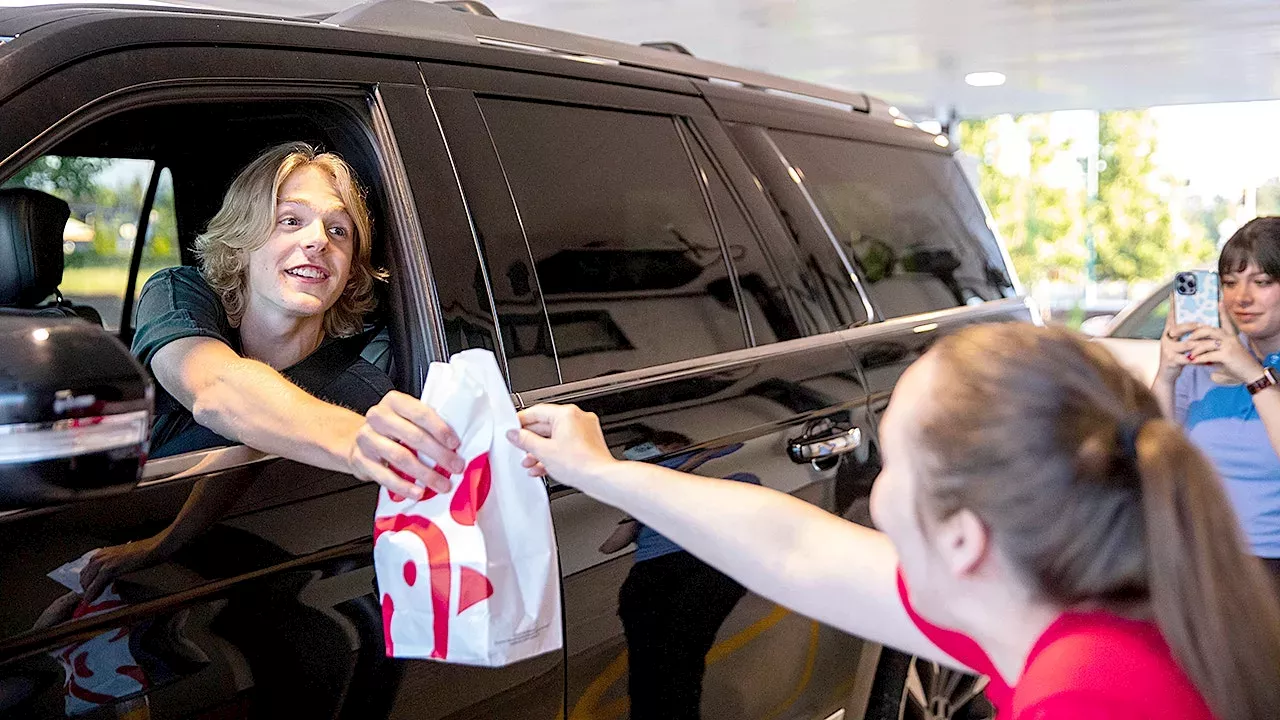
Chick-fil-A has formally ruled out the adoption of AI drive-thru ordering across its restaurant network, explicitly rejecting the industry trend toward replacing human order-takers with automated voice technology. Chief Executive Officer Andrew Cathy announced that the Atlanta-based chicken chain will not use artificial intelligence to take drive-thru orders at its locations. Instead, the company plans to double down on human hospitality and human-to-human interaction in its drive-thru lanes, choosing not to substitute personal service with front-of-house automated systems.
What Changed in Chick-fil-A’s Operational Strategy
As competitors across the quick-service restaurant industry rush to integrate automated voice assistants into their order boards, Chick-fil-A is establishing a clear boundary regarding where artificial intelligence belongs within its business model. The decision marks a deliberate strategic divergence from rival fast-food chains that view automated order-taking as a primary lever for labor reduction and throughput management.
While Chick-fil-A is strictly ruling out customer-facing voice bots at the drive-thru interface, the company is not dismissing technology altogether. Instead, the chain is exploring potential uses for artificial intelligence behind the scenes, leveraging digital infrastructure and hardware tools to boost operational efficiency without eliminating direct human touchpoints.
Human Hospitality vs. Drive-Thru Automation
At the center of Chick-fil-A’s refusal to automate drive-thru ordering is a core corporate emphasis on customer service and brand perception. CEO Andrew Cathy highlighted the company’s core belief that interpersonal connections are vital to the dining experience.
“From our experience, we really want that hospitality to be human to human,” Cathy stated regarding the company’s operational philosophy. “We’re not going to substitute that interaction with technology, because we feel like that hospitality is so important to create that warm environment for consumers.”
This positioning underscores a broader business strategy: treating the drive-thru experience not merely as a mechanical transaction, but as a primary point of guest engagement. By protecting human-to-human interaction at the order boundary, Chick-fil-A aims to reinforce the service identity that differentiates it from competitors offering increasingly automated drive-thru lanes.
Behind-the-Scenes Automation and Engineering Innovations
Chick-fil-A’s strategy separates customer-facing warmth from physical and back-of-house technological efficiency. Rather than using conversational AI to interface with drivers, the chain is investing heavily in advanced physical architecture, mechanical conveyor systems, and behind-the-scenes digital workflows.
This multi-pronged architectural vision began taking shape publicly in 2023, when Chick-fil-A unveiled plans for digitally focused restaurant designs engineered specifically to elevate human touchpoints while keeping human interaction at the center of the customer journey.
The McDonough, Georgia Elevated Drive-Thru Model
A primary example of this technology-supported, human-centered approach materialized in 2024 with the opening of Chick-fil-A’s elevated drive-thru restaurant in McDonough, Georgia. The purpose-built location demonstrates how hardware innovation can drastically increase speed and volume without deploying voice AI order takers.
- Elevated Kitchen Architecture: The McDonough location features four drive-thru lanes built directly underneath an elevated, overhead kitchen structure.
- Rapid Mechanical Delivery: The facility utilizes an advanced conveyor system capable of delivering a completed meal to an employee on the ground every six seconds.
- Expanded Capacity: According to company figures and project claims, the McDonough elevated drive-thru design can accommodate two to three times as many vehicles as a traditional Chick-fil-A drive-thru location.
By using a conveyor system to deliver a meal to team members every six seconds, the restaurant delegates heavy physical transfer tasks to mechanical engineering. This frees store employees to focus entirely on taking orders in person, fulfilling items, and interacting directly with guests in the drive-thru lanes.
Competitive Landscape: How Fast-Food Rivals Approach Voice AI
Chick-fil-A’s rejection of front-of-house AI places it in direct contrast with major fast-food rivals that are aggressively testing and deploying automated voice ordering technology.
Multiple competitor chains are turning to artificial intelligence to take customer orders in an effort to streamline operations and manage labor costs. For example, McDonald’s announced during its investor day last month that it is actively testing its proprietary voice AI technology named ‘Archy’. McDonald’s is evaluating Archy in both English and Spanish across drive-thru locations to determine how voice software handles complex customer requests, ambient outdoor noise, and order accuracy.
While McDonald’s and other fast-food competitors move toward automated conversational order boards, Chick-fil-A’s leadership contends that automated order takers risk eroding the warm environment consumers expect when visiting its drive-thru lanes.
Business Context and Financial Scale
Chick-fil-A’s decision to maintain human order takers comes from a position of substantial financial strength. The privately held chain generated approximately $23.9 billion in U.S. systemwide sales in 2025, according to figures disclosed in its franchise documentation.
This sales baseline provides the company with the financial flexibility required to support higher labor density in its drive-thru lanes. Rather than seeking immediate payroll reductions through front-of-house AI ordering tools, Chick-fil-A leverages its high sales volume to fund physical store expansions, high-capacity conveyor infrastructure, and dedicated team-member staffing.
Sector Impact and Business Implications
The operational divide between Chick-fil-A and its competitors highlights two distinctly different approaches to technology adoption in the quick-service restaurant industry:
- Front-of-House Labor Strategy: Competitors using voice AI like Archy aim to optimize throughput by removing human friction from the initial ordering step. Chick-fil-A maintains that front-of-house staff are essential to driving customer loyalty and maintaining brand value.
- Targeted AI Integration: Chick-fil-A restricts AI applications to behind-the-scenes efficiency, kitchen optimization, and back-of-house support, ensuring technology serves the staff rather than replacing the customer relationship.
- Capital Investment Priorities: Rather than spending capital primarily on front-of-house conversational AI models, Chick-fil-A prioritizes mechanical innovations—such as elevated four-lane drive-thrus and automated conveyor systems—to solve bottleneck issues.
Limitations, Uncertainty, and What to Watch Next
While Chick-fil-A has made its stance on voice AI order-taking clear, questions remain regarding the specific software applications the company will adopt for its back-of-house technological expansion. Chick-fil-A did not immediately respond to FOX Business’ request for additional comment regarding specific details on its behind-the-scenes AI testing schedules or software vendor partnerships.
Looking ahead, industry analysts and corporate observers will monitor how Chick-fil-A balances its commitment to human labor against rising operational costs and expanding order volume. CEO Andrew Cathy emphasized that the chain remains open to broad technological exploration as long as it enhances the guest experience without undermining personal service.
“We think about all these new things into the future, about how will people want to receive food in the future?” Cathy reflected. “It’s a fun time in the industry, to think about all the possibilities of what we can do to make a better experience for our guests.”
Whether Chick-fil-A’s insistence on human-to-human service yields long-term competitive advantages over AI-driven competitors like McDonald’s remains a central storyline for the fast-food sector. For now, drivers entering a Chick-fil-A drive-thru lane can expect to speak directly with a human team member rather than an automated voice agent.