
Introduction
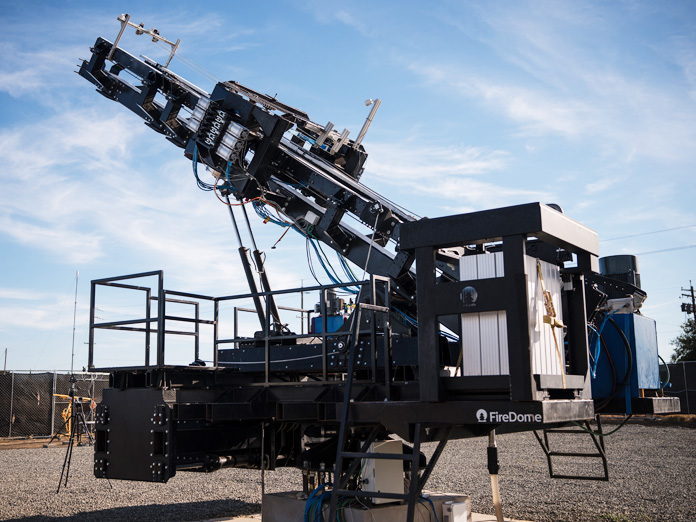
FireDome has officially launched its U.S. operations, introducing an autonomous defense platform designed to tackle emerging wildfire threats before they can escalate into major disasters. The company has established a fully operational site at Yuba County Airport in California, featuring offices, a control room, and a dedicated demonstration area centered on its core technology.
By situating its testing ground in a wildfire-risk-prone area with real-world conditions, FireDome aims to validate its system ahead of commercial deployment. The platform addresses a critical challenge in modern disaster management: intervening upstream during the crucial first few minutes of a fire.
What Changed
FireDome has moved from developmental phases to establishing its physical U.S. footprint. Over the past several months, the company built out its operational site at Yuba County Airport. This environment allows the team to test how the autonomous system handles real-world conditions in a region highly vulnerable to wildfires.
The system relies on stationary launchers equipped to identify and respond to emerging threats. These launchers deploy smart capsules filled with eco-friendly retardant. According to the company specifications, each capsule can travel up to 1,000 feet, and a single FireDome system is designed to protect up to 70 acres.
Context and Development
The operational model behind FireDome was shaped through direct input from California fire-service leaders. This includes chiefs and senior leaders from San Bernardino, Orange County, and Los Angeles, alongside Dr. Lori Moore-Merrell, the former U.S. Fire Administrator.
Gadi Benjamini, co-founder and CEO of FireDome, noted the operational pressures faced by first responders. When extreme winds move embers and firefighting resources are stretched thin, communities need multi-layered protection that can pinpoint threats early. The system is designed to create an immediate barrier in the critical moments before human crews can arrive on the scene.
“Our focus is on creating a holistic wildfire defense platform that strengthens the traditional tools and strategies communities already rely on,” said Gadi Benjamini. “By combining data, early detection and autonomous suppression, FireDome gives incident commanders greater visibility and adds a critical layer of security when every second matters.”
Technical Explanation
The FireDome platform provides 24/7 detection, proactive protection, precision targeting, and real-time suppression. Its architectural design integrates these functions into a single autonomous system.
Adi Naor Pomerantz, co-founder and CTO of FireDome, emphasized the dynamic nature of wildfire environments. The system must continuously assess what is happening, prioritize targets, and respond as conditions shift.
“By integrating detection, targeting and suppression into one autonomous architecture, we’ve built a system that provides a new layer of protection for our customers,” said Adi Naor Pomerantz. “It acts within seconds during the most consequential first few minutes and continues to operate in high winds and when power, water or communications are limited.”
The technology is specifically engineered to move wildfire intervention upstream. By creating defensive firebreaks and suppressing spot fires before they spread, the architecture aims to stop small ignitions from turning into catastrophic blazes.
Business Implications and Sector Impact
For high-risk regions, property owners, and local municipalities, the deployment of automated defense networks introduces a new paradigm in risk mitigation. Jason Kopping, deputy director of the Yuba County Airport, expressed support for the initiative, stating that the airport is proud to serve as a place where emerging technologies can be put to work in real-world conditions.
As a force multiplier for personnel on the front lines, the system aims to reduce the strain on traditional firefighting services. By maintaining functionality during communication outages or power and water supply limits, the platform offers operational resilience that standard infrastructure may lack during an active emergency.
Limitations and Risks
While the system provides robust capabilities—protecting up to 70 acres per unit and operating under adverse conditions like high winds—its overall effectiveness depends on proper placement and integration within broader regional emergency strategies. The technology is designed to complement, rather than replace, traditional firefighting tools and strategies.
Furthermore, commercial deployment follows ongoing testing phases. Continued validation at the Yuba County Airport demonstration site remains essential for refining how the platform responds to unpredictable weather patterns and varied terrain.
What to Watch Next
Industry observers and emergency management officials will be monitoring the results from the Yuba County Airport testing site. Key areas to watch include how the stationary launchers perform across extended real-world trials, how local fire services incorporate the data feeds into their command structures, and progress toward broader commercial deployment across wildfire-prone regions.