
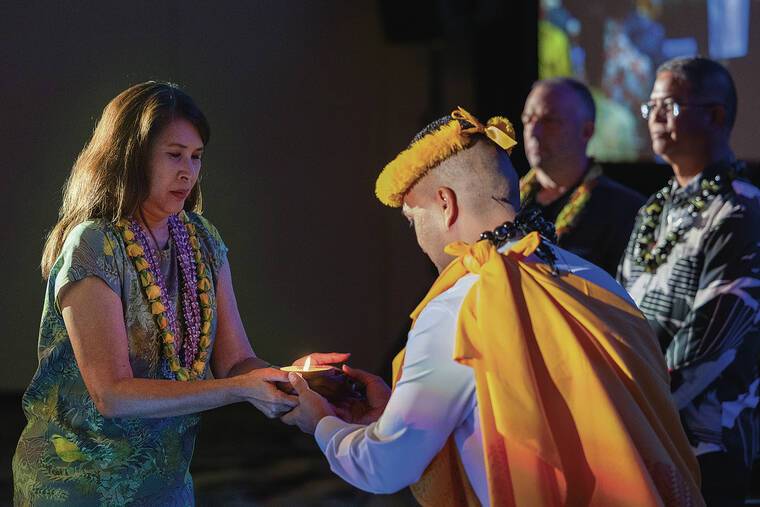
More than 700 tourism industry leaders, government officials, and community stakeholders gathered at the Hilton Hawaiian Village for a sold-out Hawai‘i Tourism Conference. The two-day conference was organized by the Hawai‘i Tourism Authority (HTA), bringing together key players to address the future of the islands’ visitor economy.
The opening protocol event and ceremony took place on Thursday, Sept. 24, 2026, at the Hilton Hawaiian Village in Honolulu. Operating under the theme ‘Ke Kahu o ka Malamalama’ (Guardians of the Light), the gathering centered on community recovery, crisis management, and sustainable economic stewardship following recent environmental and operational disruptions.
What Changed
The annual conference highlighted a strategic pivot toward community-integrated crisis response and international accessibility. Speakers pointed to the 2023 Maui wildfires, recent hurricanes, flooding, and other emergencies as examples of how the visitor industry worked alongside government agencies and local communities during crises.
Significant structural announcements accompanied the event. U.S. Ambassador Nick Adams signed a memorandum of understanding advancing U.S. customs and immigration pre-clearance in Japan, alongside a direct flight corridor between Japan and Maui. Ambassador Adams noted that relations with Japan have reached new heights, making it an opportune time to push for the implementation of the Japan pre-clearance initiative.
Business Implications
Governor Josh Green addressed the economic gravity of the sector, stating that visitor spending in Hawaii generates $22 billion, employs 222,000 residents, and brings in over $3 billion in tax revenue. Gov. Green emphasized that without this capital inflow, the region’s hospital system, public schools, and kauhale infrastructure could not be maintained.
Highlighting private-sector engagement during emergencies, Gov. Green noted that tourism businesses helped house nearly 8,000 Maui residents displaced by fires. James Tokioka praised hotel and tourism workers for remaining on the front lines during recent emergencies, noting that employees often run toward dangerous situations to keep guests safe.
At the same time, Hawaiian Airlines CEO Diana Birkett Rakow offered a cautionary business outlook, stating that Hawaii’s post-COVID-19 recovery remains uneven and competition for travelers continues to grow globally. Rakow emphasized that Hawaii’s position as a leading global destination is not something that can be taken for granted.
Crisis Leadership and Sector Impact
Retired Fire Department of New York Chief Joseph Pfeifer delivered the keynote address, drawing parallels between historic urban disasters and modern emergency management in the hospitality sector. Gov. Green compared the lasting impact of the Sept. 11, 2001, terrorist attacks on New York to the trauma Hawaii experienced following the Lahaina wildfire.
Chief Pfeifer outlined core principles of emergency response, stating that the art of crisis leadership is to connect, collaborate, and coordinate. He noted that these three lessons were forged during the 25 years since 9/11.
Risks, Limitations, and Considerations
While international agreements like the Japan pre-clearance initiative aim to streamline travel corridors, structural vulnerabilities remain. The uneven nature of post-pandemic recovery, coupled with external pressures such as approaching severe weather events—including Hurricane Nolo described as approaching the islands while Hawaii braces for flooding and high winds—demonstrate the ongoing exposure of the regional tourism market to environmental shocks.
Furthermore, balancing aggressive global marketing with regenerative local practices requires continuous data-driven planning. Industry leaders acknowledged that community well-being and visitor volume must be carefully balanced to sustain long-term viability.
What to Watch Next
Stakeholders will monitor the formal implementation timeline for the U.S. customs and immigration pre-clearance protocols in Japan, alongside the operational launch of the direct flight corridor to Maui. Observers will also track how HTA’s data-driven planning and regenerative tourism initiatives shape visitor volume and community relations through upcoming fiscal cycles.