
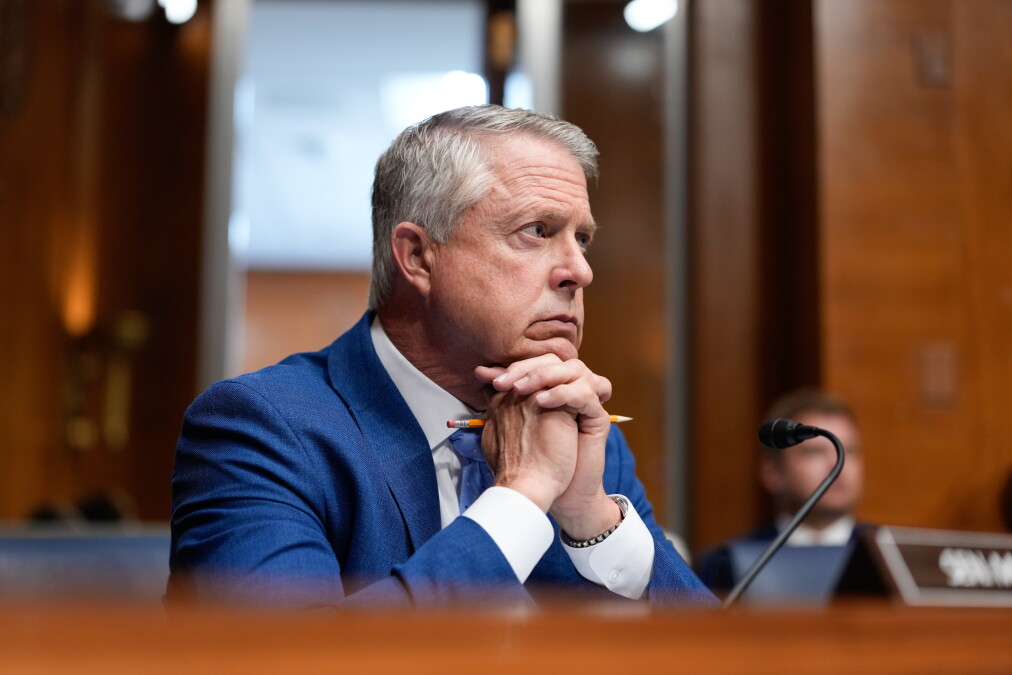
The intersection of financial regulation, national political brands, and local banking interests has created an unexpected flashpoint in the American heartland. How credit cards are playing into the Kansas Senate race offers a clear window into how federal legislative battles over electronic payments can ripple back into high-stakes midterm politics. Senator Roger Marshall (R-Kansas) faces a challenging re-election campaign where recent polling suggests he could potentially lose, a development that would make him the first Republican to lose a Senate seat in Kansas in nearly 100 years.
At the center of this legislative dispute is the Credit Card Competition Act (CCCA), a swipe fee bill co-sponsored by Senator Marshall and retiring Senate minority whip Dick Durbin (D-Ill.). While the banking industry strongly opposes the measure, President Donald Trump supports it. This unusual alignment has placed Senator Marshall at odds with key state financial institutions, triggering a multi-million-dollar local advertising campaign and transforming a technical financial services bill into a prominent factor in the Kansas contest.
What Changed in the Kansas Senate Race
The political dynamics surrounding Senator Marshall shifted notably when The Cook Political Report downgraded his re-election prospects from ‘likely Republican’ to ‘lean Republican.’ This ratings adjustment brought national attention to a contest where Marshall is being challenged by Democrat Adam Hamilton, a Methodist minister who has crossed traditional political lines to appeal to disaffected Republicans and independents.
Simultaneously, the financial services sector has escalated its pushback against Marshall’s legislative portfolio. The Kansas Bankers Association joined a roughly $1 million ad buy calling out Marshall for his co-sponsorship of the swipe fee bill. The association contributed about $250,000 to the campaign, partnering directly with the Electronic Payments Coalition to air criticisms of the legislation.
Context: The Credit Card Competition Act and Swipe Fees
The Credit Card Competition Act aims to introduce more competition into the processing of credit card transactions, a space historically dominated by major networks. Proponents argue that lowering swipe fees benefits merchants and consumers. However, banking groups and industry stakeholders strongly contest this outlook.
The Kansas Bankers Association and the Electronic Payments Coalition argue that proposed credit card legislation could have harmful effects on consumers and restrict access to credit cards offered by community banks. Populism generally involves pushback against large institutions like banks, making them the focus of populist anger on both the left and the right. This creates a complex ideological landscape where traditional conservative support for free markets brushes up against populist interventions in pricing and payment networks.
Despite the fierce political friction, industry analysts note that the underlying mechanics of the payment system remain largely opaque to the average voter. As one observer noted, voters do not typically understand the intricate mechanisms of how payments are made; they simply want to be able to use their cards and buy their goods.
Business Implications and Sector Impact
The direct intervention of state banking associations into a federal legislative race highlights the high stakes attached to swipe fee regulations. Financial institutions view the CCCA as a direct threat to interchange revenue models that support rewards programs and credit availability.
Jaret Seiberg, an analyst at TD Cowen, observed that bread-and-butter issues like inflation, higher gas prices, diesel prices, and agricultural issues are driving the race, while credit cards are ‘just along for the ride.’ Nevertheless, the financial sector’s willingness to fund opposition ads demonstrates that banking stakeholders are taking no chances when their core business models intersect with populist political agendas.
On the other side of the debate, merchant groups remain convinced that legislative momentum will persist regardless of individual election outcomes. Doug Kantor of the National Association of Convenience Stores and Merchants Payments Coalition stated there is enough momentum for the bill to pick up new lawmaker advocates if Marshall loses. This suggests that the pressure on credit card interchange fees will remain a fixture of financial services policy in Washington regardless of the Kansas electoral outcome.
Limitations and Legislative Outlook
While the political debate in Kansas is fierce, the national legislative path for the bill remains uncertain. Ian Katz of Capital Alpha Partners stated that the CCCA faces an uphill climb in Congress and is unlikely to become law, though a hearing on the subject next year is possible.
Furthermore, broader regulatory scrutiny of the financial sector continues to evolve. Federal Housing Finance Agency Director Bill Pulte recently expressed an interest in reforming credit scoring, indicating that payment and lending practices remain under sustained observation by federal officials.
What to Watch Next
As the November midterms approach, observers will monitor whether the ad campaigns funded by the Kansas Bankers Association and the Electronic Payments Coalition successfully sway voters in Marshall’s district. Beyond the immediate electoral result, the race will serve as a crucial test of whether co-sponsoring populist financial legislation creates a sustainable political shield or alienates vital traditional business supporters within the party base.