
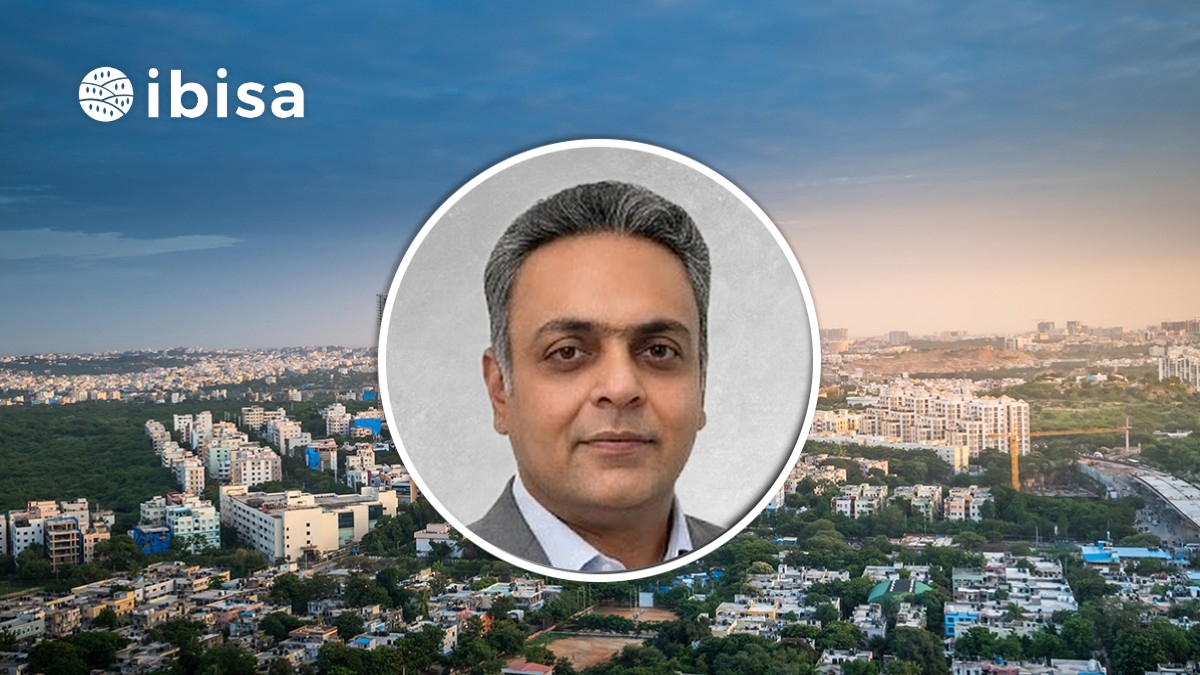
Climate-focused insurtech firm IBISA has announced a major leadership transition, confirming that IBISA appoints Samdarshi Vikram Singh as CEO for India. The appointment, detailed in a company press release on October 9, positions Singh at the helm of the firm’s strategic expansion across the Indian market as demand for climate risk solutions and parametric insurance continues to evolve.
Operating in India since 2019, IBISA specializes in technology-driven agricultural insurance, reinsurance, and parametric solutions designed to protect vulnerable communities and climate-exposed enterprises. With Singh’s extensive background in the insurance sector, the company aims to scale its operations beyond traditional agricultural boundaries into emerging sectors such as lending, small and medium-sized enterprises (SMEs), and renewable energy.
What Changed
IBISA has restructured its executive leadership in India by naming Samdarshi Vikram Singh as chief executive officer. In this role, Singh will spearhead the company’s regional growth strategy, manage the local team, forge new business relationships with insurance and distribution partners, and extend the firm’s core offerings beyond traditional agricultural lines.
Prior to stepping into his new position at IBISA, Singh spent nine years at Generali Central Insurance. During his tenure there, he most recently held the position of senior vice president and head of government business and reinsurance. His career background also includes professional experience at Bharti AXA General and HDFC ERGO General. Across these roles, Singh has accumulated more than 18 years of specialized industry experience spanning agricultural insurance, reinsurance, and parametric solutions.
Context and Background
IBISA has maintained an active operational presence in India since 2019, working to build out product, technology, and operational capabilities tailored to climate-vulnerable markets. The firm utilizes parametric solutions, which trigger payouts automatically based on predefined hazard thresholds—such as extreme temperatures or rainfall anomalies—rather than traditional, time-consuming damage assessments.
Practical applications of these risk models are already evident in the region. For instance, a parametric heat insurance programme implemented alongside the Mahila Housing Trust successfully paid out over INR2.06 million (approximately US$21,558) to women informal workers after local temperatures exceeded predefined thresholds.
Industry leaders have noted that the market environment is ripe for expansion. Commenting on the technological and structural foundation of the firm, leadership noted that the organization has established robust product, technology, and operational frameworks. Bringing in an executive with deep market, underwriting, reinsurance, and parametric experience is intended to translate those technical capabilities into larger and more diverse business portfolios.
Business Implications and Sector Impact
Under Singh’s leadership, IBISA’s strategic mandate involves targeting growth opportunities across multiple climate-exposed sectors. While agriculture remains a core pillar, the expansion into lending, SMEs, and renewable energy marks a significant diversification of parametric insurance products in India.
Singh remarked that India possesses the market depth and insurance capability necessary to demonstrate what parametric solutions can achieve alongside traditional insurance models. He emphasized key operational advantages, including more transparent protection, accelerated claims processing, an improved customer experience, and stronger risk insights for underwriters.
However, sustainable commercial expansion relies heavily on strategic execution. According to company statements, success depends on combining strong local partnerships with the operational agility required to deliver both tailored and repeatable products at scale.
Limitations and Uncertainties
While parametric and climate-risk coverage models are gaining traction, broader adoption faces structural considerations. Market expansion depends on regulatory frameworks, partner distribution capabilities, and the willingness of commercial entities in sectors like renewable energy and SMEs to adopt non-traditional risk management tools.
Additionally, while various initiatives are under consideration to broaden catastrophe-risk coverage in the region—such as a disaster home insurance programme currently under evaluation—implementation timelines and scope remain subject to ongoing industry and regulatory developments.
What to Watch Next
As Samdarshi Vikram Singh takes charge of IBISA’s India operations, industry observers will monitor how effectively the company establishes new distribution partnerships with insurance providers and commercial networks. Key milestones to watch include the rollout of customized parametric products tailored for renewable energy operators, SME networks, and lending institutions, as well as the broader scaling of climate-resilient financial protections across vulnerable Indian markets.