
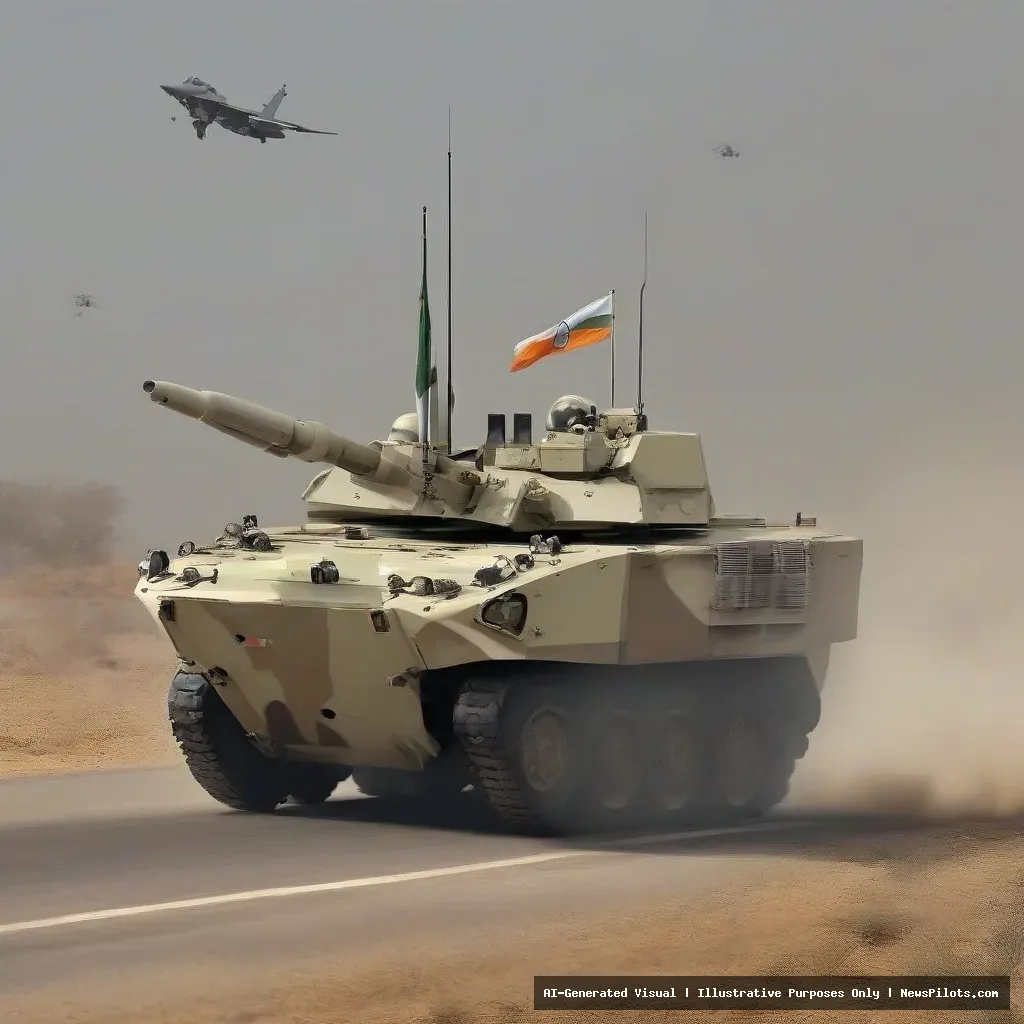
India’s latest defence doctrine, unveiled by the Ministry of Defence, declares strategic autonomy as the guiding principle for the country’s security architecture. The document, described by the ET Government as a “comprehensive framework that balances self‑reliance with global engagement,” frames autonomy as a function of robust military capability and advanced technology.
Strategic Autonomy at the Core
Central to the doctrine is the idea that India must be able to act independently in the face of evolving security challenges. The ET Government article notes that the doctrine links autonomy to “the capacity to project power, defend sovereignty, and maintain strategic options.” By positioning autonomy as a strategic outcome rather than a political stance, the doctrine seeks to align military planning with national interests.
Technology and Self‑Reliance Drive the Doctrine
Self‑reliance is a recurring theme across the doctrine’s recommendations. The Defence Minister’s remarks, published in the Press Information Bureau (PIB), stress that “jointness and self‑reliance are essential for a future‑ready force.” This call to action is echoed in the NatStrat analysis, which highlights India’s focus on domestic supply chains, indigenous technology development, and reduced dependence on foreign suppliers as key levers for sustaining strategic autonomy.
In line with this, the new Chief of Defence Staff, as reported by SP’s Naval Forces, is tasked with steering the military transformation that the doctrine envisions. The leadership appointment signals a commitment to institutionalizing the autonomy agenda across the armed forces.
Space and Geospatial Capabilities
India’s expanding space programme is identified as a cornerstone of strategic autonomy. The Stiftung Wissenschaft und Politik (SWP) piece on India’s space policy underscores the nation’s investment in satellite navigation, reconnaissance, and early warning systems. Complementing this, Col. Manik Anandh’s Geospatial World article argues that “space and geospatial intelligence are integral to the defence transformation” and will provide the situational awareness necessary for autonomous decision‑making.
International Partnerships and Regional Dynamics
While the doctrine champions autonomy, it also acknowledges the value of selective partnerships. The Modern Diplomacy article on the India‑UAE partnership illustrates how bilateral ties can enhance India’s strategic posture without compromising its autonomous stance. At the same time, NatStrat’s discussion of Vietnam and India’s “unequal burden of strategic autonomy” points to the complex balancing act required in a region where great‑power competition is intensifying.
These diplomatic engagements are framed as complementary to India’s internal capability building, ensuring that the country can navigate a multipolar world while maintaining its independent decision‑making power.
Implementation Pathways
The doctrine outlines a phased approach to achieving autonomy. It calls for accelerated development of indigenous weapons systems, expansion of domestic manufacturing, and the integration of space‑borne intelligence into operational planning. The PIB statement from the Defence Minister reinforces that “jointness”—the seamless cooperation among the Army, Navy, and Air Force—will be critical to translating technological gains into operational effectiveness.
Moreover, the NatStrat analysis suggests that strengthening supply‑chain resilience will be a priority, with an emphasis on critical components such as electronics, propulsion, and advanced materials. This focus is expected to reduce vulnerability to external pressures and support sustained military readiness.
Overall, India’s new defence doctrine presents a cohesive vision that intertwines strategic autonomy with technological self‑sufficiency and selective diplomacy. By aligning policy, technology, and leadership, the doctrine aims to equip India with the tools and mindset necessary to safeguard its interests in an increasingly complex security environment.
Related Articles
- Noise Master Buds Open with Sound by Bose Technology Unveiled at IFA Berlin 2026
- Dreame H12 Dual FlexReach Wet & Dry Vacuum Launched in India
Original Source: ET Government