
Introduction
Lafayette Consolidated Government (LCG) is asking residents and business owners to weigh in on a proposed overhaul of the Johnston Street-Louisiana Avenue corridor. Only on ANF: LCG gathers stakeholder feedback on Johnston Street revitalization project as local leaders pursue significant infrastructure changes across the community. The comprehensive initiative targets an 8.5-mile stretch of Johnston Street from Louisiana Avenue at I-10 to Ambassador Caffery Parkway.
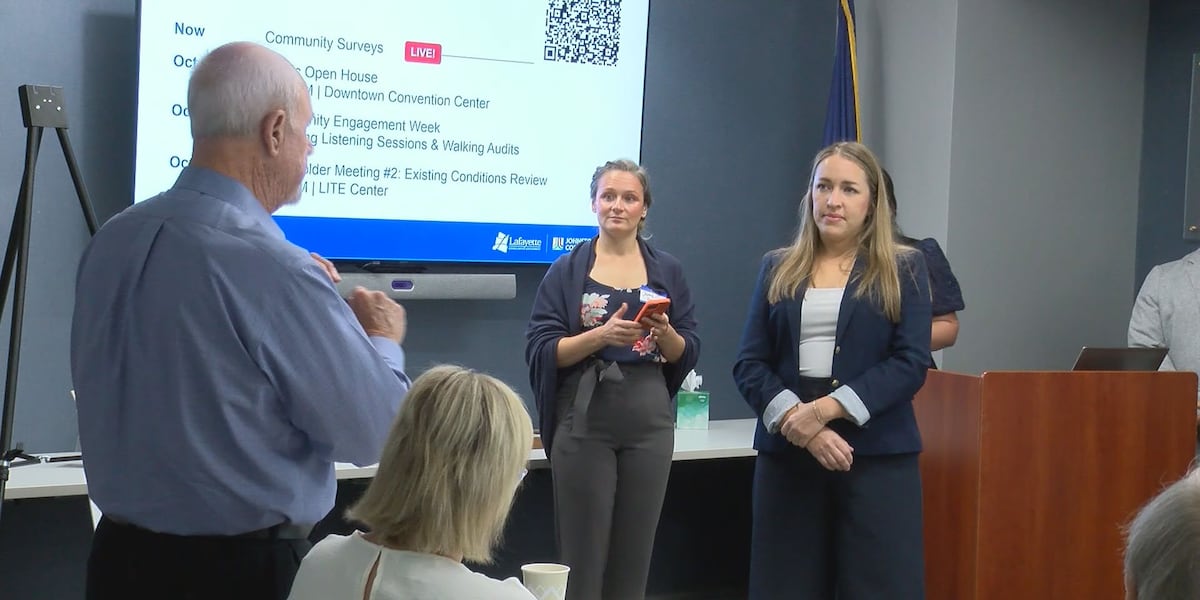
With an expected cost around $250 million, the project aims to address long-standing infrastructure, safety, and drainage challenges in the area. Mayor-President Monique Boulet and city staff recently met with stakeholders at One Acadiana to gather feedback on the corridor project.
What Changed
The city has initiated direct stakeholder engagement and opened a formal public comment portal to collect input on the massive regional overhaul. Mayor-President Monique Boulet, alongside city staff, hosted meetings at One Acadiana to discuss the plans with business owners and community members. Furthermore, LCG has scheduled an additional public meeting for October to broaden community participation.
While the full project cost is projected around $250 million, the city has secured about $50 million in state and federal funding for the project so far. This funding milestone marks a critical starting point for an initiative designed to transform one of the city’s most heavily traveled thoroughfares.
Context and Background
The proposed plan covers an 8.5-mile stretch of Johnston Street from Louisiana Avenue at I-10 to Ambassador Caffery Parkway. Stakeholders noted that Johnston Street sits at the heart of Lafayette and represents the oldest part of the community.
As development expands southward toward Kaliste Saloom Road and Verot School Road, local leaders emphasize the necessity of reinvesting in the urban core. City representatives noted that the community wants to avoid creating a stagnant section of the city, making large investments in Johnston Street essential for balanced regional growth.
Mayor-President Monique Boulet stated regarding the initial outreach: “Kicking the conversation off with key stakeholders and even some general public is exciting. People are excited and they are ready for the conversation and they are ready to set a vision of what Lafayette can be and where we are going. This conversation is a big part of that Johnston Street is at the heart of Lafayette, it’s a big part of our city, and we need to start making big investments in that.”
Drainage and Safety Priorities
Improving infrastructure performance, particularly regarding severe weather, forms a cornerstone of the proposed revitalization. Improving drainage, particularly in downtown Lafayette, is one of Boulet’s primary goals for the project. Boulet remarked on the drainage initiative: “Getting a hand on our flash-flooding situation downtown is a goal.”
Safety data from recent years underscores the need for physical corridor modifications. From 2023 to 2025, more than 300 crashes resulting in serious injuries were reported along Johnston Street. To counteract these incident rates, the current plan includes proposed bike lanes and walking paths.
Boulet believes proposed bike lanes and walking paths included in the plan will help reduce crash numbers by offering protected infrastructure for non-motorized travel.
Sector Impact and Business Implications
The Johnston Street corridor serves as a commercial backbone for the region, directly impacting local businesses, retail centers, and daily commuters. Business owners participating in the sessions at One Acadiana discussed how the sweeping changes might alter traffic patterns, customer access, and commercial vitality.
While commercial stakeholders have expressed enthusiasm for revitalizing the older section of the city, local business leaders noted that careful coordination during construction will be essential. Observers remarked: “We’ll have to see how that works, and what the proposal is.”
Reinvesting in the corridor aims to bring renewed economic energy back into the city center as suburban developments continue to expand.
Risks and Limitations
Despite strong community interest, the project faces notable financial and logistical hurdles. The full project cost is projected around $250 million, while the city has secured about $50 million in state and federal funding so far. This leaves a substantial funding gap that local leaders must close through future state and federal allocations or alternative funding sources.
Additionally, managing traffic flow and business access during construction across an 8.5-mile stretch presents complex engineering and administrative challenges.
What to Watch Next
Stakeholders and residents should monitor several upcoming milestones as the revitalization moves forward. LCG has opened a public comment portal to collect ongoing feedback from community members.
A public meeting on the project is scheduled for October, providing another major platform for public input. City officials will also track additional state and federal funding announcements to address the remaining balance of the estimated $250 million budget.