
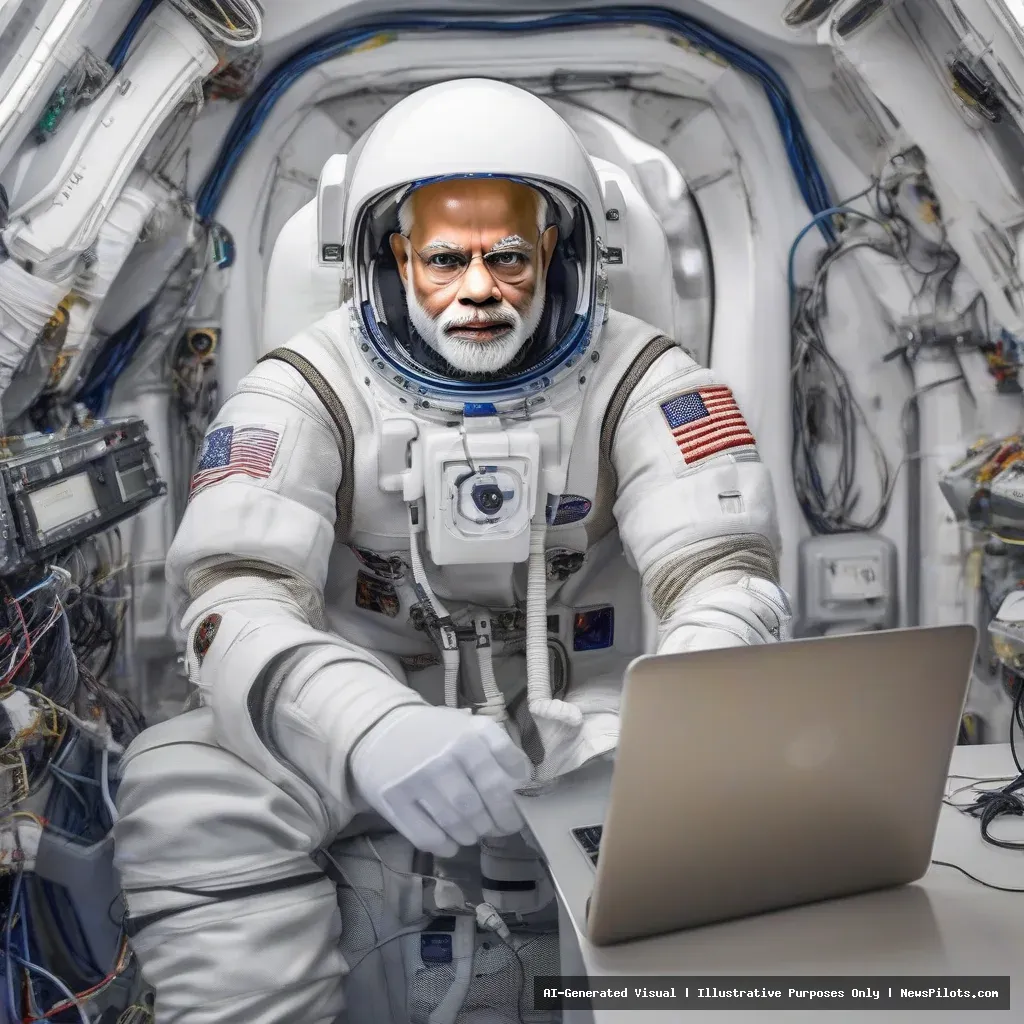
During a series of remarks that coincided with National Space Day, Prime Minister Narendra Modi underscored the rapid rise of India’s space startup ecosystem and highlighted the country’s potential to become a global magnet for scientific talent. India space startups is an important part of the developments covered in this report.
India space startups: What It Means and Why It Matters
Space Startups Receive Presidential Endorsement
Modi praised a growing number of private companies that are developing satellite technology, launch vehicles and related services. He noted that these startups are operating at a fraction of the cost of traditional space programs, giving India a competitive edge in the global market. The Prime Minister stressed that the low cost advantage, combined with a large pool of engineers and scientists, positions India to attract international talent.
Celebrating Gen Z Innovation
On National Space Day, Modi highlighted the role of Generation‑Z entrepreneurs and researchers who are building new technologies. He lauded their creativity and technical skill, describing them as the future drivers of India’s space ambitions. The Prime Minister’s comments came after the Indian Space Research Organisation (ISRO) chief announced plans to launch eight new launch vehicles, a move that signals a broader push toward commercial space capabilities.
ISRO’s Expansion and the Private Sector
ISRO’s chief outlined a roadmap that includes eight new launch vehicles aimed at expanding India’s launch capacity and supporting the growing needs of both government and commercial customers. Modi’s remarks were framed around the idea that a robust private sector can complement ISRO’s efforts, leading to a more diversified and resilient space industry.
Political Context: Debates Over ISRO’s Future
While Modi’s praise for private space firms was widely welcomed, opposition parties raised concerns about potential privatization of ISRO. The Congress party voiced allegations that the government might be moving toward a “plan” to privatize the national space agency. Modi’s statements, however, focused on collaboration rather than a wholesale shift, emphasizing the importance of maintaining ISRO’s core research and development role.
Attracting Global Talent
In a call to action, the Prime Minister urged Indian policymakers and industry leaders to create an environment that attracts scientists and engineers from around the world. He highlighted the need for supportive policies, funding mechanisms, and a culture of innovation that can harness both domestic and international expertise.
Implications for the Indian Space Ecosystem
Modi’s remarks signal a strategic pivot toward a more inclusive space sector. By encouraging private investment, fostering young talent, and maintaining strong ties with ISRO, India is positioning itself to become a key player in satellite manufacturing, launch services and space‑related research. The cost advantage, combined with a large talent pool, could make India a preferred destination for global space companies seeking partnerships or outsourcing.
Looking Ahead
With the launch of eight new vehicles on the horizon and a growing cohort of startups, India’s space industry is poised for significant expansion. The Prime Minister’s emphasis on global talent attraction and cost competitiveness may pave the way for increased foreign investment and collaborative projects that could accelerate India’s ascent in the international space arena.
As the sector evolves, stakeholders will watch closely how the government balances public and private interests, and how it leverages India’s youthful demographic to sustain momentum in space technology.
Related Articles
- Onkar Singh Batra: Jammu Tech Founder Secures $4.3 Million for Space Startup
- Azora Secures $7.7 Million Seed Funding to Build Optical Ground Stations for Space Communications
Original Source: Greater Kashmir
What Happens Next?
The next phase of this development will be closely watched by industry participants, consumers and policymakers. India space startups could influence future technology, business decisions and broader market trends. The practical impact will depend on implementation, cost, reliability, regulatory developments and how quickly the underlying technology evolves.