
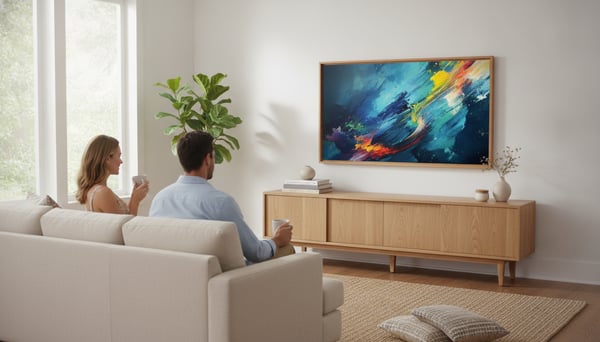
The 2024 Samsung 43-inch The Frame TV (model QN43LS03D) has drawn sustained market interest for combining a conventional 4K QLED display panel with a lifestyle-oriented design that mimics a framed picture. Reported via retail tracking on October 06, 2026, the device positions itself between home entertainment and interior decor, utilizing a matte anti-reflection screen and dedicated software features to blend into living spaces when not actively streaming video.
As consumer electronics manufacturers increasingly focus on aesthetic integration within residential spaces, devices like The Frame series represent a distinct category shift. Rather than prioritizing purely technical specifications or maximal brightness output, the hardware leverages specialized coatings, motion sensors, and art subscription capabilities to address the visual footprint of large black glass rectangles on living room walls.
What Changed
The 2024 iteration of Samsung’s lifestyle television line, specifically the QN43LS03D model, has solidified its position in retail channels with consistent customer ratings landing between 4.4 and 4.5 out of 5 stars across major platforms including Amazon. The standard retail box includes the 43-inch QLED television alongside Samsung’s Slim Fit Wall Mount, facilitating flush installation against a wall.
However, buyers must note that decorative bezels are sold separately and are not included in the standard box. Whether a specific purchase includes a promotional bezel bundle depends entirely on individual retailer packages, as Samsung occasionally offers package deals through vendors like Amazon and other major retail partners.
Technical Specifications and Display Capabilities
Underneath its aesthetic exterior, the 43-inch display features a QLED panel with 4K resolution. The hardware utilizes a conventional LCD panel architecture without local dimming and does not support Dolby Vision. Instead, image enhancement relies on Quantum HDR, which covers formats including HDR10, HDR10+, and HLG.
For audio and gaming performance, the television incorporates Dolby Atmos support and features HDMI 2.1 ports capable of handling 4K at 120Hz gaming. This makes the hardware compatible with current-generation consoles such as the PlayStation 5 and Xbox Series X, allowing for high-refresh-rate gaming alongside standard media consumption.
Art Mode and Anti-Reflection Features
A defining element of the device is its matte anti-reflection screen. According to product specifications and claims, this specialized surface mimics the texture of canvas or paper. Rather than bouncing light back like a mirror, the screen scatters ambient reflections, maintaining the illusion of physical artwork.
Complementing the visual texture is Art Mode, which displays digital artwork or photographs when the television is not in use for standard viewing. A built-in motion sensor activates the display when someone enters the room and automatically dims or turns the screen off when the space is empty to conserve power.
Key Benefits
The television handles everyday streaming, cable television, and sports broadcasting without compromise for typical viewing environments. The matte screen treatment effectively mitigates glare in brightly lit rooms where traditional glossy panels struggle with window reflections.
Integration with smart home ecosystems is supported via built-in Alexa functionality, while the operating system accommodates major streaming applications such as Netflix, Disney+, and YouTube. The inclusion of the Slim Fit Wall Mount directly in the box reduces additional setup costs for users intending to mount the display flush against a wall.
Risks and Limitations
Despite its lifestyle appeal, technical limitations constrain the display’s performance in dark-room viewing environments. Because the unit uses a conventional LCD panel without local dimming, it lacks the deep black levels and high contrast ratios found on OLED displays or high-end mini-LED televisions.
Furthermore, the absence of Dolby Vision support means users cannot take advantage of that specific dynamic metadata format from compatible streaming services. Buyers should also account for the additional cost of decorative bezels if they wish to customize the frame’s color to match their interior decor, as these accessories are excluded from the standard retail package.
Sector Impact and Business Implications
The enduring popularity of The Frame series illustrates a broader business shift toward form-factor innovation in consumer displays. By targeting interior designers and design-conscious consumers, manufacturers can capture market segments that might otherwise reject traditional, utilitarian electronics.
Retailers benefit from peripheral sales opportunities, including modular magnetic bezels, wall-mounting services, and digital art store subscriptions. This ecosystem approach transforms a one-time television purchase into an ongoing service and accessory relationship.
What to Watch Next
Market observers will monitor how competitors respond to Samsung’s lifestyle TV dominance by introducing their own anti-reflection, art-focused display solutions. Future iterations will likely address the contrast and black-level limitations of current LCD-based lifestyle models as competing panel technologies mature and drop in manufacturing cost.
Consumers tracking retail availability should verify exact package contents with individual vendors, ensuring they account for any promotional exclusions regarding bundled bezels or mounting accessories.