
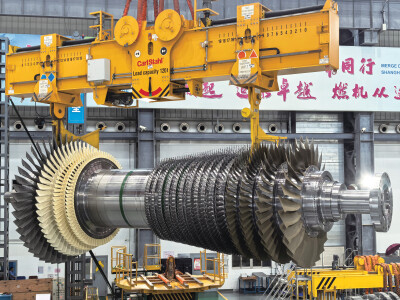
Chinese state media has praised a major international contract secured by Shanghai Electric, highlighting it as a crucial commercial breakthrough for high-end Chinese power equipment in foreign markets. According to reports from the China News Service (CNS), Shanghai Electric has won the contract for Unit 3 of the Samalaju Combined Cycle Gas Turbine (CCGT) Project located in Sarawak, Malaysia. The milestone agreement represents the first overseas deployment and commercial debut for a heavy-duty gas turbine manufactured by Shanghai Electric.
As global power markets face tight equipment supplies and growing demand for integrated engineering solutions, the project serves as a key indicator of how Chinese manufacturers are expanding beyond traditional borders. This article examines the background of the deal, what has changed in international procurement dynamics, and the operational and strategic implications for the global energy sector.
What Changed
The core of the announcement centers on Shanghai Electric securing the engineering, procurement, and construction (EPC) contract alongside a complete equipment package for the 500-megawatt-class power plant in Sarawak. The supply scope includes major equipment such as gas and steam turbines, generators, heat recovery steam generators (HRSGs), and an air-cooled system. In addition to delivering hardware, Shanghai Electric will serve as the EPC contractor and provide long-term lifecycle services covering the major equipment.
This marks a distinct departure from historical export patterns. According to industry assessments, the move reflects a structural shift from simply exporting equipment alongside engineering projects toward the direct export of complete, high-end proprietary equipment and comprehensive integrated solutions. CNS highlighted the agreement as a substantive breakthrough for China’s heavy-duty gas turbines in international commercial competition, noting that it is no longer merely an equipment export.
Context and Market Dynamics
To understand the significance of the Samalaju CCGT Project win, it is necessary to examine the broader conditions of the global gas turbine market. Data shows that global gas turbine orders reached approximately 90 to 100 gigawatts (GW) in 2025. In contrast, global manufacturing capacity stood at around 55 to 60 GW during the same period, illustrating a persistent supply-demand gap.
This supply tightness has altered how overseas project developers approach procurement. With traditional Western and international suppliers facing backlogs and extended lead times, overseas developers are increasingly considering alternative providers like Chinese companies. These alternative suppliers are capable of offering shorter delivery times and integrated solutions to meet urgent regional energy demands.
Furthermore, Shanghai Electric is not a newcomer to Malaysia. The company boasts a substantial track record of prior project delivery in the country. Its past Malaysian engagements include the 2×300-megawatt Balingian coal-fired power plant, various renewable energy projects in Selangor, the TG12 renewable energy project, a 106-kilometer 500-kilovolt transmission line in Sarawak, and Sarawak’s first off-grid microgrid project. This prior operational footprint established local familiarity and technical credibility ahead of the current gas turbine contract.
Sector Impact and Business Implications
The entry of Shanghai Electric into the mature Malaysian market carries broad implications for the competitive landscape of international power generation engineering. Liu Zhitan noted that the successful bid means Shanghai Electric’s gas turbine products and integrated solutions are beginning to undergo commercial validation in a mature overseas market. Liu observed that the Malaysian market is a mature commercial market, where clients make equipment selections based heavily on technology, delivery capabilities, and full lifecycle costs.
From a business perspective, the integrated solution model provides distinct advantages for project developers. By consolidating major equipment supply, engineering, and long-term lifecycle services under a single provider, the model reduces the need for owners or EPC contractors to coordinate complex interfaces, conflicting technical parameters, and disparate control systems across multiple different vendors.
This reduction in coordination friction can lower project execution risks and shorten construction timelines. Consequently, regional developers facing tight capacity margins may look more favorably toward single-source integrated packages when planning future thermal and combined-cycle generation assets.
Strategic Growth and Future Planning
The contract aligns with Shanghai Electric’s broader corporate strategy. During the 15th Five-Year Plan period covering 2026 to 2030, the company identified global expansion as a key priority, outlining three distinct strategic shifts aimed at deepening its international market penetration.
By successfully commercializing its heavy-duty gas turbine technology in a competitive export market, Shanghai Electric has demonstrated the technical and commercial viability required to execute on these strategic shifts. Observers note that securing reference projects for high-end equipment in recognized regional markets is an essential prerequisite for challenging established global Original Equipment Manufacturers (OEMs) in other developing and developed economies.
Limitations and Uncertainties
While the commercial milestone is significant, several limitations and data caveats should be noted. First, figures concerning global gas turbine orders (90-100 GW) and manufacturing capacity (55-60 GW) are cited in research materials generally as data points without naming a specific primary database, proprietary market research firm, or auditing entity. Readers should view these figures as broad market indicators rather than verified macroeconomic census data.
Additionally, while state media and company representatives have emphasized the commercial validation aspect of the win, long-term operational metrics, actual delivery timelines, and the ongoing performance of the heavy-duty gas turbine under commercial operating conditions in Sarawak will require future evaluation. The contract represents an initial deployment; sustaining momentum will depend on the successful execution and operational reliability of Unit 3 once completed.
What to Watch Next
Industry analysts and market participants will be monitoring several developments following the Samalaju CCGT Project announcement:
- Execution and Delivery: Progress on the manufacture and shipping of the 500-megawatt-class gas and steam turbines, generators, and HRSGs from Shanghai Electric production facilities to Sarawak.
- Commercial Validation: Subsequent operational data and client feedback from the Malaysian market regarding the performance and full lifecycle maintenance efficiency of the deployed heavy-duty gas turbine.
- Further International Tenders: Whether this initial commercial debut in Malaysia serves as a springboard for Shanghai Electric to secure similar combined-cycle gas turbine contracts in other international territories during the 2026-2030 planning cycle.