
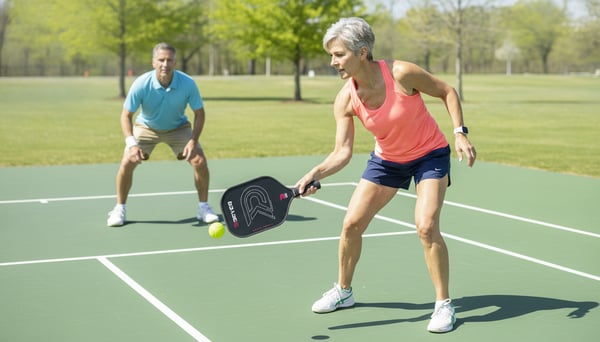
An unbranded carbon fiber pickleball paddle priced at $159.99 on Amazon has entered the online marketplace, raising questions for players evaluating whether a $160 carbon fiber pickleball paddle: worth the risk? As the sport continues to grow, consumers frequently encounter unbranded gear offering high-end materials at mid-tier prices. However, purchasing unverified equipment introduces significant uncertainties regarding quality control, manufacturing standards, and performance consistency.
What Changed
A new product listing on Amazon offers an unbranded paddle featuring a carbon fiber face and a honeycomb core for $159.99, as detailed in reports from October 03, 2026. Unlike established gear from recognized manufacturers, this listing appears without a recognizable brand name, verified customer reviews, or a confirmed manufacturer reputation history. Furthermore, the product page lacks explicit confirmation of quality control standards, warranty terms, or customer service details, leaving prospective buyers with limited recourse if the product proves defective.
Technical Overview and Claims
To understand the appeal of such products, it is helpful to examine the materials involved. Carbon fiber faces are generally valued in the industry for providing a responsive feel and potential spin generation, especially when paired with a textured surface. However, industry observers note uncertainties surrounding whether such listings utilize a true raw carbon fiber weave, a simple carbon fiber layer applied over a composite base, or merely an aesthetic finish designed to mimic the appearance of carbon fiber.
The internal structure of the paddle relies on a honeycomb core, typically constructed from polypropylene or aluminum. This design provides structural support while keeping the paddle lightweight. Core thickness plays a major role in on-court performance: thicker cores, such as 16mm options, generally offer a softer feel and greater control, whereas thinner cores measuring 13mm or less favor power over touch.
Key Risks and Limitations
A primary limitation of the $159.99 unbranded listing is the absence of verified technical specifications. Critical details remain unconfirmed, including total paddle weight, paddle face dimensions, grip circumference, handle length, core thickness, and surface texture type.
For comparison, most standard pickleball paddles operate within established anatomical and physical ranges:
- Weight: 7.3 to 8.5 ounces
- Grip sizes: 4 to 4.5 inches (broken down into smaller bands such as 4.0 to 4.25 inches and 4.25 to 4.5 inches)
- Standard handles: 4.5 to 5.25 inches
- Extended handles: 5.5 inches and above
Without these exact measurements for the unbranded paddle, players risk purchasing equipment that does not suit their hand size, swing weight, or playing style. Additionally, the USA Pickleball approval status for this specific unbranded paddle remains unconfirmed, meaning players who compete in sanctioned tournaments could find the equipment ineligible for official match play. Finally, questions persist regarding the accuracy of the single Amazon listing, return policies, and warranty coverage.
Business Implications and Market Context
The appearance of unbranded high-material gear on major e-commerce platforms reflects broader retail trends where consumers weigh cost savings against operational risk. Established alternatives near the $160 price point offer transparency, customer support, and documented testing.
Notable alternatives in this price bracket include:
- Paddletek Bantam EX-L: Features a fiberglass face over a polymer core, verified weight specifications, and recognition by testing publications such as Wirecutter.
- Paddletek Phoenix G6
- SLK Helix Pro
Purchasing from recognized brands typically ensures adherence to quality control benchmarks and provides access to consumer warranties, lowering the long-term risk profile for buyers.
Who May Be Affected
Recreational players looking to upgrade their equipment without paying top-tier prices are the primary demographic targeted by unbranded listings. Conversely, competitive tournament players are directly affected by unconfirmed USA Pickleball approval statuses, as using non-compliant equipment can result in disqualification. Budget-conscious consumers also face financial exposure if an unverified paddle fails prematurely without manufacturer backing.
What to Watch Next
Observers of the equipment market should monitor whether the manufacturer secures official USA Pickleball certification, publishes verified laboratory specifications, or accumulates reliable user reviews. Until such data becomes available, buyers must weigh the upfront savings of an unbranded carbon fiber paddle against the lack of verifiable performance data and consumer protection.
Attribution
This report is based on marketplace data and findings published by The Inventory Staff and referenced sources as of October 03, 2026.