
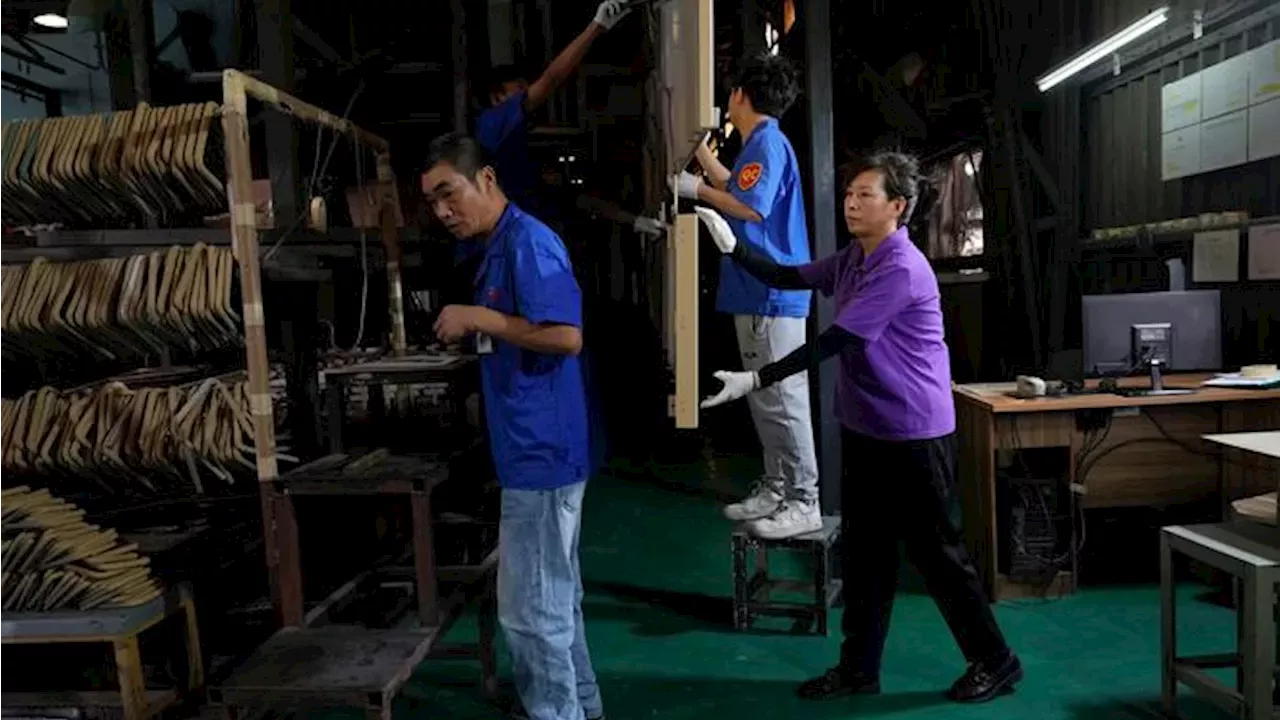
Factory activity returns to expansion in a positive sign for China’s economy, according to official data released by China’s National Bureau of Statistics. The recent manufacturing purchasing managers’ index (PMI) climbed to 50.1 in September, moving up from 49.8 in August. This shift marks the first time factory activity has expanded since June, breaking a three-month streak of contraction or stagnation within the country’s manufacturing sector.
What Changed in the Manufacturing Sector
The official PMI metric is measured on a scale between 0 and 100, where any reading above 50 reflects expansion. Moving from August’s 49.8 to September’s 50.1 puts the official index just across the threshold into growth territory. Underlying subindices provide a more detailed breakdown of this operational shift across Chinese industrial enterprises.
The subindex dedicated to production rose notably to 51.7 in September, up from 50.4 in August, signaling increased output volumes from factories. Meanwhile, other key subindices showed mixed movements. The subindex on new orders stood at 50.5, down slightly from 50.6 in August. New export orders eased further to 50.0, down from 50.1 in the previous month, illustrating shifting pressures within external versus domestic demand streams.
Complementing the official government statistics, private survey data also registered an uptick. The RatingDog PMI indicated that China’s manufacturing PMI advanced to 52.1 in September, up from 51.5 in August. Together, both official and private surveys point toward a simultaneous recovery trend in the broader manufacturing landscape.
Context: Economic Pressures and External Drivers
China’s broader economy has faced growing slowdown pressure over recent periods. This friction has been driven largely by sluggish domestic demand and investment, which are partly caused by ongoing weaknesses in the nation’s property sector. Property market downturns have traditionally dragged down consumer confidence and investment capital.
Despite domestic retail and consumer lags, external factors have provided notable support. The global artificial intelligence boom has buoyed exports of high-tech goods, acting as a crucial engine for manufacturing output. ING Bank and analyst Lynn Song have highlighted this dynamic, noting that manufacturing has served as a relative strength this year, though it has mostly been driven by external demand while domestic consumption and investment lag.
Business Implications and Government Policy Measures
To combat domestic slowdown pressures, China announced new key measures on Tuesday aimed at supporting its domestic economy. Among these interventions are new subsidies designed for Chinese homebuyers’ mortgage interest payments, intended to stimulate the struggling property market and restore consumer purchasing power.
In addition to domestic stimulus, international trade developments have provided an encouraging backdrop. U.S.-China relationships saw a two-month extension of a trade truce between the two superpowers, pushing the deadline out until January. Economists suggest that recent improvements in bilateral ties and this trade truce extension are likely to help improve bilateral trade flows.
Furthermore, some economists believe China is on track to surpass last year’s record $1.2 trillion trade surplus, driven by resilient export capabilities despite global economic uncertainties.
Sector Impact and Who May Be Affected
Industrial manufacturers, high-tech exporters, and real estate stakeholders are directly impacted by these shifting economic indicators. High-tech exporters benefit heavily from continued global demand trends, while property developers and domestic suppliers stand to gain if the newly announced mortgage interest subsidies successfully revive consumer demand in the housing market.
Conversely, sectors reliant purely on domestic retail consumption may experience a more gradual recovery, given that domestic demand has lagged behind industrial production strength.
Limitations and Uncertainties
While the return to expansion is a welcome indicator, analysts note several uncertainties regarding future trajectory. It remains uncertain whether China will officially surpass last year’s record $1.2 trillion trade surplus, as global market conditions remain fluid. Additionally, the exact extent to which the trade truce extension with the United States will improve bilateral trade over the coming months cannot be guaranteed.
What to Watch Next
Observers will monitor upcoming monthly PMI releases from both the National Bureau of Statistics and the RatingDog private survey to determine if the expansion trend continues past September. Observers will also track the implementation and early consumer response to the new mortgage interest subsidies, alongside any further developments in U.S.-China trade relations ahead of the January deadline.