
Factual Lead
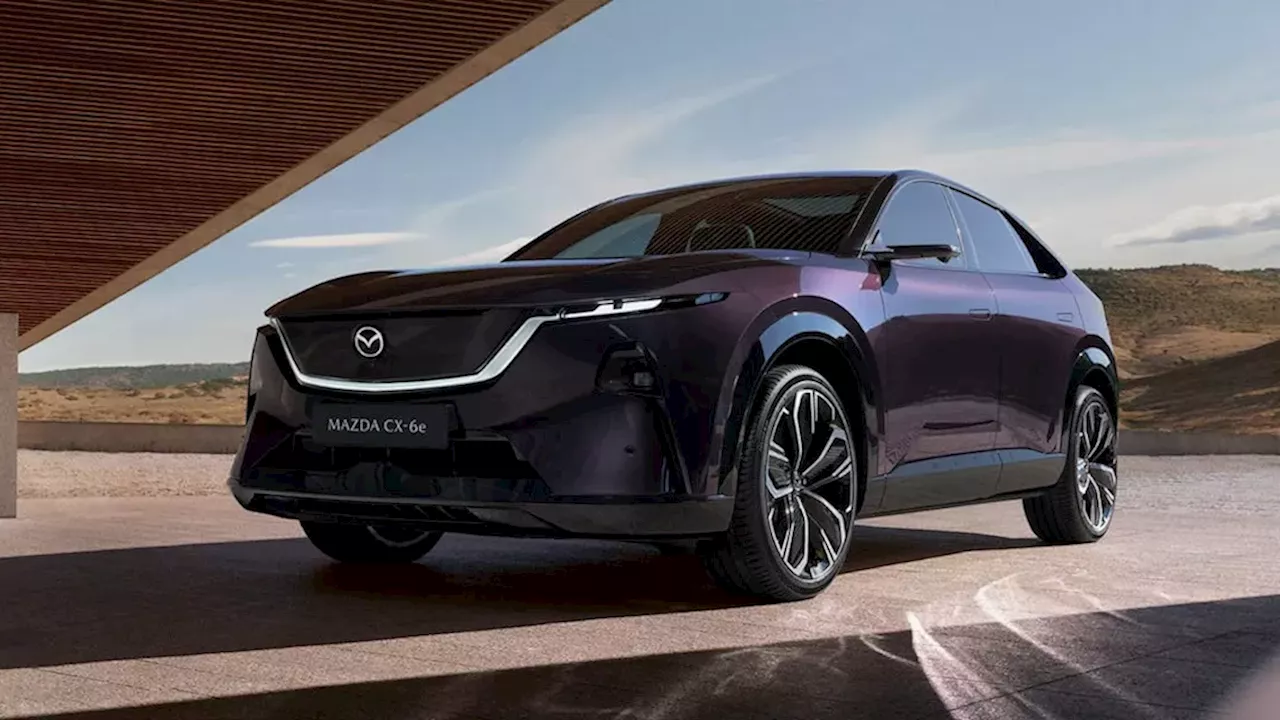
The Chinese-built Mazda CX-6e, also referred to in documentation as the Mazda CX-9e, is an electric vehicle equipped with an external speaker system designed to alert cyclists and pedestrians of its presence. Beyond standard pedestrian warning alerts, the vehicle integrates a keyboard interface that allows drivers to type out messages for the system to read aloud, play pre-programmed alerts, record their own voices, and reproduce profanities in traffic environments.
What Changed
Traditionally, electric vehicle acoustic warning systems have been engineered to emit low-level operational sounds or reversing tones to offset near-silent vehicle operation. The Mazda CX-6e expands the function of external acoustic hardware by giving vehicle operators direct text-to-speech and recording tools via an integrated keyboard. Instead of relying solely on automated warning sounds, drivers can actively generate customized verbal outputs through the vehicle’s exterior loudspeakers.
Context
Early electric vehicle adoption flagged near-silent operation as a safety hazard for vulnerable road users, leading most manufacturers to adopt standard reversing sounds and low-speed acoustic alerting systems. The Mazda CX-6e builds upon this mandatory exterior sound architecture by incorporating advanced interactive user inputs. The vehicle features an external speaker that comes with a keyboard allowing drivers to type out messages to be read out loud, play pre-programmed alerts, record their own voice, and read out profanities.
Documentation highlights specific phrases associated with the system’s capabilities, including pre-programmed or typed outputs such as “Please look up from your phone,” “You go ahead,” “Get out of the way, you blithering slug!”, and “Tonight only, the fabulous Blues Brothers.”
Sector Impact
The introduction of public address capabilities in passenger vehicles bridges the operational gap between commercial or emergency vehicles and standard consumer electric automobiles. While commercial trucks and municipal vehicles have long utilized external public address systems for directional communication, applying similar capabilities to consumer electric vehicles shifts acoustic interaction on public roadways. This feature changes how drivers can interact directly with pedestrians, cyclists, and fellow motorists.
Business Implications
From a product differentiation perspective, incorporating an interactive external speaker and keyboard offers a novel interface feature in the competitive electric vehicle market. However, the inclusion of open-ended text-to-speech features and profanity output introduces notable brand and compliance considerations for automotive manufacturers. Providing users with unrestricted capability to broadcast custom text and voice recordings via exterior amplification equipment creates unique liability and public relations exposures.
Who May Be Affected
Pedestrians and cyclists are directly affected by the acoustic outputs of the Mazda CX-6e, as the system’s primary function is to alert them to the electric vehicle’s presence. Drivers of the Mazda CX-6e are affected by the addition of the cabin keyboard interface, which provides novel methods for vocalizing messages externally. Furthermore, regulatory bodies and municipal traffic authorities may monitor how public address systems on consumer vehicles impact urban soundscapes and traffic civility.
Risks or Limitations
Industry observers have raised concerns regarding the potential misuse of public address technology in dense traffic environments. Commentary from freelance writer and photographer Brendan McAleer, based in North Vancouver, B.C., Canada, notes that wider use of this type of external loudspeaker is probably a net negative because many people should not be trusted with an ordinary car horn, let alone a public address system.
Regarding potential software adjustments, Brendan McAleer speculates that Mazda will presumably issue an over-the-air patch if there are too many complaints to limit the messages played over the system. This limitation highlights the reliance on software updates to moderate user-generated external audio content after vehicles are deployed to consumers.
What to Watch Next
Observers will monitor whether regulatory agencies evaluate the safety and noise compliance of open-ended text-to-speech exterior vehicle systems. Additionally, market response in regions where the Mazda CX-6e and Mazda CX-9e are distributed will dictate whether manufacturers maintain unrestricted keyboard messaging features or implement software restrictions via over-the-air patches to curb the broadcast of profanities and inappropriate messages.