
What Changed
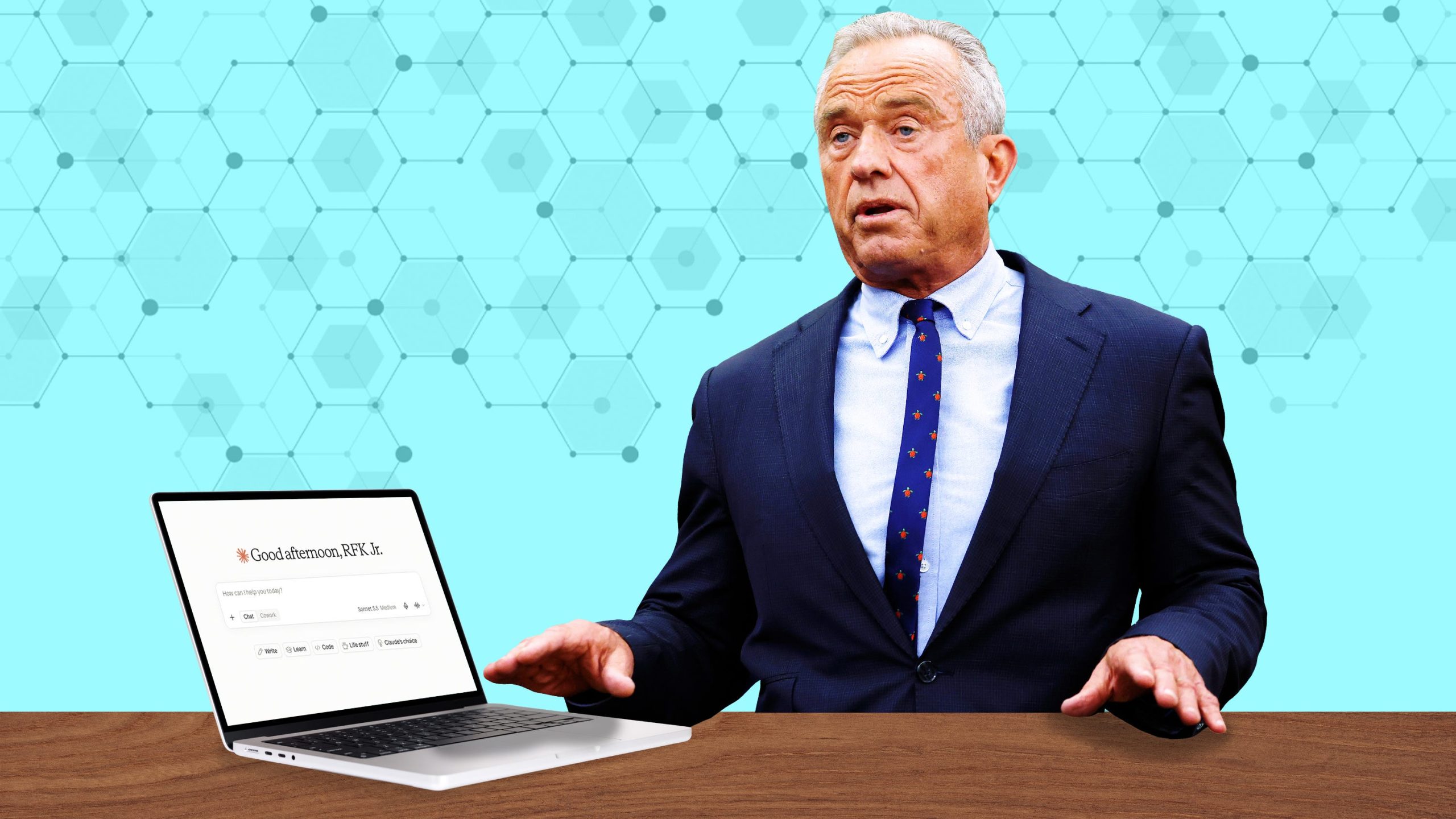
At a MAHA Action conference in Washington, Secretary of Health and Human Services Robert F. Kennedy Jr. outlined a sweeping vision to integrate artificial intelligence into everyday medical practice. Speaking in his official capacity, Kennedy stated that it would be medical malpractice for a doctor to make a diagnosis or a prescription without first checking artificial intelligence. He further claimed that AI would allow average citizens to challenge doctors and scientists, empowering them to make up their own minds about personal medical care and “free us from medical tyranny.” However, when tests were run using leading artificial intelligence systems—including the paid, professional version of Anthropic’s Claude, alongside OpenAI’s ChatGPT, Google’s Gemini, and Elon Musk’s Grok—the models evaluated Kennedy’s foundational claims and found them to be false or misleading.
Context
The intersection of artificial intelligence and public health policy has become a contentious battleground. While health officials debate the regulatory boundaries of automated tools, large language models are increasingly deployed to process complex clinical data. Ezekiel Emanuel noted over email that AI is often more accurate than human physicians at creating a differential diagnosis in many cases. Emanuel also co-authored an article in the Journal of the American Medical Association suggesting that medical decision-making by AI alone was frequently superior to decision-making by doctors who merely consult AI. Concurrently, Mehmet Oz serves as the administrator of the Centers for Medicare and Medicaid Services, placing administrative leadership within a shifting ecosystem of digital health advocacy.
Despite these technological advancements, Kennedy’s vision for AI-driven patient empowerment relies heavily on historical and medical claims that have drawn intense scrutiny. In previous speeches to Children’s Health Defense and during an August CNN interview, Kennedy asserted that out of 94 doses of 18 vaccines recommended by the CDC for children, only one—the COVID-19 vaccine—was subject to a placebo-controlled trial, with no safety studies conducted for the others. He also claimed that the scientific community has not seriously investigated links between vaccines and autism.
Technical and Business Implications
The reliance on large language models to fact-check federal health officials exposes significant business and technical implications for the tech industry and health sector alike. When users query tools like Claude, ChatGPT, Gemini, and Grok regarding Kennedy’s specific assertions, the models quickly surface counter-evidence. For instance, Claude noted that the measles, mumps, and rubella (MMR) vaccine has been linked to falling vaccination rates and outbreaks after losing its elimination status, contradicting claims supporting the separate administration of MMR shots.
Furthermore, historical claims regarding past vaccine safety are easily contextualized and corrected by modern algorithms. Between 1955 and 1963, an earlier version of the polio vaccine was grown in monkey cells and contained simian virus 40 (SV40). While polio caused more than 3,000 deaths and many cases of paralysis in 1952, Kennedy claimed that SV40 caused an explosion of soft tissue cancers in his generation that killed more people than polio. AI systems cross-reference these assertions against established medical literature, providing users with a stark contrast between official public health data and unverified claims.
Similarly, Kennedy’s description of COVID-19 vaccines as “the deadliest ever made” relies on unverified interpretations of the federal Vaccine Adverse Event Reporting System (VAERS), a passive reporting database that raw data does not validate as direct causal links. AI assistants flag these nuances, illustrating both the potential utility of AI as a critical filter against misinformation and the risks of relying on unverified AI outputs for clinical governance.
Risks and Limitations
While AI assistants can rapidly evaluate public statements against vast repositories of medical literature, the technology itself carries inherent limitations. Hallucinations, algorithmic bias, and the challenge of interpreting complex epidemiological data mean that AI cannot serve as an infallible arbiter of medical truth. The author of the analysis noted that whether AI will extinguish humanity remains an open assumption, underscoring the broader societal anxieties surrounding automated intelligence. Moreover, while Emanuel observed that AI can outperform physicians in specific differential diagnosis tasks, he also noted that in many cases there is no need to check with AI, pointing to the ongoing necessity of human clinical judgment.
Sector Impact and Who May Be Affected
The push to integrate AI into health care affects a wide array of stakeholders, from frontline physicians and hospital administrators to technology developers and everyday patients. If federal guidelines begin to encourage or mandate AI-assisted diagnostics as Kennedy suggests, medical liability frameworks could shift dramatically. Doctors could face legal exposure if they ignore algorithmic recommendations, while patients armed with AI tools may increasingly question clinical prescriptions. Conversely, if prominent health figures promote claims that AI models flag as false, public trust in both federal health institutions and digital health technologies may fracture.
What to Watch Next
Observers will monitor how the Department of Health and Human Services formalizes its AI policies under the current administration, as well as how software providers update safety guardrails for medical queries. As platforms like Claude, ChatGPT, Gemini, and Grok continue to moderate political and health-related prompts, the friction between official government messaging and algorithmic fact-checking will likely intensify across the health technology sector.