
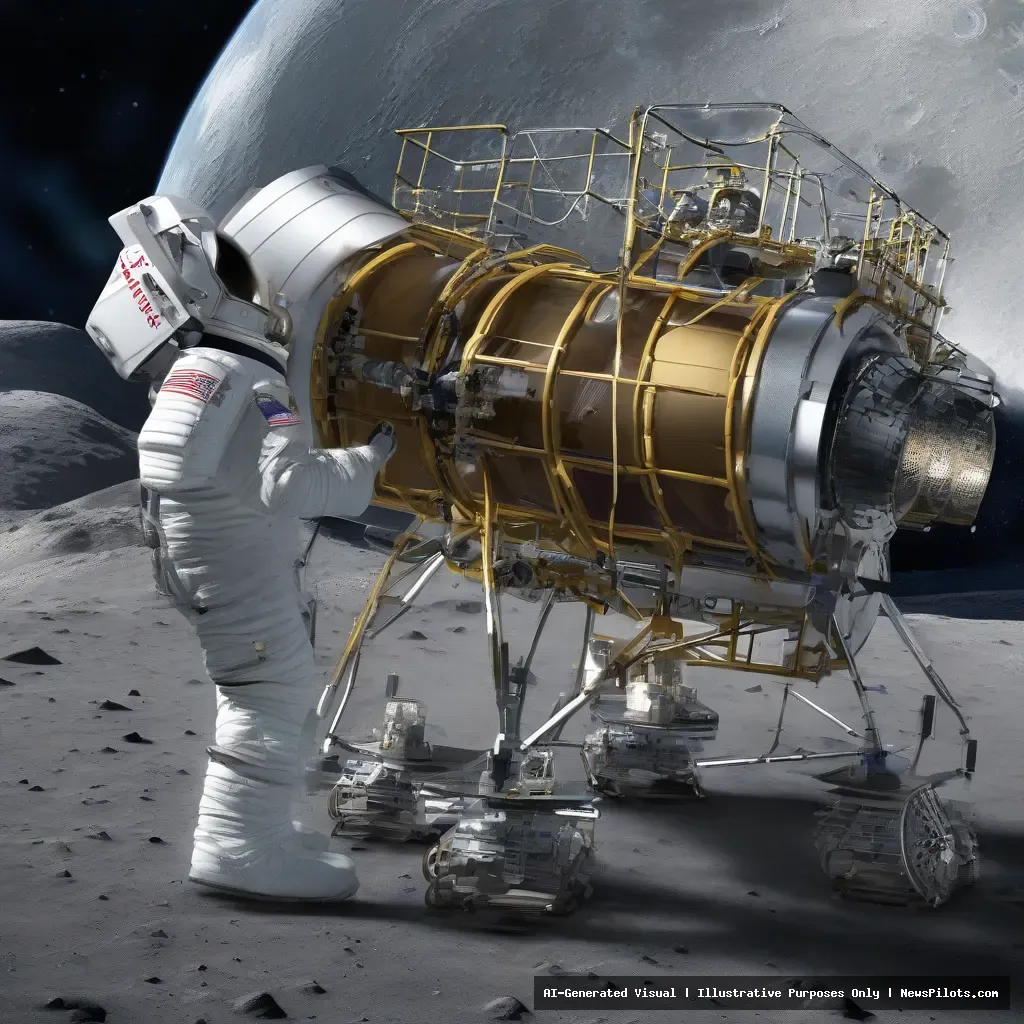
NASA is seeking feedback and proposals from the commercial space industry to accelerate the development of critical lunar infrastructure and surface technologies. Through its Next Space Technologies for Exploration Partnerships (NextSTEP-3) program, the agency is releasing draft solicitations aimed at establishing long-term operational capabilities on the Moon.
NASA Calls on Industry for Lunar Infrastructure Development
The push for expanding surface capabilities is structured under new agency solicitations, including NextSTEP-3 A, which focuses on Lunar Enabling Technology, and NextSTEP-3 B, centered on Moon Base Demonstrations. By requesting public and industry comments on the draft solicitations, NASA aims to refine its requirements for building foundational lunar infrastructure.
The initiative intends to speed up the maturation of essential lunar surface technologies by partnering with private enterprise. NASA’s strategy relies on commercial innovation to support key infrastructure elements required for sustained lunar exploration.
Commercial Responses and Advisory Initiatives
Commercial space firms are actively positioning themselves to participate in the NextSTEP-3 framework. Astrotech Corporation has established a Strategic Advisory Board to advance its Lunar Infrastructure Initiative and support its proposal for the NASA NextSTEP-3 Lunar Enabling Infrastructure Activity (LEIA).
Such private sector preparations signal growing industry engagement as commercial space companies align their technological roadmaps with NASA’s long-term lunar infrastructure objectives.
Overcoming Lunar Night and Surface Power Challenges
A primary hurdle facing initial Moon-base operations and robotic surface hardware is power availability. Most early lunar-base robots will rely heavily on solar power, making the extended two-week lunar night one of the major operational challenges facing surface missions.
To address energy constraints during these prolonged dark periods, NASA is evaluating potential workarounds. Among the concepts under consideration is the deployment of PROMISE, an engineering twin project developed by NASA’s Jet Propulsion Laboratory (JPL), to support surface operations and technology testing.