
On Monday, Sept. 28, the Overland Park city council officially approved Playbook OP, a comprehensive 10-year plan designed to renovate and expand the city’s extensive parks and recreation system. While the long-term blueprint establishes clear capital project priorities across the community, it leaves a significant financial deficit. City leaders and residents now face intensive discussions regarding how to bridge the funding gap through potential sales tax increases.
What Changed
The Overland Park city council voted to adopt Playbook OP, setting a formal municipal direction for parks, trails, pools, and recreational infrastructure over the next decade. The approved framework calls for an estimated $356.9 million in capital projects. However, current funding levels only account for about $108.8 million of that total, leaving a substantial $248.1 million funding gap. This represents an adjustment from an earlier version of the plan, which had projected an even higher shortfall of $276 million.
The council approved the plan via a show-of-hands vote, though it was not unanimous. Three council members—Drew Mitrisin, Melissa Cheatham, and Richard Borlaza—voted in opposition.
Context and Scope of Playbook OP
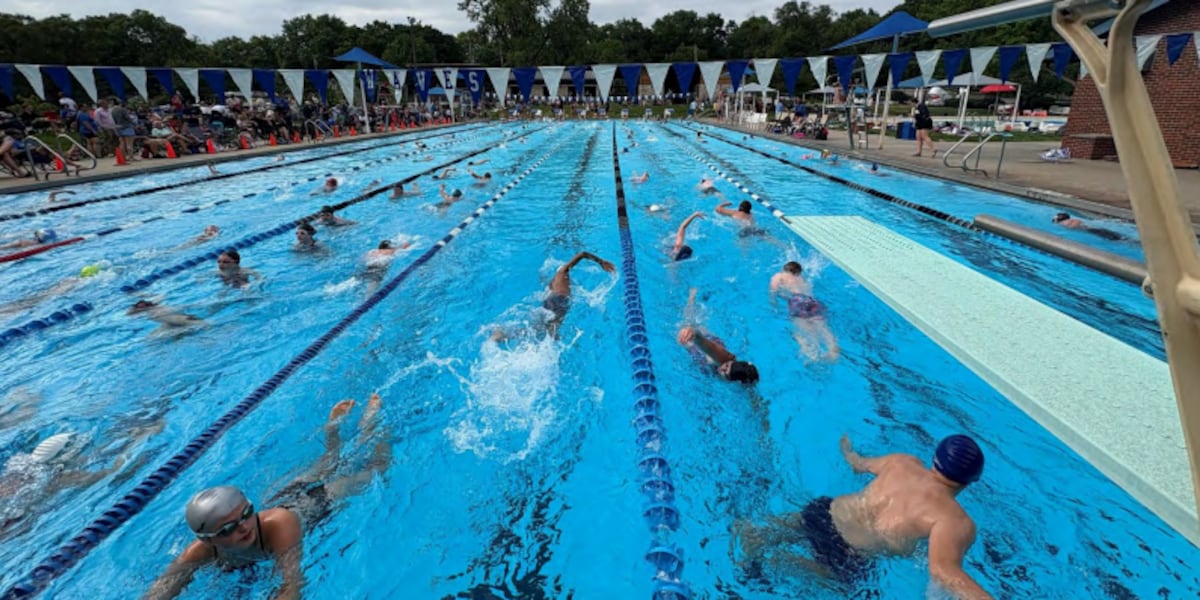
Playbook OP encompasses a wide array of municipal recreational assets. The plan outlines renovating or replacing regional pools, specifically Young’s Pool, Tomahawk Ridge Aquatic Center, and the Matt Ross Community Center. It also schedules new water play features, new regional, community, and neighborhood parks, expanded trail linkages, and universally accessible playgrounds. Additionally, the initiative directs reinvestment into the Overland Park Arboretum & Botanical Gardens and the Deanna Rose Children’s Farmstead.
At the same time, the plan accounts for the changing realities of local facilities. Bluejacket Pool was permanently closed by the city in 2024 after operating for 51 years, driven by costly water leaks and the end of its useful life. Under the newly approved plan, Stonegate Pool will not receive capital improvements and will instead be left to run out its remaining useful life.
Business Implications and Financing Debate
The central challenge facing city officials is closing the $248.1 million funding gap. During a committee-of-the-whole work session, council members discussed three potential sales tax rates: an eighth of a cent, a quarter of a cent, and three-eighths of a cent. City staff indicated that a three-eighths of a cent sales tax would be required to fully implement Playbook OP as currently written.
However, the formal sales tax decision was postponed, with further discussions scheduled for a Committee of the Whole meeting on Oct. 5. Financing choices carry distinct strategic trade-offs for the municipality.
Mayor Curt Skoog noted that new tax measures face close scrutiny from voters and urged choosing an amount that residents are likely to approve at the ballot box.
Conversely, Ward 1 Councilman Logan Heley argued that parks, recreation, and trails poll better with voters than other city investments. He expressed concern that opting for a lower tax rate might create mismatched expectations.
“If I was going to be concerned about any of those three options not passing, it would probably be the 1/8, because when we’ve gone through this large process to adopt Playbook OP, that you basically need the 3/8 to implement, and then we go to the voters for 1/8. Their expectation is that we’re going to implement Playbook OP. I think it will muddy the waters if we’re saying, ‘We adopted Playbook OP, but really we’re just doing the maintenance part,’” Heley stated.
Community Feedback and Public Preferences
The formulation of Playbook OP heavily factored in public opinion through community surveys and hypothetical budgeting exercises. Survey results indicated that 62% of respondents prefer more neighborhood pools, while 31% favored larger regional pools.
When asked about specific facility actions, 68% of respondents supported renovating and enhancing Tomahawk Ridge and Young’s Pool, 66% supported building two new neighborhood pools north of I-435, and 60% supported renovating Stonegate Pool.
In a hypothetical $100 city recreation budget allocation exercise, residents distributed their funds across several categories: pools received $28.30, bike and hike trails received $20.47, parks received $20.24, community centers received $14.44, and splash pads accounted for $6.60.
Despite the broad enthusiasm for recreational amenities, dissenting council members highlighted the emotional and social impact of losing certain hyper-local spaces. Speaking on the changes, Drew Mitrisin noted, “There’s just such beauty in being able to walk to the pool and let your kids run around and swim and hang out with their friends, and it’s sad that we’re going to be losing some of those community spaces.”
Limitations and What to Watch Next
While Playbook OP provides a structured 10-year vision, its execution remains limited by the unresolved financing method and the ultimate sales tax rate chosen by leadership. Furthermore, any future sales tax measure remains subject to voter approval outcomes, meaning the full scope of projects depends on public alignment at the ballot box.
Stakeholders and residents should monitor the upcoming Committee of the Whole meeting on Oct. 5, where the city council will resume discussions on the sales tax rate options and potential pathways to fund the $248.1 million deficit.