
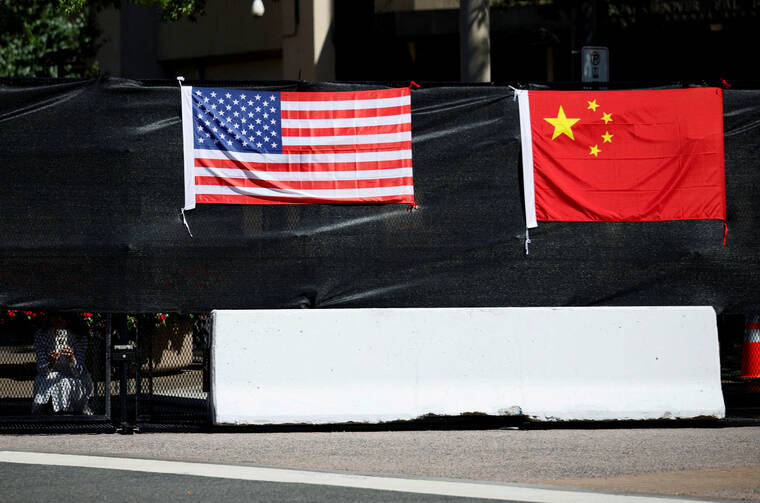
China and the United States have pledged to pursue reciprocal tariff cuts on $60 billion worth of goods imported from each other, following the second summit this year between President Xi Jinping and U.S. President Donald Trump in Washington. Under the framework of the U.S.-China Board of Trade, both nations recommended $30 billion of trade in non-sensitive goods each for more favorable tariff treatment.
Despite the high-profile agreement, statements from neither side indicated the extent of the tariff reductions or any specific timing for implementation. Alongside the reciprocal tariff reduction effort, the two nations agreed to extend their trade truce by two months through January 10.
What Changed
The reciprocal tariff reduction effort emerged from the summit between President Xi Jinping and U.S. President Donald Trump. Under the U.S.-China Board of Trade, both countries recommended $30 billion of trade in non-sensitive goods each for more favorable tariff treatment, with the product lists based on 2024 import data.
As part of the package, China planned to trim duties on a range of U.S. agricultural goods, including corn, wheat, sorghum, meat, dairy, vegetable oils, and meals. However, Beijing excluded non-seed soybeans from this initial reduction. Non-seed soybeans totaled $16.2 billion in 2025, and Beijing currently maintains a 10% retaliatory tariff on them.
Beyond agriculture, China will look to reduce levies on U.S. fish, seafood, logs, wood products, cosmetics, and medical devices. China also agreed to import 10 million metric tons of coal annually from the United States in 2027 and 2028, and committed to examining and approving foreign financial services institutions—including those with U.S. capital—to conduct business and open branches in China.
On the U.S. side, Washington’s proposed reciprocal tariff cuts for Chinese consumer goods focused on small appliances such as coffee makers and toasters, along with tableware, blankets, bed linens, toys including children’s bicycles, fireworks, artificial flowers, holiday decorations, and children’s car seats. Chinese toys and children’s bicycles totaled $14.4 billion in 2024, before falling to $9.8 billion in 2025 amid higher tariffs.
Context and Background
The bilateral agreements follow a tense period of trade friction. The $30 billion valuations for the import product lists were derived from 2024 import data. The trade truce between the U.S. and China was extended by two months through January 10, providing a temporary buffer for bilateral commerce.
U.S. Trade Representative Jamieson Greer stated that the U.S. list unlocked improved market access for about 30% of U.S. exports to China. Meanwhile, the Chinese commerce ministry stated that the truce extension provides a ‘relatively stable and predictable policy environment’ for cooperation.
Beyond physical trade items, the two countries agreed to establish an artificial intelligence communication channel for incidents and scheduled a follow-up dialogue by the end of November.
Business Implications
The trade adjustments carry distinct implications for various sectors. The American Soybean Association noted that while non-seed soybeans were excluded from the immediate tariff cuts, removing the tariff would improve the competitiveness of U.S. soybeans and provide greater opportunity for private Chinese buyers.
Financial services firms stand to gain new operating latitude as China moves to examine and approve foreign financial services institutions, including those backed by U.S. capital, to open branches and conduct business.
Despite these commercial developments, broader market reaction was cautious. Stocks fell sharply in China on Monday, and major U.S. stock indexes also fell following the announcement.
Limitations and Uncertainties
Significant questions remain regarding the execution of the pledge. Statements from neither side indicated the extent of tariff reductions or any timing for implementation. While the lists identify targeted categories based on past trade data, the exact percentage reductions and the date duties will actually drop have not been formally established.
Additionally, the exclusion of non-seed soybeans—which accounted for $16.2 billion in 2025—leaves a major agricultural export category subject to Beijing’s ongoing 10% retaliatory tariff.
What to Watch Next
Stakeholders will monitor several upcoming milestones. The extended trade truce runs through January 10, setting a near-term deadline for further diplomatic progress. Additionally, both nations are scheduled to hold an artificial intelligence communication dialogue by the end of November to address incident management. Observers will also watch for official schedules detailing the extent and implementation timelines of the promised tariff cuts on the $60 billion in goods.