
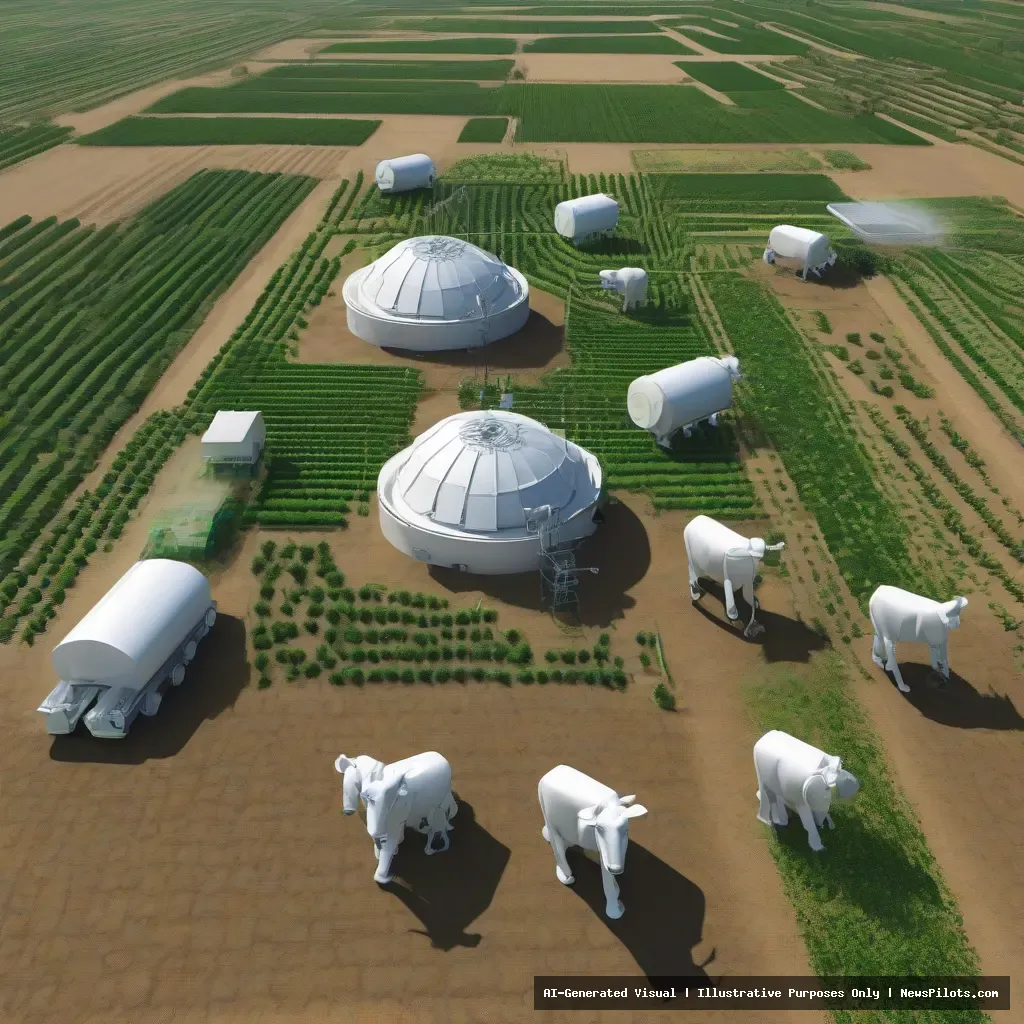
Google’s DeepMind division has taken its pioneering agricultural technology, originally launched in India, and rolled it out across Africa. The move follows a successful rollout in the Asia Pacific region and marks a significant step in the global expansion of data‑driven farming tools. DeepMind agriculture models is an important part of the developments covered in this report.
DeepMind agriculture models: What It Means and Why It Matters
From India to the World
DeepMind first introduced its suite of predictive models to Indian farmers, offering real‑time insights on crop health, weather patterns, and market conditions. The platform leveraged local data sets to deliver tailored recommendations, helping farmers optimize planting schedules and reduce input costs.
According to reports from Deccan Herald and AgroSpectrum India, the technology was designed with a focus on the diverse agro‑ecological zones of India. By integrating satellite imagery, soil sensors, and farmer‑reported observations, the models could forecast pest outbreaks and nutrient deficiencies with unprecedented accuracy.
Scaling Across Continents
Building on its Indian success, DeepMind has now scaled the same framework to Africa. MediaBrief highlighted that the expansion includes countries such as Kenya, Nigeria, and Ethiopia, where smallholder farms face similar challenges of climate variability and limited market access.
In the Asia Pacific, DeepMind’s tools have already been deployed in countries like Indonesia and Vietnam. The technology’s ability to adapt to local conditions has made it a valuable resource for farmers seeking to increase yields while managing risk.
Local Impact, Global Reach
Experts note that the technology’s local-first approach is key to its effectiveness. By training the models on region‑specific data, DeepMind ensures that the recommendations are relevant to the specific crops, soils, and weather patterns of each area.
Global Agriculture’s analysis underscores how this strategy has translated into tangible benefits: farmers in India have reported yield improvements of up to 15%, while early adopters in Kenya are already seeing reductions in water usage and fertilizer costs.
Supporting Sustainable Growth
Beyond immediate productivity gains, the platform supports broader sustainability goals. By providing precise input recommendations, it helps farmers reduce over‑application of chemicals, thereby lowering environmental footprints.
DeepMind’s partnership model involves collaboration with local governments, NGOs, and agribusinesses. This ecosystem approach ensures that the technology is not only accessible but also integrated into existing supply chains and extension services.
Future Directions
Looking ahead, DeepMind plans to refine its models further by incorporating additional data streams, such as market price signals and livestock health metrics. The goal is to create a comprehensive decision‑support system that serves the entire agricultural value chain.
With its expansion into Africa, DeepMind demonstrates a commitment to using technology to empower farmers worldwide. The platform’s success in India and the Asia Pacific provides a proven blueprint for delivering actionable insights that drive both profitability and sustainability.
Related Articles
- Gabriel India and HL Klemove Forge Joint Venture to Advance Autonomous Driving Technology
- India Targets 3-7nm Chip Technology Within Eight Years Under Semicon 2.0
Original Source: Deccan Herald
What Happens Next?
The next phase of this development will be closely watched by industry participants, consumers and policymakers. DeepMind agriculture models could influence future technology, business decisions and broader market trends. The practical impact will depend on implementation, cost, reliability, regulatory developments and how quickly the underlying technology evolves.