
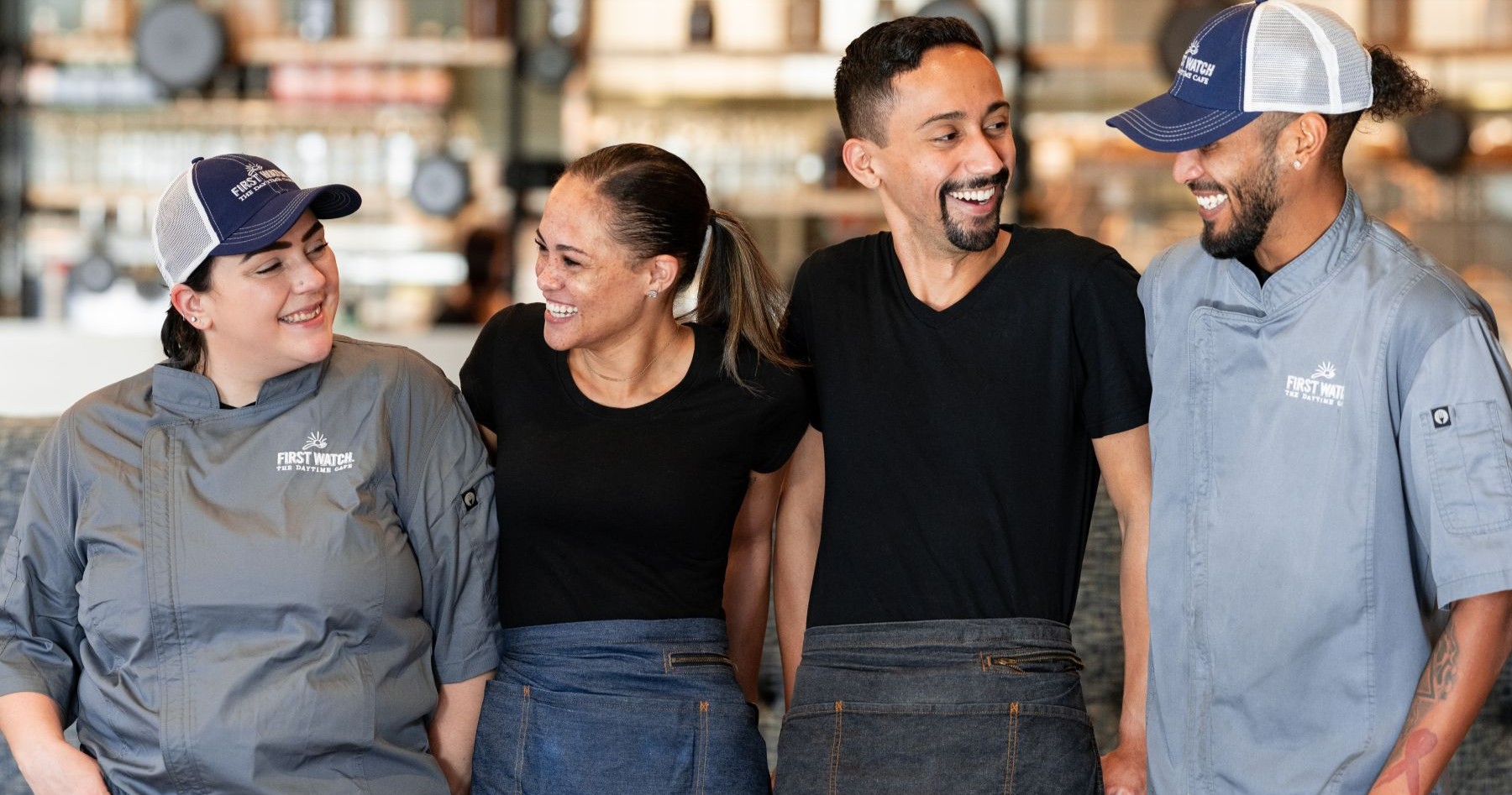
Managing rapid expansion without losing a company’s core identity is one of the toughest challenges in the restaurant industry. How First Watch protects its culture while opening a restaurant a week offers a unique case study in balancing aggressive growth with operational consistency. According to Technomic data, the 43-year-old Florida-based brunch concept finished 2025 with 633 locations. Led by CEO Chris Tomasso, the brand is currently opening a new restaurant every week and is on track to achieve a larger footprint than both Longhorn Steakhouse and Texas Roadhouse. However, scaling a restaurant brand at this velocity requires strict adherence to internal pipelines, standardized training, and unwavering operational guardrails.
What Changed
When CEO Chris Tomasso joined the company 20 years ago as president and chief marketing officer, First Watch had about 50 restaurants co-founded by Ken Pendery and John Sullivan. At the time, the operating system was entirely disparate. According to Tomasso, the brand operated with four bases of operations, four distinct philosophies, different uniforms, logos, and menus.
“I could tell there was something there,” Tomasso said regarding his initial assessment of the brand. “But when I got there, I realized we were not able to be scaled.”
Regional differences presented immediate roadblocks to uniformity. Employees in different states resisted operational changes, leaning heavily on local traditions.
“The flannel uniforms in Ohio were very important to them. The Hawaiian shirts in Florida had to stay because that’s how it’s always been. Do they handle change well? I had to find out for myself and the answer was no,” Tomasso noted.
To build a scalable foundation, leadership examined every single operational touchpoint. “We looked at every single touch point, from how we present our syrup to our plateware. We even changed how we made omelets,” Tomasso stated. Alongside structural homogenization, the brand drew a hard line on kitchen equipment. First Watch famously does not use deep fryers, heat lamps, or microwaves.
Business Implications
Operating without deep fryers, heat lamps, or microwaves creates a distinct positioning strategy in a competitive market. While many operators cut corners to reduce costs, First Watch maintains these kitchen constraints to stand out.
“Those are never going to change and it’s easier than ever to stand out doing those things because so many people are moving away from them,” Tomasso said. “Not because they don’t believe in it, but because they’re cutting costs and labor.”
Furthermore, shifting economic realities have altered long-term corporate planning. First Watch no longer creates rigid five-year plans, favoring agile one-to-two-year plans due to the volatile operating environment.
Sector Impact and the People Pipeline
In the restaurant industry, real estate acquisition often dictates expansion pace. First Watch, however, inverts this traditional sequence by prioritizing human capital over physical expansion.
The company enforces a strict internal rule: it plans a restaurant and signs a lease only after knowing who the general manager will be first. Tomasso explicitly stated that the company does not plan a restaurant or sign a lease without confirming the general manager beforehand.
“The people pipeline is more important than the real estate pipeline,” Tomasso said.
To feed this pipeline, First Watch implements a rigorous training regimen. The company runs a 10-week in-restaurant training program for managers, followed by an 11th week at the support center in Sarasota, Florida, known as FARM (First Watch Academy of Restaurant Management). Currently supporting 16,000 employees, the company relies on this centralized training to bridge geographic gaps.
“When they leave, they know the players at the home office and know we have a unified vision of taking care of them and setting them up for success,” Tomasso explained.
Risks and Limitations
Rapid scaling carries inherent corporate risks. Maintaining brand ethos across hundreds of units requires constant vigilance against organizational drift. For executive leadership, the pressure of maintaining oversight is palpable.
“Losing the culture and having rapid growth become a negative is what keeps me up at night,” Tomasso admitted.
While the brand enjoys strong employee retention—bolstered by brunch hours that offer a favorable work-life proposition and promotional career opportunities—future footprint expansion timelines remain subject to real estate and economic conditions.
What to Watch Next
As First Watch continues its trajectory—headed toward a footprint larger than major competitors like Longhorn Steakhouse and Texas Roadhouse—industry observers will monitor whether its centralized training framework at FARM can sustain its quality standards. With short-term planning horizons replacing five-year forecasts, the brand’s ability to balance localized execution with strict corporate oversight will determine its long-term viability in the crowded casual dining and brunch sectors.