
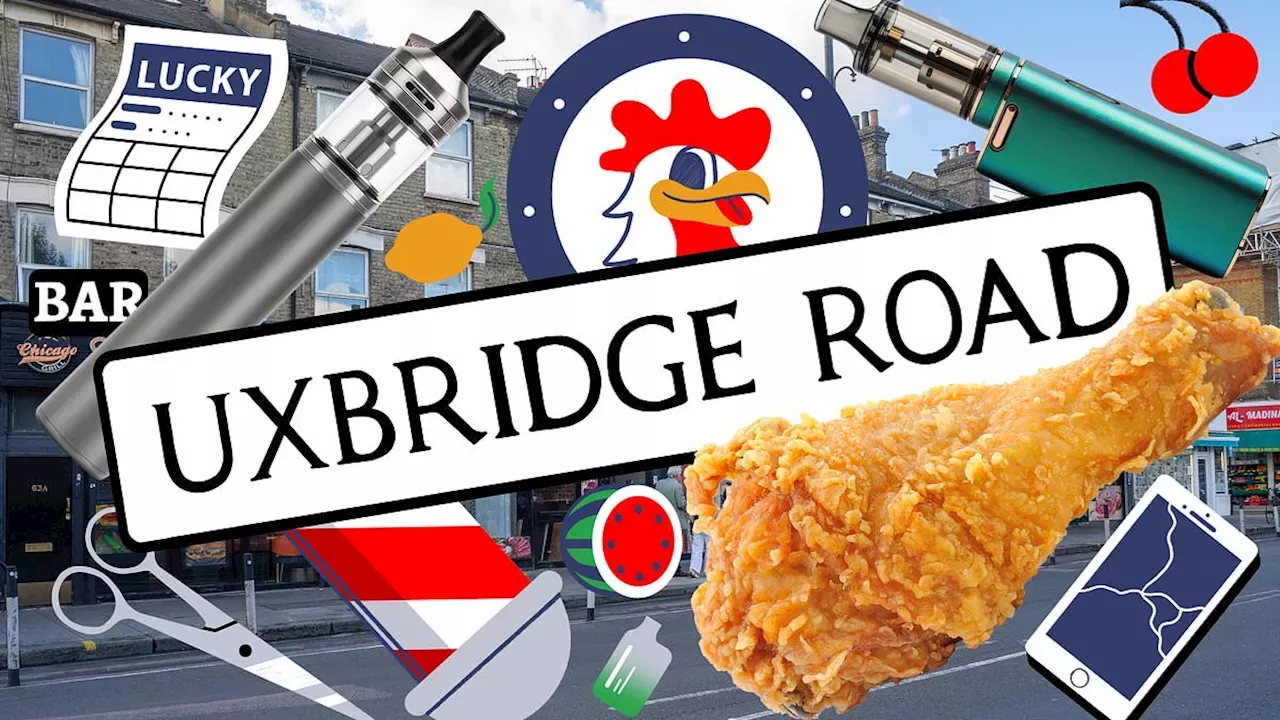
On a half-mile stretch of thoroughfare in Shepherd’s Bush, Uxbridge Road reflects the decline and resilience of London high streets as shifting retail economics collide with grassroots community intervention. Local residents and traders report that unaffordable commercial rents, mounting business rates, and an intense concentration of mono-use retail formats are accelerating the retreat of long-established independent stores. At the same time, community campaigns and municipal interventions are attempting to stabilize the streetscape.
The commercial dynamic visible along the road illustrates the wider pressures facing suburban commercial centers across the United Kingdom. As traditional high street staples such as major retail banks withdraw entirely, they leave behind spaces occupied primarily by fast-turnover services, specialized financial outlets, and fast-food storefronts, prompting localized efforts to reclaim civic space and secure economic diversification.
What Changed on Uxbridge Road
The physical profile of the commercial strip has shifted markedly in recent years. The last branch of the last remaining commercial bank on Uxbridge Road recently ceased operations, leaving the busy corridor without traditional retail banking infrastructure. Basic daily access to cash and essential postal counters has consolidated into remaining shops; one convenience store on the street that doubles as a local Post Office was observed closed for lunch during a daytime visit.
Alongside the retreat of financial branches, commercial occupancy has swung toward specific business categories. A direct physical count across the central half-mile stretch recorded:
- 32 fast food outlets and takeaways
- 11 money transfer service locations
- 11 barber shops
- 11 stores selling mobile phone cases and repair services
- 4 bookmakers, including one situated directly beside a primary school
Despite the dense physical footprint of these operations, pedestrian foot traffic inside many of them remains negligible during peak daytime hours. Across several hours of observation, zero customers were seen utilizing the 11 money transfer operations. One operator, Juba Express Money Transfer, was found entirely devoid of visitors on two separate visits despite keeping interior lights active and bearing a front window slogan reading “Service Beyond The Ordinary.” Separate statutory filings at Companies House confirm that Juba Express Money Transfer remains solvent and maintains a payroll of ten staff, though the specific day-to-day operations conducted by those employees are not publicly detailed.
A similar customer lull was noted across the 11 barber operations, where only two total patrons were observed receiving services during an entire afternoon. In contrast, several traditional street cafes reported active attendance, though observers noted these spaces were occupied entirely by men, creating an environment described by locals as intimidating to women.
Economic Pressures and Retail Realities
Independent retail longevity on Uxbridge Road faces severe commercial barriers, led by aggressive property valuations. One prospective shopkeeper reported being met with a demand from an existing tenant for a £90,000 upfront premium in addition to an annual lease cost of £40,000 for a small, vacant retail unit.
These overhead hurdles are reshaping longstanding retail fixtures. Greenford Timber, an independent hardware store operated by brothers Jasbir Bhachu, aged 73, and Sukhvinder Bhachu for more than 45 years, now displays a “To Let” sign in its window. According to Jasbir Bhachu, the market interest received for the site points solely toward food retail rather than hardware preservation: “Most of the offers so far are from people who want to turn it into a cafe or restaurant.”
Existing operators also face direct competition from fast food clustering. Amr Nasr, the operator of local Italian establishment Little Napoli, voiced frustration over the ongoing monoculture of the strip, emphasizing: “We love this area, but please no more chicken shops!” The volatility of food retail units was demonstrated when a former Kentucky Fried Chicken branch closed, leading to a temporary, sharp decrease in street litter and double parking; however, those issues returned once a new KFC franchised unit subsequently opened in the same location.
Enforcement records along the road underline historical regulatory interventions among food premises. The Woody Grill halal kebab establishment was fined £30,000 ten years ago for hygiene violations, and local authorities forcibly shuttered the business for three months three years ago after discovering it had hired illegal workers.
Sector Impact and Political Focus
The commercial stress observed in Shepherd’s Bush mirrors broader national political debates regarding the economic vitality of British town centers. Commenting on the condition of national town centers, the Prime Minister stated that “too many high streets have been left to hollow out, leaving town centres a shell of what they once were,” adding:
> “People don’t measure growth by looking at a spreadsheet. They measure it by looking at their local high street. Are shops opening or are the shutters down? Does the place feel like it’s moving forward or being left behind?”
Interventions at the regional level have involved capital allocations. Greater Manchester Mayor Andy Burnham announced a £210 million funding package tailored specifically to assist local authorities in rebuilding derelict commercial and town center hubs.
In London, the Labour-run Borough of Hammersmith and Fulham has acknowledged the operational constraints of its commercial strips. The council publicly stated that it agrees with residents regarding retail composition: “We agree with residents that there are too many betting shops, unhealthy takeaways, money lenders and vape shops.” The council has committed to working alongside neighboring local authorities to formally lobby central government for strengthened planning enforcement powers and direct access to specific Land Registry records to trace non-compliant landlords.
Community Action: Fix Uxbridge Road
Frustrated by deteriorating streetscapes, local residents mobilized into direct civic action. The campaign group “Fix Uxbridge Road” was founded by Noor, a local lawyer in her 30s, after she relocated to the neighborhood. The coalition features a diverse leadership base with organizers identifying as Middle Eastern, Indian, Sri Lankan, and Polish.
The group initiated a public petition demanding urgent institutional intervention to rehabilitate the visual appearance of Uxbridge Road. The petition surpassed its baseline target of 250 signatures to collect 3,000 names, compelling the local administration to respond.
Organizers emphasize that their core mission is not to price out traditional residents, but to achieve balanced retail options. As campaign participants noted: “We’re not talking about gentrification. What we want is diversification.” Another resident added: “Why can’t we have, say, a deli or a bookshop instead of another fried chicken place?”
Civic activism has involved personal safety risks. Full identities and photographs of several key campaign guides, known locally as Jenny, Angie, and Kat, have been withheld publicly due to severe online abuse and explicit death threats directed at members of the organization.
Council Response and Streetscape Interventions
The local authority has translated campaign pressure into targeted streetscape improvements, backed by political commitments made during the local election campaign to channel multi-million-pound funding investments into the Uxbridge Road corridor. Campaign representatives now attend dedicated meetings with a designated council cabinet member every fortnight to review operational progress.
Municipal actions completed or underway along the strip include:
- Aesthetic cleanups: Graffiti and discarded chewing gum removal operations have been executed, and commercial shop shutters have been refreshed with painted patterns.
- Infrastructure upgrades: The railway bridge carrying the Hammersmith & City line over Uxbridge Road was stripped of peeling paint, cleared of graffiti, and repainted blue.
- Commercial facade cleaning: Dozens of soiled commercial shop awnings were power-cleaned under council programs.
- Removal of street clutter: The council successfully pressured British Telecom to remove redundant, damaged street phone kiosks.
- Urban greening: New street trees have been planted along pedestrian footpaths, though continuing vandalism forced the local authority to encase the young trees in protective metal cages.
- Financial ringfencing: Capital funding derived from local redevelopment projects, including receipts linked to a former disused police station site, has been ringfenced explicitly for public realm and infrastructure improvements along the road.
Planning adjustments are also underway to provide stronger statutory teeth. Uxbridge Road is slated for inclusion in an updated Local Plan, intended to grant council officers broader legal powers to dictate commercial usage and curtail the unrestricted clustering of specific storefront types.
Risks, Limitations, and Regulatory Barriers
Despite visible physical improvements, severe legal and practical limits continue to impede council enforcement and neighborhood preservation. Under current planning regulations, if an unauthorized physical modification or breach of planning control remains unchallenged on a property for more than four years, local planning authorities lose the statutory power to compel enforcement action.
Furthermore, the council lacks the statutory authority to block betting shops from replacing other betting establishments under existing commercial use classes. On Uxbridge Road, one branch formerly operated by BetFred currently sits vacant. Local officials noted the operational vulnerability: “We’re hoping it will become something else but if it gets bought by another betting firm, then there’s nothing anyone can do.” The ultimate occupant of the site remains unknown.
Timeline delays have also caused friction between residents and council departments. Campaigners reported raising the total absence of street Christmas lights a year ago, only to receive mixed schedules: “Last year, we flagged the lack of any Christmas lights and were told it would happen this year – but now we’re being told to come back in a year.”
What to Watch Next
The long-term retail equilibrium of Uxbridge Road will depend on a combination of community persistence, private capital, and legislative changes.
On the private investment front, some hospitality renewal is testing the market. The former Queen Adelaide pub is undergoing full refurbishment and will launch as the Talli Queen, an establishment framed as a gastropub serving Indian food under hospitality owners Avi Shashidhara and James McLean.
Simultaneously, the timeline for the adoption and formal enforcement of the council’s new Local Plan remains a critical metric to watch. If granted stronger clustering controls by central government, Hammersmith and Fulham could establish a regulatory precedent for rebalancing retail density across inner-city London high streets. Until then, local community campaigners continue their fortnightly administrative reviews, testing whether sustained civic oversight can preserve high street utility under challenging macroeconomic conditions.