
Introduction
Framework has announced the upcoming pre-order availability for its new system, bringing high-capacity hardware configuration directly to home users looking to handle local artificial intelligence workloads. As demand grows for powerful local hardware capable of executing large-scale models and complex computations without relying entirely on cloud infrastructure, hardware manufacturers are introducing specialized systems tailored to these requirements.
The announcement highlights a significant step for modular and repairable hardware ecosystems stepping into specialized computing arenas. With the Framework 192GB Ryzen AI Max+ Pro 495 desktop for running AI at home opens for pre-order tomorrow, prospective buyers and technology enthusiasts have a new option to examine regarding local machine learning capabilities, configuration potential, and system design.
What Changed
According to reports sourced via Digital Trends, the Framework 192GB Ryzen AI Max+ Pro 495 desktop for running AI at home opens for pre-order tomorrow. This new release targets users seeking high-capacity RAM and advanced processor capabilities in a desktop form factor suited for intensive computational tasks.
The timing of the pre-order window gives interested developers, researchers, and home users an immediate opportunity to secure a unit as soon as ordering goes live. Given the specialized nature of high-memory desktop configurations intended for artificial intelligence tasks, the opening of pre-orders marks the transition from announcement to commercial availability readiness.
Context and Background
Running artificial intelligence workloads locally requires substantial memory bandwidth and capacity, particularly when working with large language models or extensive datasets that exceed standard consumer hardware limits. Systems outfitted with 192GB of memory bridge the gap between standard consumer desktops and enterprise-grade server infrastructure.
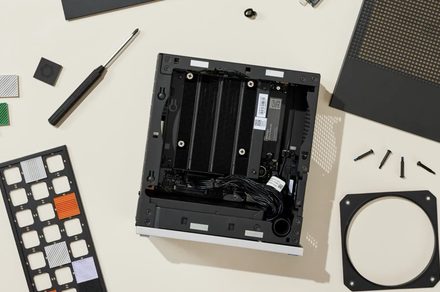
Framework has historically focused on modularity, upgradeability, and repairability across its product lines. Extending this philosophy into a desktop system configured for heavy artificial intelligence computing introduces a unique proposition to a market that often relies on closed, non-upgradable architectures. However, exact details regarding the modularity aspects, chassis design, and upgrade paths for this specific model remain subject to the official specifications provided by the company upon launch.
The broader technology landscape has seen a rising emphasis on localized artificial intelligence processing. As data privacy concerns grow and users seek to minimize latency or recurring subscription costs tied to remote cloud APIs, having robust desktop hardware capable of executing complex models locally becomes an increasingly attractive alternative. Desktop solutions outfitted with massive RAM capacity, such as 192GB configurations, allow developers and enthusiasts to experiment with larger weights and context windows directly from their home environments.
Business Implications and Sector Impact
The availability of high-memory desktop systems aimed at running AI at home impacts multiple segments of the technology sector. For independent developers and small research groups, having access to local hardware with 192GB capacity can reduce reliance on paid cloud compute services and protect data privacy by keeping sensitive models and training sets on-premise.
For Framework as a company, offering a specialized desktop variant demonstrates market expansion beyond its initial laptop lineup. It targets a distinct demographic of power users who prioritize both high-end computational capacity and the repairable, customizable design principles championed by the brand. By stepping into high-end desktop configurations tailored for machine learning, Framework positions itself within a rapidly evolving niche that blends consumer accessibility with workstation-class performance metrics.
Furthermore, enterprise employees working remotely or hybrid environments may look to such hardware as a viable workstation replacement. The ability to prototype, test, and run models locally without routing intellectual property through third-party cloud servers provides a distinct operational advantage for businesses operating under strict compliance or security guidelines.
Limitations and Uncertainties
While the opening of pre-orders represents a major milestone, several details and limitations remain dependent on official disclosures. Prospective buyers must monitor exact shipping timelines, regional availability, comprehensive hardware specifications, and final pricing details as they are published by Framework.
Additionally, performance benchmarks and real-world testing regarding thermal management, power consumption, and sustained workload handling for the Ryzen AI Max+ Pro 495 processor within this specific desktop chassis will only become fully clear once units reach end users and reviewers. The reliance on preliminary product announcements means that potential buyers should exercise caution and verify official data sheets once pre-order pages go live.
What to Watch Next
As pre-orders open tomorrow, prospective buyers will be closely monitoring shipping timelines, official full specifications, and configuration options provided by Framework for the new desktop system. Future updates will likely clarify delivery schedules, initial user feedback, and any additional accessories or modular components compatible with the release.
Observers will also watch how the broader market responds to a modular desktop designed specifically for local machine learning tasks, potentially paving the way for further iterations or expanded product lines from Framework in the desktop computing space.